
We conducted a comprehensive survey to gain insights into the experiences of job seekers and address their most pressing challenges.
Our research revealed that many job seekers tend to internalize their struggles, often to their detriment. By sharing these findings, we aim to show job seekers that they are not alone and that they can learn valuable lessons from the experiences of others.
In this guide, we’ll delve into the key findings, trends, and strategies uncovered by our survey, providing practical advice and actionable tips to help you navigate your job search more effectively.
1. Job Search Activity
How Active Are Job Seekers in Today's Market?
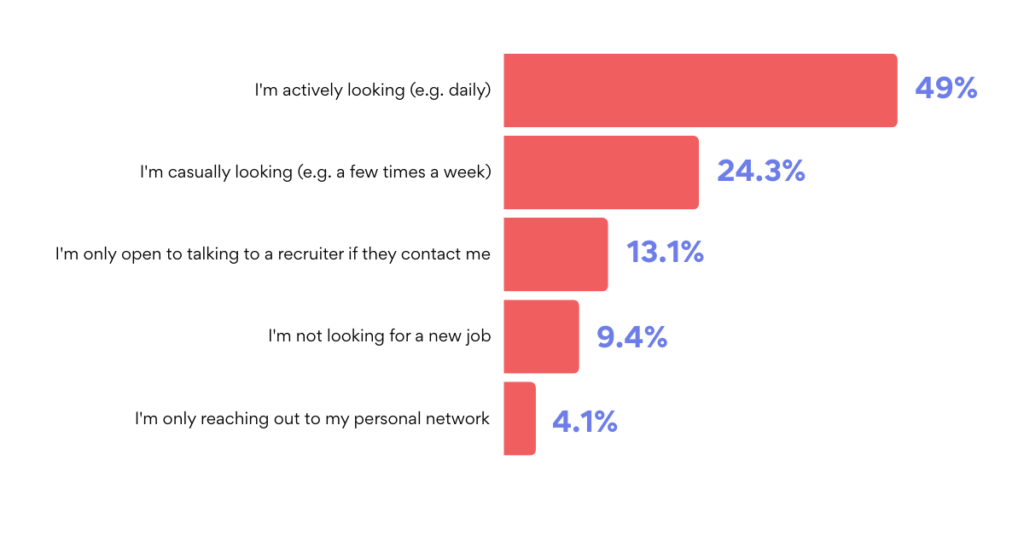
The results show that a significantly higher number of survey respondents are searching for jobs compared to the general market average.
Around 75% of survey respondents base is engaged in job-seeking activities, whereas the typical percentage of individuals actively looking for jobs in the broader market is around 25%.
Advice for Job Seekers: High Demand for Job Opportunities
The higher engagement with job-seeking activities on GrabJobs shows there is a substantial demand for job opportunities among the population. This is due to various factors such as economic conditions, employment trends, or specific demographics using the platform.
We can draw the conclusion that even though there’s high demand, job seekers shouldn’t be discouraged. We recommend that you focus on enhancing your resume, gaining relevant experience, and honing your interview skills. These steps can significantly improve your chances of landing your dream role despite the competition.
Based on the survey results, we think that job seekers should be at the top of their game when looking for work. The good news? We have many tips for mastering your job search on our website. Whether it’s crafting the perfect resume or preparing for an interview, our resources are designed to help you succeed.
How Many Job Sites Do Job Seekers Typically Use?
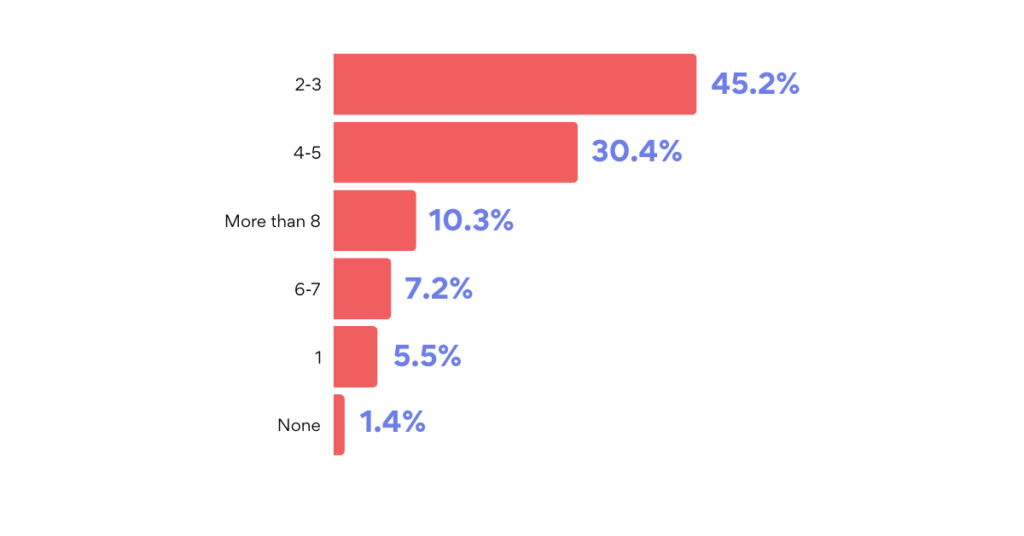
Our findings show that job seekers are using multiple job sites in their search for work. Approximately 75% of respondents use 2 to 5 job sites during their job search; this shows a preference for exploring diverse platforms.
Moreover, we see that the average number of job sites used by job seekers is 4.5. Although many individuals are leveraging multiple platforms, there is still an opportunity for increased diversification.
Advice for Job Seekers: Diversify Your Job Site Usage
We recommend that you diversify your job site usage to increase your exposure to a wider range of job opportunities.
If you explore various platforms, you can access a more extensive pool of job listings—which will increase your chances of finding relevant positions that match your skills and preferences.
Remember, this survey shows job seekers are only browsing through 4.5 job boards. If you look through 10 job boards, you’re already ahead of the game.
How Many Jobs Do Job Seekers Apply to Per Week?
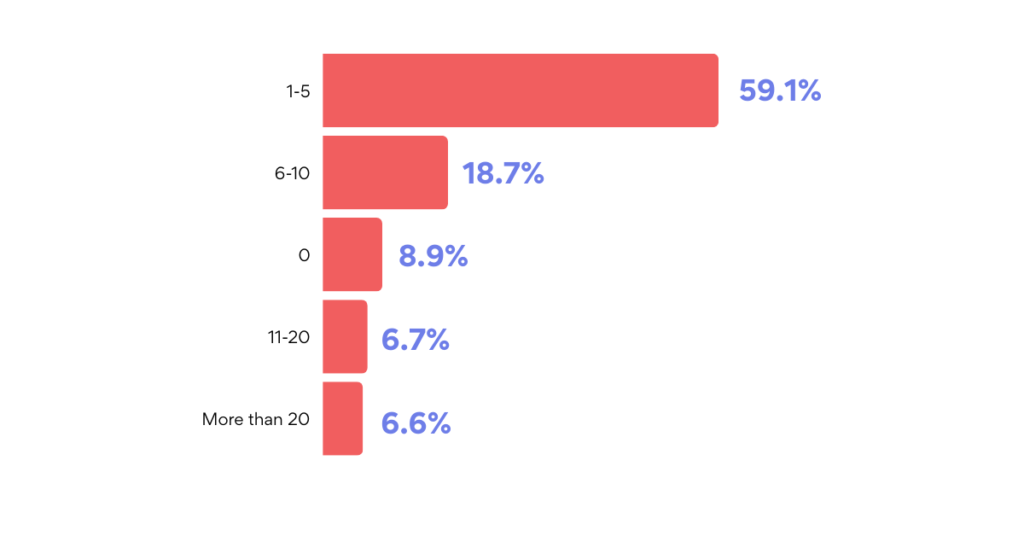
These findings show how active job seekers are, with a significant majority of respondents—approximately 80%—applying to up to 10 jobs per week.
Additionally, the average number of job applications per week—around 8—translates to approximately 31 applications per month.
Advice for Job Seekers: You Must Continuously Apply for Roles
According to our survey, job seekers are highly active in the job application process, with approximately 80% of individuals applying to up to 10 jobs per week. Based on these findings, we recommend that you continuously search for new employment opportunities to maximize your chances of securing a role.
You should always remember the old saying: It’s a numbers game. Of course, there’s no point in sending thousands of applications without customization and a bad resume. But still, apply for as many jobs—with solid applications—as possible in your free time. It gives you a better chance of success!
How Quickly Do Job Seekers Find Employment?
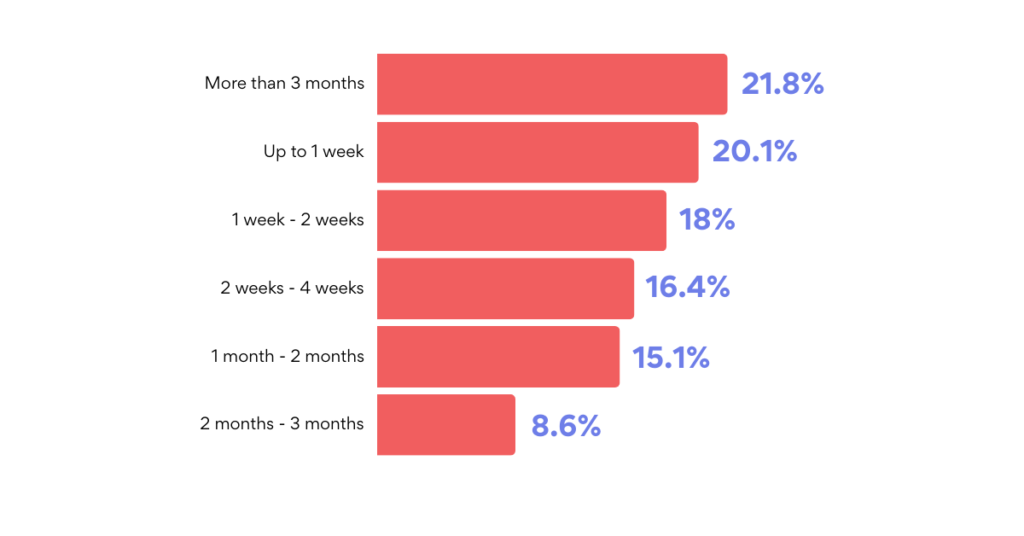
The data shows that job seekers are looking for jobs for different lengths of time. Approximately 38% of job seekers find employment within 2 weeks.
Around 53% secure employment within 1 month—while approximately 68% find employment within 2 months.
However, about 30% of job seekers take more than 2 months to secure employment. Despite these fluctuations, the average duration to find employment is around 1.5 months.
Advice for Job Seekers: Be Patient & Do Not Quit
Be Patient
According to our observations, the duration to secure employment can vary widely depending on factors such as industry, experience level, and job market conditions. While some job seekers find employment quickly, others may experience a more prolonged job search.
We recommend that you understand and adjust your expectations accordingly. The survey results suggest that it’s important not to become frustrated if you don’t find work within days; you’re not alone in this experience.
By staying proactive, continuously networking, and refining your job search strategies—you increase your chances of finding suitable employment opportunities that align with your skills and career aspirations. But first, stay patient.
Never Quit
Amidst the ebb and flow of the job search journey, one steadfast principle remains: perseverance is key. The data paints a nuanced picture of the job market landscape, revealing varying timelines for securing employment.
However, regardless of the duration, one thing remains constant: the importance of never giving up.
What Methods Do Job Seekers Use to Find Opportunities?
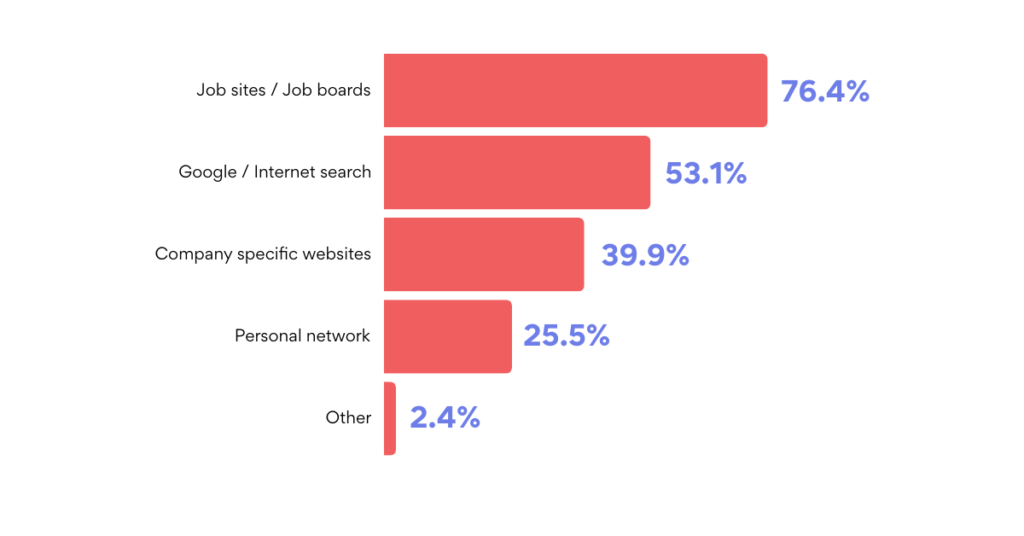
Our data reveals a major reliance on digital platforms. Approximately 3 out of 4 job seekers use aggregators to discover job openings.
Furthermore, a striking 87% of job seekers primarily depend on online channels to conduct their job search—with only 13% opting for offline methods.
Advice for Job Seekers
You Must Leverage Digital Platforms
With 87% of job seekers primarily depending on online channels to conduct their job search, it’s crucial to prioritize your online presence. Today, many companies post job openings exclusively on the internet, moving away from traditional methods like local newspaper advertisements.
Therefore, ensure that your profiles on job sites and social media platforms are up-to-date and professional. This proactive approach enhances your visibility to potential employers and positions you competitively.
Balance Online and Offline Strategies
While online methods dominate the job search landscape, you should not overlook the value of networking and offline strategies to supplement your efforts.
Offline interactions and networking events can still play a significant role in uncovering hidden job opportunities and building meaningful connections within your industry. If you can attend local conferences and seminars and chat with the right people, your dream role may appear.
Likewise, always look for referrals from friends, family, and your network.
Many freelancers find good gigs through referrals; you can also find great full-time roles through referrals.
2. Job Search Experience and Satisfaction
How Satisfied are Job Seekers with their Search Experience?
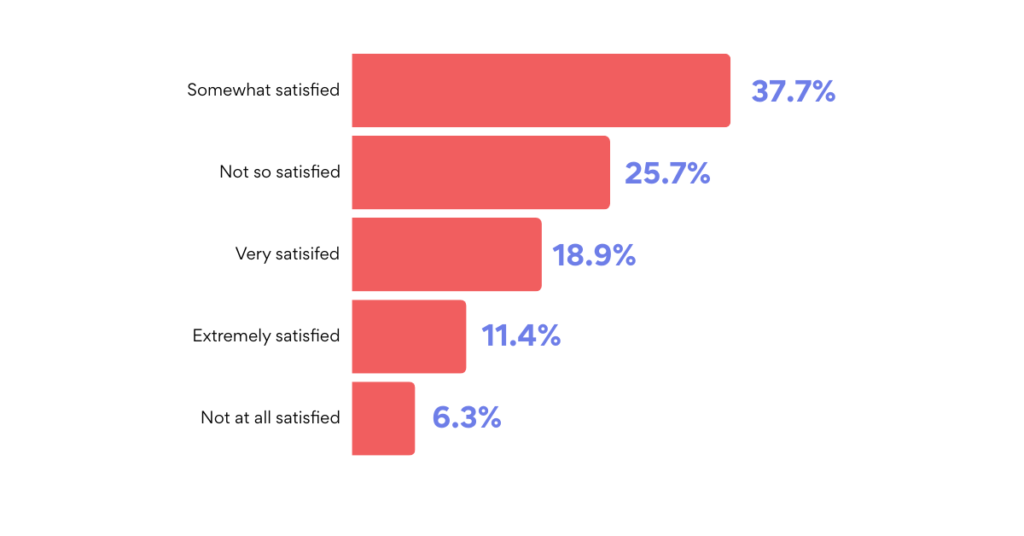
Our data reveals significant discontent among job seekers with their job search experience. Approximately 70% of job seekers express dissatisfaction, which aligns closely with market trends. This sentiment highlights the challenges and frustrations of finding jobs.
Advice for Job Seekers:
Acknowledge Common Frustrations
Be mindful that you are not alone in experiencing frustrations during your job search journey. With approximately 70% of job seekers expressing dissatisfaction, recognize that many individuals encounter similar challenges and obstacles.
As a result, this acknowledgement could provide you with comfort and reassurance. It can also motivate you to persevere and seek out solutions to improve your job search experience.
Always Look to Improve Your Skills
You should take proactive steps to identify areas for self-improvement—whether it’s refining your resume, enhancing your networking efforts, or exploring new job search platforms.
You can also enhance your job search and increase your chances of finding rewarding employment opportunities with this positive, proactive mindset.
What are the Biggest Frustrations in the Job Search Process?
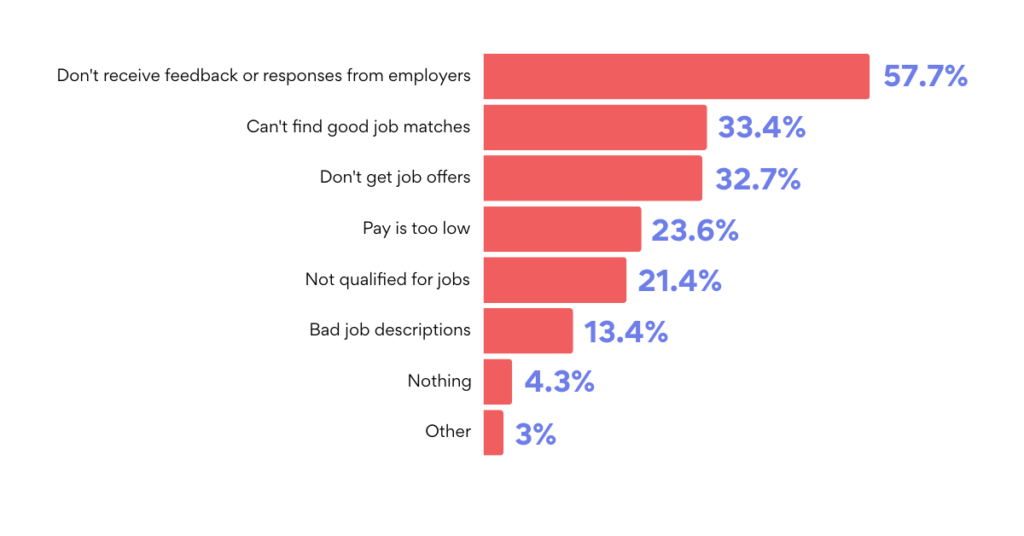
Our findings indicate a prevalent frustration among job seekers, with the most significant complaint being “ghosting” by employers. Ghosting is the lack of communication or feedback from employers after submitting applications or attending interviews.
Advice for Job Seekers:
Manage Expectations
You should be prepared for the possibility of ghosting during your job search and not take it personally. We know that can be challenging!
However, the most significant frustration reported by job seekers is a lack of communication with employers. So manage your expectations and recognize that ghosting is a common occurrence in the hiring process. You’re not alone.
Moreover, if you reframe your mindset and know that ghosting is not a reflection of your worth as a candidate, you can maintain confidence and resilience through a longer-than-expected job hunt.
Take Proactive Measures
Proactively following up with employers after applying or interviewing can help alleviate some frustration and provide clarity on the application status.
Additionally, exploring job platforms or resources that prioritize transparency and effective communication can reduce ghosting and improve the job search experience.
You should look for employers who value open communication and strive to maintain a positive candidate experience; this will ensure a smoother and more rewarding job search journey.
3. Time Investments in Job Searching
How Much Time do Job Seekers Spend Searching for Jobs Each Week?
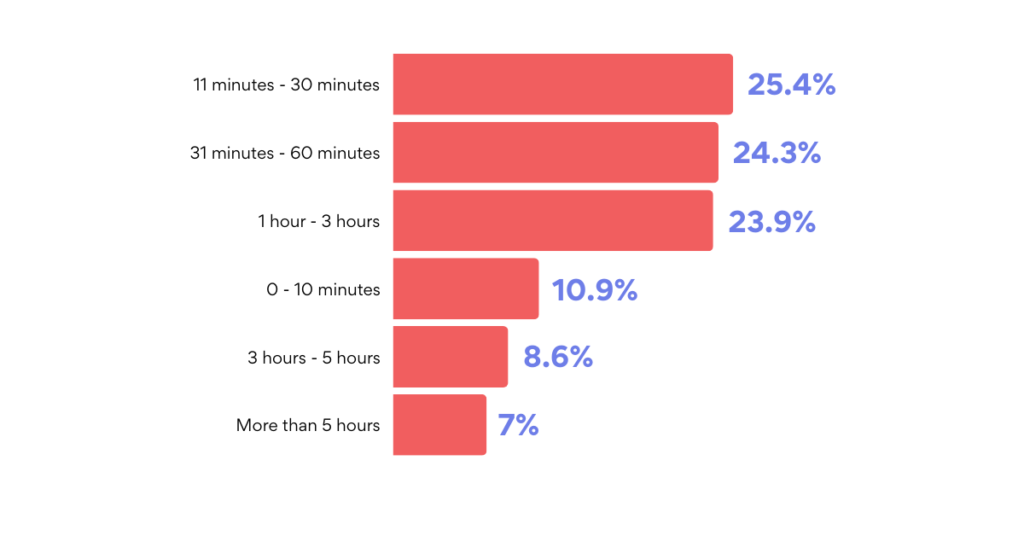
Our data reveals varying levels of time investment among job seekers in their job search efforts. From our survey, approximately 60% of job seekers spend 1 hour or less per week searching for jobs, indicating a relatively low level of engagement.
However, the average time spent per week is approximately 2.2 hours, with some individuals dedicating over 3 hours to their job search.
Advice for Job Seekers:
Increase Time Allocation
You should consider allocating more time to your job search efforts to increase your exposure to more opportunities.
With the majority of job seekers spending 1 hour or less per week on their job search, committing additional time will significantly enhance your chances of finding suitable employment.
In addition, by increasing your time investment to an average of 5 hours per week for job search and application activities—you adopt a more comprehensive approach that maximizes your visibility to potential employers.
Improve Job Search Strategies
Dedicating more time to your job search allows you to implement and refine your strategies. You should actively research companies, customize your applications, and network with professionals in your field.
Additionally, “passive” job seekers—who spend less time on their job search—should be aware that increasing their time investment can significantly enhance their chances of success.
How Much Time is Spent on Applying to Jobs Weekly?
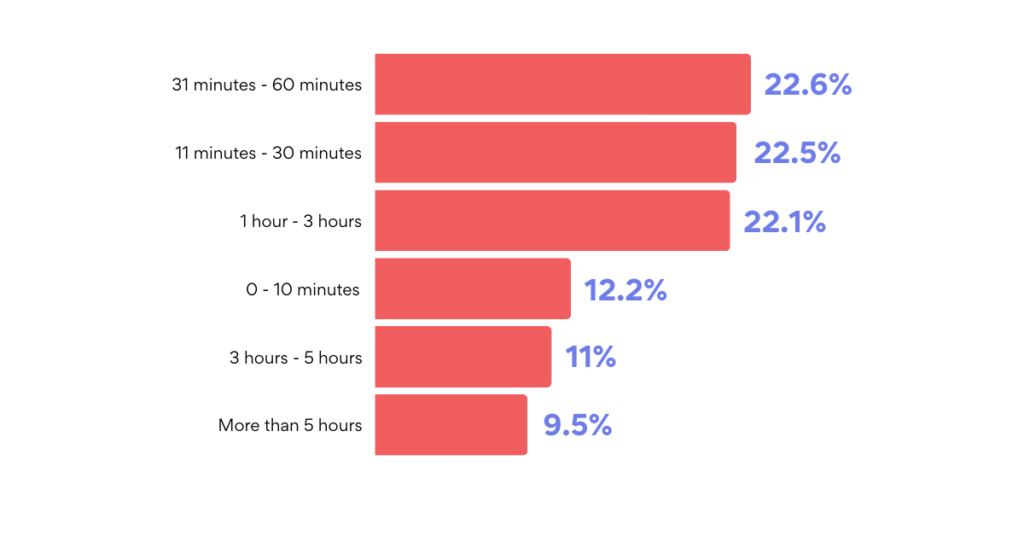
Our findings reveal varying levels of time investment among job seekers in the application process. From our data, approximately 60% of job seekers spend 1 hour or less per week applying for jobs, which is a surprisingly low level of engagement
However, the average time spent per week on job applications is around 2.5 hours—with some individuals dedicating over 3 hours.
Advice for Job Seekers: Ensure Sufficient Application Time
With an average of around 8 jobs applied per week and the average time spent per application being about 19 minutes, you should allocate enough time to customize applications effectively.
Rushing through applications can lead to generic and poorly tailored submissions, diminishing your chances of standing out to employers. This is a mistake many job seekers make.
However, by dedicating sufficient time to each application—you can craft compelling resumes and cover letters that showcase your qualifications and fit for the role.
This will increase your chances of securing interviews and job offers, resulting in less frustration and happier outcomes.
4. Financial Investments in Job Searching
How Much Do Job Seekers Typically Spend on their Job Search?
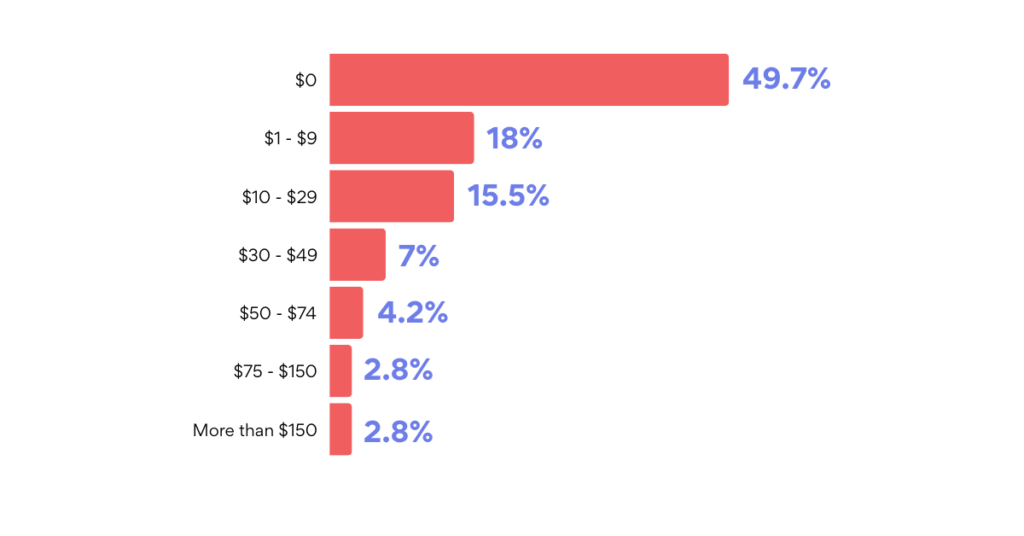
Our findings reveal that a significant majority of job seekers—approximately 85%—spend $29 or less on their job search.
Interestingly, about 50% of job seekers report spending money on their job search, with 10% allocating more than $50.
The average spend among job seekers is approximately $22, with those who do spend averaging around $44.
Advice for Job Seekers:
Evaluate Your Spendings
Many job seekers can secure job opportunities without paying for costly services or resources, as evidenced by the high percentage of job seekers spending $29 or less.
This suggests many job seekers may not perceive the value in paying for services or may prioritize free or low-cost alternatives in their job search.
Current market conditions are generally of a high standard to secure employment. Understanding where you might have gaps, or where you can find an edge on the competition, can make a meaningful difference in success. Consider paying for offerings that increase your competitiveness.
In some cases, a small investment can make all the difference in your job hunt. You can use sites to help craft a creative, eye-catching resume with all the right keywords. Or you can hire a ghostwriter to write a brilliant resume.
Use Free Resources
Given the bulk of job seekers spending zero on their job search, it shows there are free resources to support job search efforts.
From online job boards and networking platforms to career counseling services and informational interviews, you can leverage no-cost resources to enhance your job search effectiveness.
Exploring creative and cost-effective approaches to networking, skill development, and self-promotion can also minimize financial investments in your job search. While some job seekers are able to spend little to nothing, it generally isn’t as effective as spending, if spending increases competitiveness.
While some job seekers are able to spend little to nothing, it generally isn’t as effective as spending, if spending increases competitiveness.
5. Tools and Customization
How Common is Customization in Job Applications?
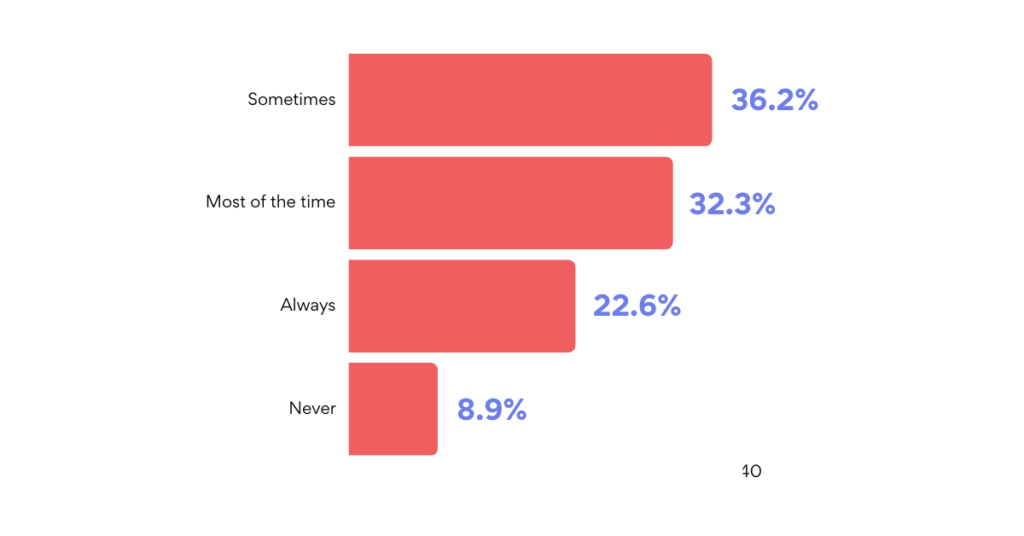
Our data highlights the importance of customization in job applications, as it’s a common practice among the majority of job seekers. Only 8.9% of respondents fail to customize their resume, and you don’t want to be in that minority.
Advice for Job Seekers: Prioritize Effective Customization
Our data highlights that customization is a prevailing practice among job seekers, suggesting a widespread acknowledgement of its importance.
With this insight, you should recognize that tailoring applications to match job requirements is not just a recommendation but a normative behavior. To land the best roles at the best companies—i.e. Fortune 500 firms—you likely won’t get anywhere without a customized resume.
We recommend focusing on crafting personalized applications that directly address the needs and preferences of each employer. This approach demonstrates a candidate’s commitment and increases the likelihood of standing out.
What Tools Are Job Seekers Using to Fill Out Applications?
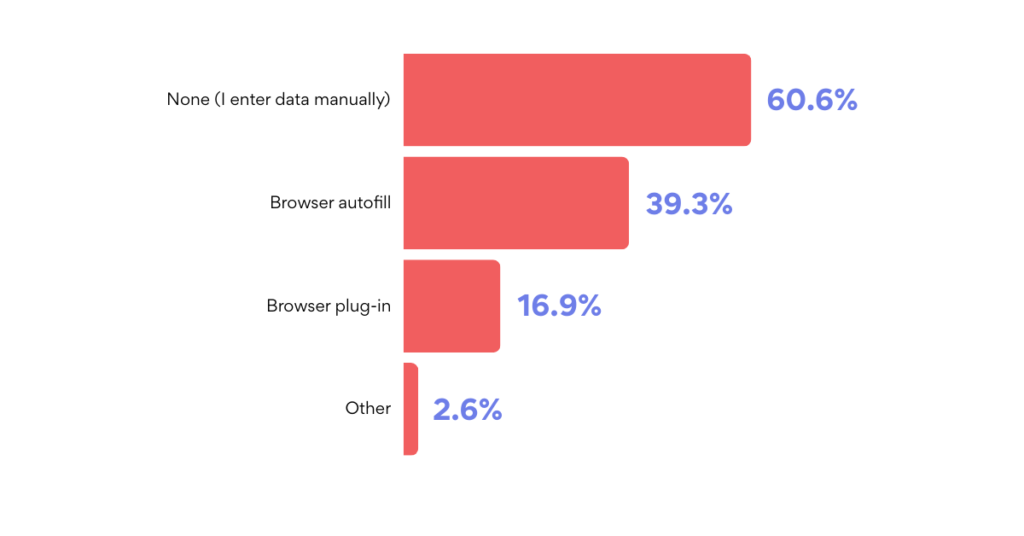
Our data highlights two significant trends in job seeker behavior: a majority of job seekers (approximately 2 out of 3) manually fill in applications, while around 1 in 5 are already utilizing browser plug-ins.
From our observations, this indicates a growing, technologically savvy user base that is increasingly seeking automation in the application process.
Advice for Job Seekers: Address the Need for Automation
Our data shows that a significant majority of job seekers still manually fill out applications, indicating a strong need for automation in the job application process. We recommend that you explore options to streamline your application workflows to save time and effort.
Whether through browser plug-ins, job search platforms, or other automation solutions—embracing technology can make all the difference.
How Do Job Seekers Keep Track of Their Applications?
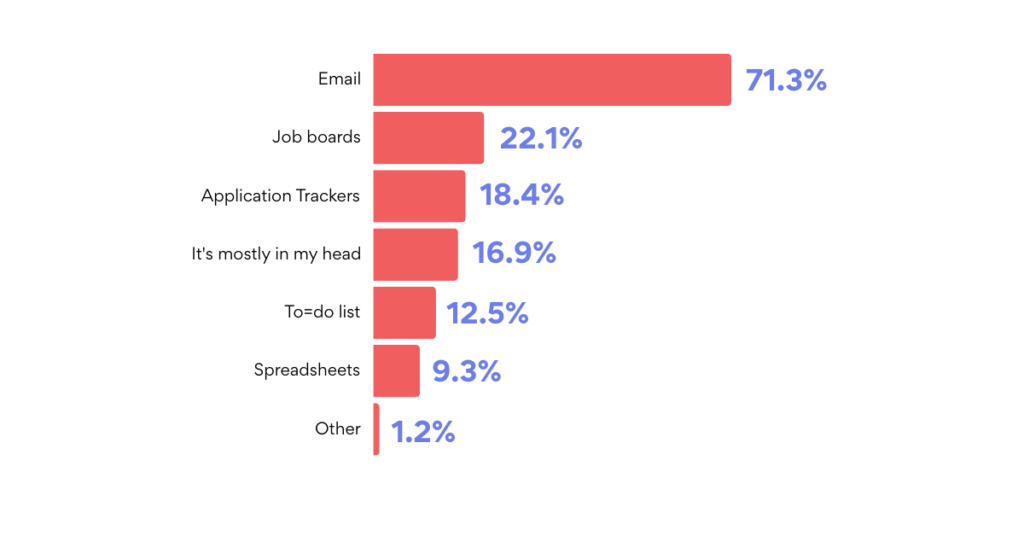
Our data shows that most job seekers are monitoring their job applications in some way. Approximately 3 out of 4 job seekers primarily use email to track their applications, while around 1 in 5 are already utilizing applicant tracking systems (ATS). As a result, this shows a more sophisticated user base seeking advanced application management tools.
Additionally, another 1 in 5 job seekers uses offline capabilities—such as lists or spreadsheets, highlighting the demand for applicant tracking solutions.
Advice for Job Seekers:
Optimize Application Management
Relying solely on email to manage applications may not be the most efficient or effective method for you. It can become overwhelming and disorganized.
To streamline your application management process—consider exploring and utilizing application trackers that can significantly enhance your ability to manage and track applications in a centralized manner.
Adopt Advanced Application Management Tools
You should also consider adopting tools or resources that provide advanced application management features—such as tracking, follow-ups, and reminders. These features can help you stay organized and increase your chances of success in the job market.
For instance, GrabJobs Premium offers these features, enabling you to manage your applications effectively and optimize your job search strategy. You can enhance your application management process and improve your overall job search experience by leveraging these tools.
6. Outcomes and Employer Feedback
How Do Job Seekers Keep Track of Their Applications?
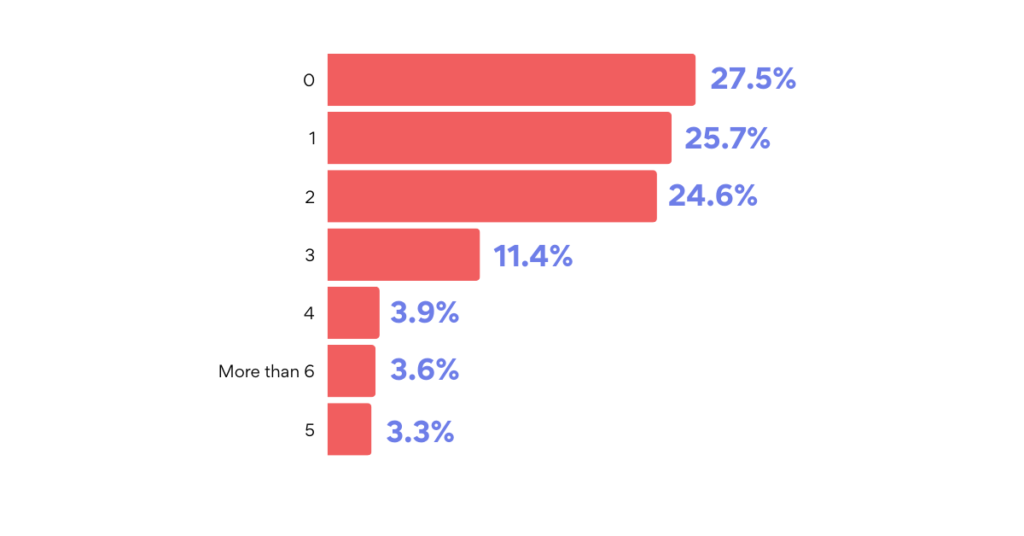
On average, for every 10 companies that job seekers apply to, how many usually get back to them with feedback?
On average, for every 10 companies that job seekers apply to, how many usually get back to them with an offer?
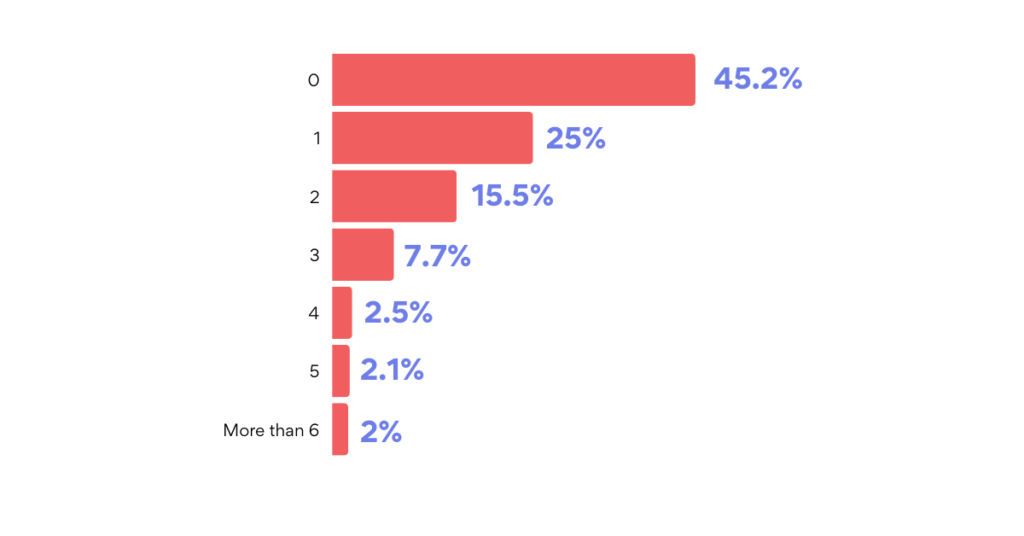
Our findings indicate promising success rates among survey respondents in securing interviews and job offers. Great news! Approximately 72% of individuals boast a 10% or higher interview success rate, suggesting a relatively high level of success in securing intervies.
Moreover, we see that the average success rate for job offers is around 16%.
Advice for Job Seekers: Be Confident
Geography, industry, role, seniority, supply/demand and income all influence success rates. Be mindful of the type of market(s) in which you are seeking employment to adjust your expectations and progress measurement.
If you aren’t progressing as effectively as you think you should be, change your approach, and keep changing, until you observe those changes results in more positive outcomes.
How important is employer feedback to unsuccessful job applicants?
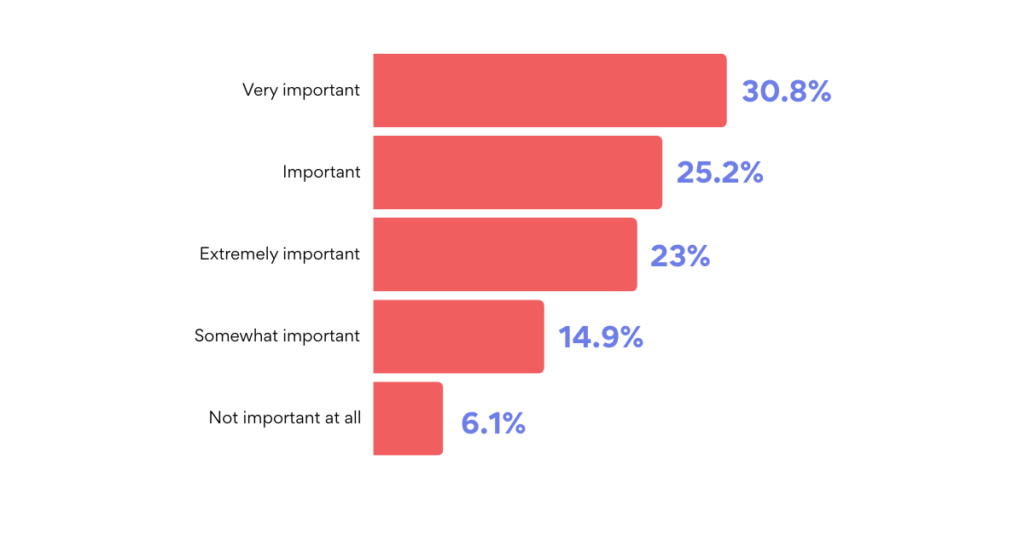
Our findings highlight a strong consensus among job seekers regarding the value of employer feedback, with approximately 80% acknowledging its significance.
This recognition shows the importance of feedback as a valuable resource for job seekers seeking to enhance their skills and competitiveness in the job market.
Advice for Job Seekers:
Actively Seek Employer Feedback
You should actively seek and value employer feedback. It provides valuable insights that can contribute to your growth and improvement, helping you understand areas for development and refinement in your job search approach.
Reflect on the Feedback
Use feedback as a tool for self-reflection and development. Likewise, take the insights gained from employer feedback and leverage them to enhance your job search strategies, interview skills, and overall competitiveness.
Whether it’s refining your resume, practicing your interview responses, or honing your networking techniques, incorporating feedback into your personal and professional development journey can lead to greater success.
Summary of our Advice
In the pursuit of a successful job search—knowledge is power. Our comprehensive survey, including insights from over 10,000 job seekers, sheds light on the modern job market’s intricacies, challenges, and opportunities.
Through meticulous research and analysis, we’ve uncovered key trends and behaviors that illuminate the path to career success