Most in Demand Remote Jobs Globally

Most in Demand Remote Jobs Globally

Most in Demand Remote Jobs Globally

As the world changes, remote work for foreigners is becoming more common and accessible. More than 20 years ago, working remotely would have met with reluctance. Today, remote working is becoming more common by default. Forbes predicts that 25% of all North American professional jobs will be remote by the end of 2022 and that the trend will continue until 2023. 

Find the most in-demand WFH jobs globally and start applying on GrabJobs today!

Becoming familiar with your options to work remotely is essential, even if you have not previously considered it. If you’re looking for some guidance on land international remote jobs- look no further!

What Skills Are in High Demand for Remote Jobs?

Time Management

For many remote workers, their hours are made entirely by themselves. While this may be a blessing for some, it can come with severe consequences for others if they cannot manage their time. When the opportunity arises, slackers can push things to the last second, resulting in extra stress and missed deadlines.

Organization

While many workers have the luxury of an office that comes with structured office space, many remote workers work from home or in numerous places worldwide.

The last thing any company wants is a lost or damaged file due to lack of organization. In addition, remote work can require a certain amount of paperwork, like visas. An improperly handled visa can result in you losing your job. When all is said and done, organizational skills can make or break your ability to get hired as a remote foreign worker.

Emotional Intelligence

Being emotionally intelligent (EQ) can help you communicate effectively with your colleagues in a remote work environment where non-verbal cues may not be available. You can also apply emotional intelligence to develop self-discipline, empathy, and flexibility when facing the challenges of remote work.

Using digital tools and learning with comfort

Collaborating effectively in a remote environment is a top priority and requirement for every employee in a remote company. Using online and digital resources is critical for successful remote collaboration. Then you need to become comfortable with project management programs, video conferencing software, and your company’s digital platforms.

Self-Motivation

Home offices are generally not supervised by a manager or boss, so you’re expected to maintain self-motivation to finish your work on time. You can stay focused and on task by creating a schedule and routine, but you must also limit distractions. Hiring supervised care for parents with children at home or finding other ways to keep them occupied while you work may be helpful.

Strong Communication Skills

Email and other messaging tools have become increasingly popular in remote work environments and video and phone conferencing. Miscommunication and unclear messaging wreak havoc on productivity and result in frustration for all workers. So, whether it’s an email, online messaging, or a note in a project management program, the ability to get your message across clearly can be paramount.

Problem Solving

When it comes to problem-solving, most non-remote employees can turn to their coworkers to help them brainstorm. However, as a remote worker, you may have to rely entirely on yourself to solve problems. While in reality, you should always have guidance and can ask for assistance when needed, due to time zones and communication barriers, you may be left to make decisions backed with confidence and expertise on your own.

Perseverance

While extremely rewarding, nobody said that remote work is always a walk in the park. There may be times, especially during the initial job search and hiring phase, when perseverance and patience are required of you as a strong skill set. You may feel overwhelmed as you interview with multiple companies. However, those who can persevere through the storm will reap all the remote benefits work for foreigners offers.

Adaptability

The ability to adapt to different work cultures, schedules, and policies of companies worldwide is a necessary skill for remote workers. In cities such as Hong Kong or Tokyo, where the pace of life is fast, workers in Italy may have to adjust their light and savory schedules to fit in with those of fast-paced cities. Whatever country the company is based in, gaining familiarity and adaptability will serve you well in creating realistic expectations.

Self-sufficiency

Employees who work remotely are typically expected to know their jobs and meet expectations on their own. Communication within virtual workspaces is possible, but responses from your manager or friends aren’t as immediate as going into an office or talking to a coworker next door. Consequently, remote workers need to be independent and resourceful. 

What are the Most In-Demand Remote Jobs Worldwide?

Digital marketing

Considering how much time we all spend online these days, it’s no surprise. On average, Americans used their phones for three hours per day in 2019, and those numbers rose to four hours per day by 2020.

That being said, digital marketing as a major strategy is increasingly being explored by marketing and PR professionals. You can surely expect more digital marketing jobs to surface for remote workers.

Skills Required

Companies Hiring

    Marketing

    Ability to write powerfully

    Experience with Social Media Ads

There is a great opportunity at FY Advertisement Pte Ltd for those looking for a job in digital marketing.

Customer service

Did you know  E-Commerce grew by 44% in sales in the U.S?

As a result of this massive increase in online spending and delayed delivery times, customer service representatives needed to be positioned remotely. An entry-level job in customer service with the potential to advance into management is an excellent place to start. Customer service remote jobs for foreigners are often good stepping stones to higher paying positions, particularly in start-up companies.

Skills Required

Companies Hiring

    Persuasive speaking skills

    Empathy and the ability to make others feel heard

    Quick problem-solving

Looking for an entry-level position with no experience? Check out this rare job offer by Unisum Land Sdn Bhd

Teachers and tutors

Various education careers have experienced rapid growth due to homeschooling, and online learning. Between 2019 and 2020, hiring for international remote jobs in the education

Various education careers have experienced rapid growth due to homeschooling, and online learning. Between 2019 and 2020, hiring for international remote jobs in the education sector grew by 20%.

In addition, English language teachers are highly coveted in countries where English is not the primary language, such as China or Thailand. 

Skills Required

Companies Hiring

    Experience

    Patience

    Strong verbal and written communication skills

Course Hero offers an excellent opportunity for those looking for tutoring experience. Check it out here!

Workforce experts

As our social landscape continues to change, more companies will seek expert consultants with experience addressing issues related to bias and prejudice while leading and managing teams.

Since 2019, hiring for these roles has risen by 90%. With diversity experts consistently topping lists of most in-demand remote jobs for foreigners in 2021, keep your eyes peeled for this one.

Skills Required

Companies Hiring

    Knowledge of the law

    Ability to counsel and advise

    Understand how to evaluate a company and then implement data-driven practices

Looking for the ability to build and manage teams? Aspire lifestyles will let you put your diversity training to work with this stellar job opportunity.

NGOs/Non-profits

The fact is that the world will always need humanitarians and non-profits. The nonprofit sector is one of the fastest-growing fields for remote jobs for foreigners, according to the 2021 Flexjobs report. 

Skills Required

Companies Hiring

    An understanding of resource-constrained environments

    Team management, supervising people, managing organizations

    Adaptability and flexibility

Ready to get your NGO career started? Time Auction limited is urgently looking for an engagement manager, and you could be it!


Positions related to translation/bilingualism

Speak another language? Multilingual jobs open a whole other door of possibilities and quickly become one of the fastest-growing remote jobs for foreigners due to their simplicity.

Translation jobs are particularly abundant. Bureau of Labor Statistics data projects a 20% growth in translating and interpreting jobs in 2019-2029. 

Skills Required

Companies Hiring

    Advanced language knowledge, sometimes with a certificate requirement

    In-depth cultural knowledge

    Good computing and Word, Excel, and PowerPoint skills

Leverage your language skills and apply at Pactera Edge where you can be a French Technical Writer

Information on Remote Work Visas for Foreigners

Every country has its own visa policy. Some countries can grant you a tourist visa if you are limited to only working in your country of residence, while others might be more strict, even if you aren’t interacting with the local labour force.

The good news for remote workers is that several countries have implemented programs that make it easier to work remotely. Barbados, for instance, offers a 12-month Barbados Welcome Stamp visa which allows people to relocate to and work from the stunning island. And it gets better- this visa is available to any employee whose work is independent of their location. You can find a complete list of countries here.

How Can You Find International Remote Jobs?

The first step is understanding what the job and lifestyle entail. While many people look over this step, it is crucial to avoid false expectations and possible failures.

Once you understand what you’re getting into, the next step would be to understand the type of work available to you.

After scooping the market, the third thing you want to do is look at your current qualifications to see if you meet the requirements for your desired job. If not, you might have to consider a different career path or obtain the proper skills.

Fourth you’ll want to confidently apply for international remote jobs and proceed with any following interviews. Ensuring you have all the needed experience and paperwork for a company is vital and shows your ability to be organized.

The last step once you’ve got the job of your dreams is to understand any job requirements and the overall nature of the job. With a proper understanding of what is expected of you- you can avoid hiccups and plan accordingly.

Closing thoughts on International Remote Jobs

Finding remote work can sometimes seem overwhelming, and as mentioned, it is the preparation that will make or break your remote working experience. If poorly prepared, you may miss your old cubicle and repurchase a flight to your home office. On the other hand, when organized with reputable experts, it may just be the change you’re looking for when organized with reputable experts.

As numerous job sectors are increasingly growing and the world is shifting to an on, line presence, becoming familiar with your options to work remotely is recommended. By picking a reputable platform and knowing your options, you could save yourself crucial time and energy.

How to Use ChatGPT to Create a Resume

How to Use ChatGPT to Create a Resume

How to Use ChatGPT to Create a Resume

Did you know that 80 percent of resumes are rejected within 11 seconds? How do you make sure your resume or curriculum vitae (CV) isn’t part of this group?

A well-written and engaging resume is more likely to catch a hiring manager’s eye and make it through the first round of reviews (and eventually help you get called for an interview).

Even if you’re not a confident writer, you can still produce an intriguing resume with the help of AI-powered tools like ChatGPT.

Curious about how to use ChatGPT to create a resume? Discover everything you need to know below, from the pros and cons of this tool to what a ChatGPT resume sample looks like.

Pros and Cons of Using ChatGPT to Write a Resume

Before you decide to use ChatGPT to create a resume, it helps to understand the pros and cons of this tool. Here are some of the most important ones to keep in mind:

Pros

  • Greater chance of passing through an applicant tracking system since most of those tools are also AI-powered
  • Ensure a consistent writing style and tone
  • Reduce your chances of spelling or grammatical errors
  • Ensure you include all essential information
  • Save money (using ChatGPT is cheaper than hiring a professional resume writer)

Cons

  • A ChatGPT CV or resume can sometimes be a little too generic
  • If you rely on a ChatGPT resume hack, your personality may not shine through
  • A ChatGPT CV or resume may contain outdated or inaccurate information (that’s why it’s always important to read through the document before submitting it)

How Do You Use ChatGPT to Create a Resume?

You might be intrigued by this ChatGPT resume hack, but you might also be confused about how to use the tool to create an engaging resume. Below is a step-by-step breakdown of how to use it to get the best outcomes:

Step 1: Identify Your Needs

Start by getting clear on what you need from ChatGPT. Here are some questions you might ask yourself during this step:

  • What is my target job role?: What is the specific job title, company type, and industry you want to apply for? Knowing this information will help you ensure ChatGPT tailors your resume appropriately.
  • How long do I want my resume or CV to be?: In most cases, a resume should be one page long; CVs can be a bit longer since they tell a more detailed story about your career history.
  • What key achievements do I want to highlight?: Consider the specific accomplishments you want to mention. If possible, share the metrics, too, so ChatGPT can quantify your achievements.

Take some time to consider these questions (and their answers) before moving on to Step Two. They’ll help you get a more personalized resume or CV.

Step 2: Identify ChatGPT’s Needs

Your next job is to understand what ChatGPT needs to produce a compelling resume or CV for you.

By asking ChatGPT what it needs, you can streamline the resume process, avoid submitting information that’s irrelevant, and ensure you provide details that do matter.

Here are some examples of how you might ask ChatGPT what it needs:

  • I have 3 years of experience as a digital marketer and now want to work as the marketing manager for a tech startup. I want you to write me a resume for this position. Please let me know what information you need to do this.
  • I want you to write my resume. I currently work as a graphic designer and want to apply for new positions in the fashion industry. What kind of information do you need from me?
  • I am a customer service representative with 2 years of experience and looking to transition to an administrative role. Can you create a personalized resume for me? What details do you need to ensure my skills and achievements are highlighted?

Step 3: Gather Relevant Examples

If you “teach” ChatGPT with relevant and well-written resume examples, you’ll be more likely to get a similar (if not superior) resume delivered back to you.

You can utilize the examples at the end of this guide, but there are also plenty of other places online that you can turn to, including the following:

  • Social media platforms like LinkedIn and Reddit
  • A friend, classmate, or colleague’s resume (if they’ve applied and been shortlisted for or received a job like the one you want)
  • YouTube videos
  • Resource libraries (such as the GrabJobs resource library)

Create a folder with all the examples you want ChatGPT to reference. Keep in mind that these samples are also important reference points for you. You can compare the resume ChatGPT prepares against them to see if it’s on the right track and producing a competitive document.

Step 4: Provide a Job Description

It’s easier for ChatGPT to personalize the resume or CV if it knows what kind of job you’re applying for.

To help with this, consider sharing the exact job description from the listing the company posted. You can also search for descriptions of similar jobs on platforms like Indeed, Glassdoor, and LinkedIn.

Another option is to write the job description in your own words. However, the problem with this is that you may miss out on critical keywords that will help your resume show up in applicant-tracking software results.

If you do decide to rewrite the description yourself, be sure to include keywords that seem relevant to avoid this issue.

Step 5: Submit a ChatGPT Resume Prompt

Finally, you’re ready to submit a ChatGPT resume or CV prompt and ask the tool to write your resume. There are lots of different ways that you can ask ChatGPT to write you a resume, including the following:

Sample Prompt 1

I’m [Your Name], and I need a data analyst resume. I recently graduated from [University Name] with a degree in [Field]. I have also completed a data analysis internship with [Company Name]. At [Company Name], I processed and visualized user data and created reports based on our findings. Can you write a new resume emphasizing my education, technical skills, and internship? I have experience with SQL, R, and Python and a Tableau certification.

Sample Prompt 2

My name is [Your Name]. I just graduated from [University Name] with a degree in [Field], and I’m looking for a job in the same industry. In college, I volunteered with a local non-profit to create and implement a fundraising campaign that raised $3,000. I also completed an internship at [Company], where I assisted with social media campaign creation and increased engagement by 20%. I have attached a job description for the position that I’m interested in, and I would like my resume to be tailored to that job description. I’m also sharing a resume from a friend that I want you to use as a reference for the format. I would like a one-page resume with a clean and modern template. Can you create a resume for me that is based on the sample resume, is tailored to the job description, and shows my experience and qualifications?

Step 6: Provide Follow-Up Prompts

Once you receive the first draft of your review, you’ll likely need to provide follow-up prompts.

For example, you might ask ChatGPT to add more detail to the work experience section or make the skills section more concise. Remember that you can go through as many revisions as possible, so don’t worry about asking for them.

Bonus Tips for a Better Resume or CV

The steps listed above will help you use ChatGPT to create a CV or resume. To get the best results, though, it also helps to keep these additional tips in mind:

Be Specific

The more specific you can be with your requests and ChatGPT prompts, the more detailed your responses and results will be. In other words, if you want a personalized and unique resume, you need to provide enough personal and noteworthy information to help ChatGPT produce that kind of document.

Use Simple Language

ChatGPT works best when prompts contain simple, direct language. Avoid long, complicated sentences. Being more straightforward with your prompts will help you get clear, readable results.

Experiment with Different ChatGPT Resume Prompts

When you use ChatGPT to create a CV or resume, it’s helpful to experiment with different prompts. It might take a few tries to get a result that you like (and that you think will help you land a job).

Think of It as a Conversation

It’s unlikely that you’ll get a great resume after submitting just one prompt. Instead, imagine you’re having a conversation with ChatGPT.

Remember that you may have to provide additional details, ask for clarification, ask for changes, adjust your requests, etc., just like you do in a regular discussion.

Double-Check for Errors and Inaccuracies

ChatGPT can do a lot when drafting your resume. However, you should always review it yourself one last time before submitting it. This review gives you a chance to address potential errors and add your own personal touch to the finished document.

Here are some specific factors to keep in mind when refining your resume:

  • Check for grammatical errors and typos
  • Ensure the resume is tailored to job requirements
  • Include keywords from the job listing
  • Remove irrelevant and unnecessary information (including skills or experiences that don’t add value)
  • Add missing information (including skills, experiences, or extracurricular activities that do add value)
  • Ensure accuracy, especially when it comes to job titles, employment dates, and educational qualifications.
  • Use verbs like “managed,” “created,” “developed,” “established,” or “organized.”

ChatGPT Resume Sample

When asking ChatGPT to write your resume, it helps to have an idea of what a well-written resume includes. Here are a couple of samples that you can use as guidelines (for yourself and ChatGPT):

Sample 1: Administrative Assistant Resume

[Name]

[Location] | [Phone Number] | [Email Address]


Summary

Professional and organized administrative assistant with three years of experience creating and sharing reports and managing employee schedules. Self-motivated collaborator with expertise in word processing, data entry, and spreadsheet formatting.


Education

[School Name]

[Year Graduated]

[Degree Type]


Experience

[Company Name], [Location], Administrative Assistant

[Start and End Dates]

  • Managed the office calendar for 15 employees
  • Submitted and filed timesheets for all employees
  • Oversaw client databases and updated client information regularly
  • Generated weekly reports on business performance and shared them with relevant team members
  • Reviewed expense reports and made budget adjustments, decreasing costs by 10%


[Company Name], [Location], Customer Service Representative

[Start and End Dates]

  • Answered phone calls
  • Documented and filed conversations with customers
  • Responded to email questions and concerns within 24 hours


Skills

Office 365 Suite

Communication

Data entry

Problem-solving

Organization

Sample 2: Marketing Manager Resume

[Name]

[Location] | [Phone Number] | [Email Address]


Summary

Dedicated Marketing Manager with proven experience developing and executing marketing strategies and training new team members. Strong communication and collaboration skills with a desire to grow and help others grow professionally.


Education

[School Name]

[Year Graduated]

[Degree Type]


Experience

[Company Name], [Location], Marketing Manager

[Start and End Dates]

  • Created promotional campaigns that increased sales by 5%
  • Negotiated client contracts without going over budget
  • Trained new Marketing Specialists
  • Oversaw new product line launches
  • Managed marketing and social media teams


[Company Name], [Location], Marketing Manager

[Start and End Dates]

  • Increased website traffic by 30% in six months using new digital marketing strategies.
  • Trained social media and marketing team members
  • Developed marketing campaigns that increased brand awareness and sales


[Company Name], [Location], Marketing Associate

[Start and End Dates]

  • Oversaw implementation of marketing programs
  • Created weekly and monthly sales reports
  • Reviewed marketing projects to improve quality and delivery


Certifications

  • HubSpot Content Marketing Certification, HubSpot Academy – 2022


Skills

  • Search Engine Optimization
  • Communication
  • Data analysis
  • Keyword research
  • Time management
  • Organization
  • Project management
  • Teamwork

Use ChatGPT to Create a Resume Today

A solid resume is critical to your job-hunting process. Whether you lack confidence in your writing skills or you simply don’t have time to create a new resume from scratch, ChatGPT can help.

Follow the guidelines mentioned above and use ChatGPT to create a resume in no time.

Do you need more help with your resume writing process? If so, GrabJobs offers a variety of tools in our resource library that can help. Check them out today!

How to Use ChatGPT to Write a Unique Cover Letter in 8 Steps

Use ChatGPT to Write a Unique Cover Letter

How to Use ChatGPT to Write a Unique Cover Letter in 8 Steps

According to the latest data, ChatGPT (specifically the OpenAI website where it’s located) has received over 1.8 billion visitors!

ChatGPT and other artificial intelligence-powered tools are everywhere these days, and people use them for everything from creating outlines for midterm papers to writing cover letters for jobs.

Are you struggling to write a compelling cover letter? Are you worried that it’ll prevent you from landing your dream job?

If so, don’t give up. Why not utilize the ChatGPT cover letter generator instead?

This guide explains everything you need to know about how to use ChatGPT to write a unique cover letter.

How Do I Use ChatGPT to Write a Unique Cover Letter?

It’s easier than you might think to use ChatGPT to write a unique cover letter, even if you’ve never experimented with this tool before.

Here are eight simple steps to create an intriguing letter that helps you land the job:

Step 1: Sign Up for an Account

The first step in figuring out how to use ChatGPT to write a letter is signing up for an account (or logging in if you already have credentials).

To do this, visit the ChatGPT website: https://chat.openai.com/auth/login. Select the “Sign Up” option and complete the prompts to create an account. You’ll be ready to go after just a few steps.

Step 2: Ask ChatGPT What It Needs

Getting good results from the ChatGPT cover letter generator is easier if you first ask the tool what it needs from you. If you’re specific in your request, it will likely be more specific in its response.

Here are some examples of prompts you might use to get the conversation going:

  • Can you tell me what information you need from me to create an effective cover letter?
  • I’m applying for a [insert job type] job and need to create a cover letter. Can you guide me through the information I need to write an effective cover letter?
  • I’m applying for my first job and need help writing a cover letter. Can you let me know what details you need from me to create the best cover letter possible?

The responses you get from these questions are especially helpful if you’ve never written a cover letter before or if it’s been a long time since you last wrote one and aren’t sure what to include.

What Will ChatGPT Ask For?

In response to your questions, ChatGPT might ask for the job description or for more information about the company you want to work for.

This information will help the free AI cover letter generator produce a more detailed and unique letter that stands out from other applicants’ submissions. It will also minimize the amount of editing you have to do later.

Step 3: Introduce Yourself

The next step is telling ChatGPT a bit more about yourself. That way, it can personalize your letter.

Here are some questions you’ll want to answer when telling ChatGPT what you need from it:

  • What is your current situation? Are you a student, recent graduate, or currently working?
  • What position are you applying for?
  • What are your specific career goals?
  • In what industry do you work?
  • Why are you motivated to apply for a particular job?
  • What are your core skills? How will you use them in your desired role?

Here’s an example of how you might introduce yourself:

“My name is [Name], and I am currently working at [Job]. I have [Number of Years] years of experience in [Area of Expertise], and I hold a degree in [Subject] from [University]. I’m applying for the [Position Name] job at [Company].

Remember that ChatGPT works best when you use clear, direct language. Keep your sentences short and straightforward. If your messages are too complex, you might get complicated (and hard-to-understand) responses.

Step 4: Submit the Job Description

Once you’ve introduced yourself, it’s time to move forward with using ChatGPT to write a cover letter. The next step is providing more specific information about the job for which you’re applying and the company for which you want to work.

Some people prefer to copy and paste the job description from the website, and others like to type it in their own words.

It’s up to you which option you want to use (you can also experiment with both). Either way, though, sharing the job description helps ChatGPT understand what kind of job you want to get, the responsibilities associated with the position, and the company culture.

Say you’re applying for a digital marketer job. Here’s an example of how you might describe the position:

“I am applying for a digital marketer position at [Company name]. The job description requires experience in social media management, content creation, and analytics. The company provides digital marketing services to small businesses and is committed to empowering small business owners with innovative solutions to achieve their goals.”

Step 5: Ask ChatGPT to Write Your Cover Letter

Once you’ve given ChatGPT all the information it needs to get started, you can move on to the next step in learning how to use ChatGPT to write a letter.

At this point, you’ll be ready to ask for help. Don’t just ask the tool to write you a cover letter for a specific position. Let ChatGPT know what kind of tone and style you want, as well as (roughly) how many words long you want the letter to be.

Here’s an example of how you might make this request:

“Can you help me write a cover letter for this position? I want to use a professional but friendly tone and emphasize my experience in digital marketing and working with small businesses. Make sure my cover letter is 150 words long.”

Step 6: Generate Multiple Versions

Remember that you don’t have to accept the first version of the cover letter that ChatGPT produces for you. You can use the “Regenerate Response” option to create more versions and then compare them to decide which one you like the best.

Copy each version to a separate document so you don’t accidentally lose them. Doing this will also allow you to take pieces from each one to create a letter that best meets your needs.

Step 7: Edit and Fine-Tune

ChatGPT is good, but it’s not so good that you don’t need to edit or polish a document before sending it (especially to a potential employer).

The good news is that you can co-edit alongside ChatGPT.

For example, say it produces a cover letter that you like but that you think needs to emphasize your skills more. You can respond to the letter ChatGPT produced and ask for a new version that focuses more heavily on your skills.

Take your time going through this step to ensure you get a unique and engaging letter that accurately represents you, your abilities, and what you will bring to the company.

Step 8: Review Before Sending

Give your letter a final once-over before you send it alongside your application and any other necessary documents. Check for spelling or grammatical errors, as well as potential inaccuracies that could hurt your chances of getting hired.

Remember that it’s always worthwhile to spend a few extra minutes reviewing the letter before you send it off, especially when applying for a job.

How Do You Write a Unique Cover Letter?

When using ChatGPT to write a cover letter, the AI tool will do the heavy lifting for you. However, you will still need to do some editing and fine-tuning to get a compelling letter that helps you win over a hiring manager.

Here are some tips to ensure your cover letter is unique and accurately represents you:

Get to Know the Company

Remember that ChatGPT can only work with what you give it. If you only provide surface-level information about the company you want to work for, you will likely get a surface-level cover letter.

Before you ask the tool to generate a cover letter for you, do some research to get to know the company better. Find out what they do, who makes up their target audience, what their mission is, etc.

You can then share this information with ChatGPT so it can produce a more unique and customized letter.

Prioritize the Opener and First Paragraph

The opening line and the first paragraph are, generally, the most important parts of a cover letter.

Recruiters typically don’t spend a lot of time reading these letters (but don’t let that trick you into thinking they’re not significant).

If you have a compelling opening line and an interesting first paragraph, you’re more likely to catch their attention and encourage them to continue reading about you. The more they learn by reading your letter, the more likely they will likely be to call you in for an interview (or hire you).

Focus on What Interests You About the Company

When prompting ChatGPT to write your letter, be sure to include some instructions about the things you like or find interesting about the company.


For example, say you like that the company is committed to supporting small businesses. Make sure ChatGPT knows you want to emphasize that point. Otherwise, it may or may not be included, and you’ll have to add it in yourself.

Emphasize What Sets You Apart

Encourage ChatGPT to emphasize characteristics that set you apart from other applicants as well.

Do you know how to use a specific program or have experience working with the same people who make up the company’s target audience?

Focus on what makes you unique (and include it in your instructions for ChatGPT), and you’ll have an easier time separating yourself from other candidates.

Explain What You Will Bring to the Company

Similarly, highlight how you can use your skills, personality traits, etc., to make the company better. In other words, what value do you bring to the table?

Maybe you think your design skills will help them create better social media content, or perhaps your coding experience means you can assist with tasks related to the backend and front end of a website.

Again, make sure ChatGPT knows that you want this information included in the cover letter!

Adjust the Tone Based on the Company

Your tone matters a great deal when writing a cover letter (or any document, for that matter). You’ll need to adjust your style to match the company’s overall vibe.

For example, if the company has a more formal and professional tone in its job description, you’ll want to mimic that in the cover letter.

Conversely, if the company’s tone in the job description is more laid back and fun, use that kind of language (while still being professional, of course) in your cover letter.

ChatGPT is capable of switching tone and style based on your instructions, so tell it what you want when writing the prompt.

Use Specific Examples

Be specific as possible when writing your cover letter. Don’t just provide a list of general tasks you completed at your last job. Paint a picture of how you helped customers, how you supported your team, what kinds of projects you completed, etc.

When it comes to adding these kinds of examples, you’ll likely have to do some of the writing yourself.

ChatGPT can get you started, but since you’re talking about your experience, you’ll probably need to finish the letter up yourself to ensure the details are accurate and the examples are compelling.

Use ChatGPT to Write a Unique Cover Letter Today

Now that you know how to use ChatGPT to write a unique cover letter, it’s time to get to work.

Use the information shared above to utilize a free AI cover letter generator like ChatGPT and produce a high-quality document that helps you land your dream job.

Do you need more help finding or applying for jobs? If so, GrabJobs offers many resources for you, including an extensive library of job-hunting guides. Check them out today!

Boosting Your Job Search Productivity: Tips and Techniques for Success

Boosting Your Job Search Productivity: Tips and Techniques for Success

Boosting Your Job Search Productivity: Tips and Techniques for Success

Without a doubt, the modern job market is more competitive than ever before. With the rise of the remote work culture and the fact that digital employment has erased geographical boundaries, you have more opportunities than ever before.

At the same time, this has created a highly competitive environment in which it can be difficult to stand out, as well as to find the right job opportunities to satisfy your needs and aspirations. Not only do you have to navigate through the muddy waters of dubious employers, but you also need to do it in the most efficient way possible.

So, let’s get to work. Here are the best tips and techniques for job search and maximize your chance of landing a job at the right company in 2023.

Combine job search methods

First things first, it’s important to keep in mind that the modern job market is rife with platforms, websites, social networks, and various other places where you can search for a job. And those are just the online channels, but let’s not forget that there may be some interesting offline ways for you to discover new job opportunities.

Here are some online and offline places you can look at and combine in your search:

  • LinkedIn
  • Corporate TikToks and IG pages
  • Job search platforms like GrabJobs
  • Facebook
  • Corporate newsletters
  • Online career events
  • Offline job fairs in your area
  • Joining professional networks
  • Your own personal network

It’s a good idea to explore all possible avenues and combine various search methods because not all companies will be present on LinkedIn, for example. Some companies choose to run a very streamlined recruitment campaign on a select few platforms, while some may only search for local talent offline.

Broaden your search, and you’ll most likely discover some hidden gems.

Learn to filter job postings and spot the green flags

Whether you’re looking at some open roles online or offline or a combination of the two, you need to stop wasting time on the ones that are obvious dead-ends. While you can’t really know what your future at a company would truly look like, you can definitely spot some red flags early on, which should prompt you to immediately move on to the next opportunity.

That said, you need to filter job opportunities based on the green flags you spot while reading the job descriptions and researching the organization. Here are some definite green flags that will up the potential employer’s score:

  • The company lists their salary ranges 
  • The company works actively to improve candidate experience through personalization
  • The company lists, in detail, what they provide to the candidates
  • Their social media comments are positive
  • Their reviews on reputable websites are positive
  • Their current employees are easy to reach on social networks

Fair compensation is more than just your salary

One of the most important issues we need to talk about is, of course, money. Let’s not fool ourselves, the employers are the only ones that think that modern job seekers prioritize company culture or anything else over monetary compensation.

The current rule of thumb in the global job market is to not even apply for a position that doesn’t list its salary ranges. Not disclosing salary ranges during recruitment wastes company resources and your own time.

Without knowing what kind of monetary compensation they’re offering, how are you supposed to calculate your budget or use a budget calculator effectively to plan expenses, living costs, or future endeavors? You can’t, and the worst part is that you can get to the final interview only to find out that you and the employer are not aligned on this matter–and then it’s back to square one.

Prioritize job postings that clearly define their salaries for all roles, but also understand that fair compensation encompasses other important elements. These include:

  • Adequate PTO (paid time off), aim for at least 20 workdays a year
  • Paid sick leave
  • A concrete raise and salary advancement scheme
  • Bonuses based on performance
  • Company-sponsored career advancement, education, and training
  • Paid parental leave

If you want to build a work-life balance and enjoy your work for years to come, then you have to fight for your rights. Remember, these are not added perks; these are essential non-negotiables.

Understand the recruitment process

To find prospective employers and narrow your search, you need to understand the recruitment process. You also need to get a general understanding of the process that each company goes through when vetting candidates.

When you know how an employer handles recruitment, you’ll be better prepared to ask the right questions before saying yes to the opportunity. Generally, the recruitment process will go like this:

  • Needs assessment
  • Position and job posting creation
  • Marketing the open role
  • Reaching out to prospects
  • Scheduling interviews
  • On-platform tests and candidate assessments
  • Negotiation and agreement

Now, when a company is using a recruitment platform to build a recruitment strategy, they will have a set of traits and variables, as well as scoring models to compare the candidates. You must tick as many boxes as possible to stand out from the competition.

Make sure that your resume has the relevant keywords that the employer is looking for, which the platform will detect. If you’re applying for an online position, list all the tools you work with and are well-versed in.

Once you get to the interview stage, you need to conduct yourself professionally and work on your charisma—and don’t underestimate that first impression. 

Many companies will insist that you first send a short video introducing yourself, so make sure to practice beforehand on creating a likable and approachable persona in front of the camera.

Here are some tips:

  • Invest in decent lighting, which will make you look better no matter the quality of the camera.
  • Dress appropriately, and avoid looking overly formal or too casual, depending on the position.
  • Work on your soft skills. Slow down your speaking tempo, relax, and learn to maintain eye contact with the camera while speaking. 
  • Learn to smile more and practice a livelier gaze. People can inadvertently project a gaze that can come off as annoyed, disinterested, or even off-putting. 
  • Get your point across quickly and use your expertise to give some fresh ideas on how you could contribute to this role.
  • Use online video editor tools wisely to enhance your presentation. Trim unnecessary segments and add subtle effects, if necessary.

Make a list of non-negotiables

Moving along, another great way to make your job search more productive and efficient is to simply have a list of non-negotiables that will exclude certain employers from the game. We talked about salary and what it means to be fairly compensated, but what else can you put on that list to weed out the poor performers?

Here are some potential job-seeking expectations and non-negotiables that you can adopt and look for during your search, but also during interviews and even onboarding:

  • Expect fair compensation and everything that it entails
  • Expect a positive work environment
  • Expect a transparent and nurturing company culture
  • Expect to be respected by all levels of seniority
  • Expect to work during your work hours only
  • Expect not to be available on the weekends or on vacations

You can complete the list to suit your needs, and always remember that having standards and clear expectations is good for you and for the company. Set clear boundaries but be prepared to give your best at your new job.

Use tasks to manage your time properly

Last but not least, you can look at your job search journey as a job in itself to get more organized and productive. The key is to stay organized and devote enough time to each of these stages so that you don’t miss out on any opportunities. 

The best way to do this is to divide every aspect of this journey into daily tasks.

Assign a concrete time frame for each task, and note what you’re going to achieve in that time. For example, if you devote two hours to searching for open roles, then make sure to note how many roles you plan to analyze and bookmark.

Much like your future employer will use time tracking for employees and their work, you should also track the time you spend researching roles and companies and preparing your applications and interviews.

The next task could be to start refining your resume and cover letter for each role so that you can apply. Another task can be researching the top employers, with a clear checkbox detailing what you want to find out about them.

Over to you

Whether you’re just starting out or if you’re thinking of a career change, or if you’re simply ready to transition to a better company, there’s no denying that finding a new job can be difficult. It’s not just about having the right skills and the right experience; it’s also about knowing how to research job opportunities and maximize your chances of landing that interview.

With these tips in mind, however, you can make a concrete action plan to help you land the job to advance your career.

Photo by S O C I A L . C U T on Unsplash

About the Author;

A seasoned writer and storyteller, Sara does her best to share her experience with the world and help brands and entrepreneurs find their voice. She loves the learning curve that comes with writing, so she gladly takes on new topics that will expand her own knowledge and expertise. The only thing Sara steers clear of? Anything resembling a comfort zone in life, as well as writing.

Succeeding in the Remote Gig Economy: A Gen-Z Guide to Thriving as a Freelancer

Succeeding in the Remote Gig Economy: A Gen-Z Guide to Thriving as a Freelancer

Succeeding in the Remote Gig Economy: A Gen-Z Guide to Thriving as a Freelancer

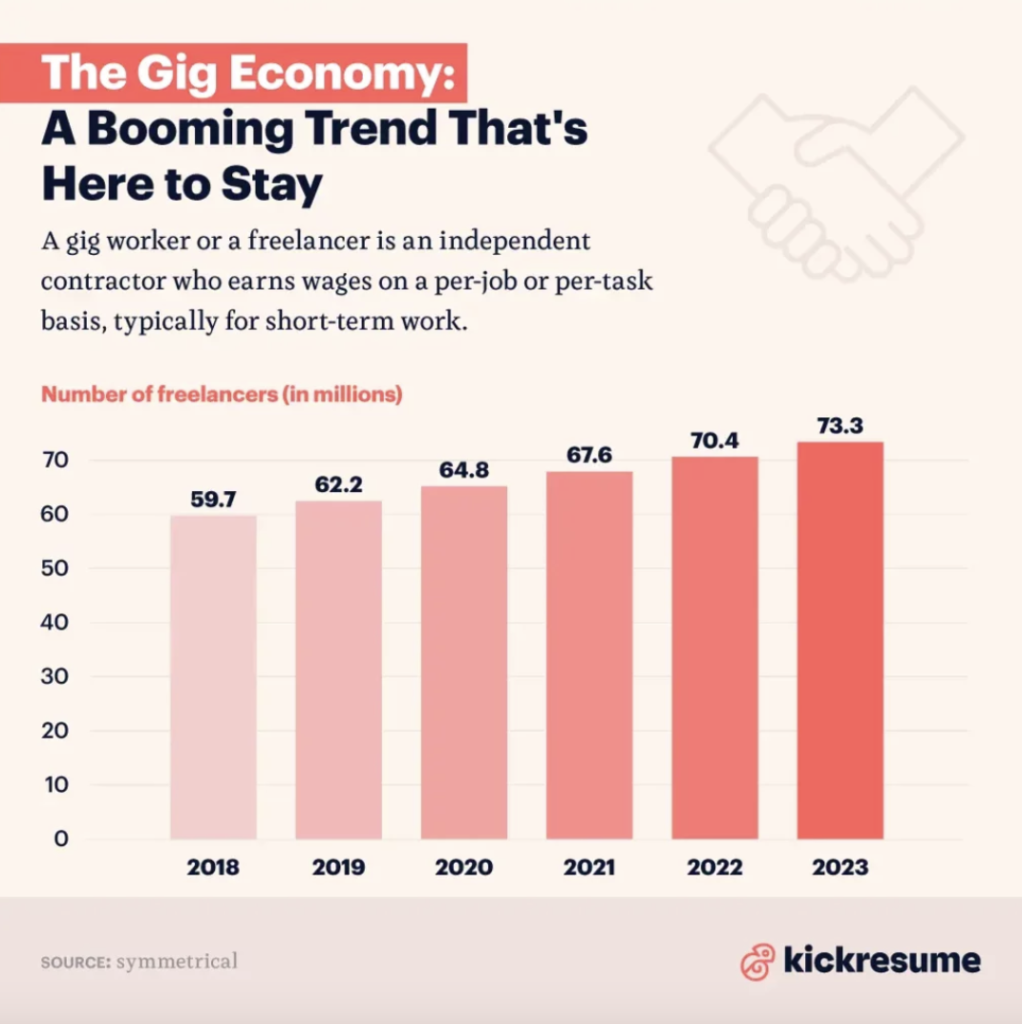
As a part of Gen Z — the generation born between 1997 and 2012 — you’re quickly becoming a powerful force in the labor market, with predictions stating that by 2030, your generation will make up more than 30% of the global workforce

With 73% of Gen Z workers in the US considering freelancing as a smart option in an uncertain economy, it’s time to gear up for success in the gig economy.

In this guide to thriving as a Gen Z freelancer, we’ll delve into why Gen Z prefers freelancing over traditional 9-5 jobs, the unique traits that define your generation, and cover essential tips to help you succeed as a freelancer.

We cover the tips in four areas, including:

  • Starting your freelancing journey
  • Attracting the right clients
  • Navigating the financial situation
  • Aligning work with your personal values

So let’s dive in, and remember, you’re more than just TikTok dances and short attention spans — Gen Z is a new wave of skilled workers ready to reshape the world of work as we know it.

Why Gen Z prefers freelancing to traditional 9 to 5 jobs

A 2023 Fiverr survey of 7,121 young individuals from around the world provides some fascinating insights into why Gen Z is tilting towards the world of freelancing.

The findings indicate that 40% of Gen Z’ers either want to freelance or own a business for their entire career. 

Surprisingly, Gen Z doesn’t view a college degree or a traditional 9-5 job as a necessity for success. A whopping 40% of you don’t believe in the need for a university degree to kick off a fruitful career, and 70% consider freelancing a viable option alongside regular 9-5 jobs.

Take a look at the infographic below for a visual representation of this growing freelancing trend in the US:

GenZ Freelancer

So, what factors contribute to this shift in career choices for the newest generation entering the workforce? 

Here are the 5 reasons why Gen Z prefers freelancing over traditional 9 to 5 jobs:

  1. Flexibility and work-life balance. You’re not into the whole office scene, and we get it. Mundane office routines, the politicking, and seemingly unnecessary rules just don’t vibe with you. Instead, you crave networking, work-life balance, and most importantly — flexibility. Freelancing ticks all those boxes, letting you live life on your terms while still getting the job done.
  2. Desire for autonomy and control over career path. Being your own boss? As a Gen Z’er, you definitely want to take charge of your career trajectory based on your passions and skills. Freelancing offers that freedom, allowing you to build a professional life that suits your goals and aspirations.
  3. Gen Z is skilled in trendy fields that aren’t big on corporate tradition. Without a doubt, your generation has got the edge when it comes to modern skills like social media content creation, podcasting, digital marketing, or video production, where conventional corporate tradition doesn’t dominate. In the ever-evolving gig economy, these modern skills are in high demand.
  4. Resistance to stuffy corporate structures. Your classic office environment and corporate ladder-climbing? No thanks. You aren’t too keen on dealing with hierarchy and would rather work in more collaborative, dynamic setups. And, freelancing allows you to work in such settings.
  5. Pursuing multiple passions and side hustles. As a Gen Z’er, you’re all about chasing your dreams and exploring diverse interests – being limited to just one career simply won’t do. Freelancing can empower you to pursue multiple passions and side hustles while continuously learning, growing, and shining across various fields of expertise.

Understanding Gen Z workers

As the latest generation to join the workforce, Gen Z exhibits qualities that set them apart from both Millennials and Boomers. 

Let’s explore the key aspects that make your generation unique in comparison to your predecessors:

  1. Prioritizing mental health. Gen Z is especially conscious of the importance of mental health and well-being in general. You’re open about mental health struggles and seek out jobs that support your emotional and psychological needs. 
  2. Emphasis on company culture and values. Your generation wants to work for organizations that align with your beliefs, contribute positively to society, and offer meaningful opportunities. 
  3. Digital natives adept at navigating technology. The upbringing in a world surrounded by technology allows you to adapt quickly to new technological advances. Your proficiency in navigating various digital tools and platforms provides you with a competitive edge in today’s increasingly digital and interconnected world. 
  4. Commitment to ethical and sustainable practices. One in six Gen Z and Millennial workers say they’ve changed job or sector due to climate concerns, and another quarter say they plan to, according to a Deloitte study. You believe your careers shouldn’t only serve personal goals but also create a positive impact on society and the environment.
  5. Importance of diversity and inclusion in the workplace. For Gen Z, diversity and inclusion are critical components of a healthy and enriching work environment. This generation values the unique perspectives, ideas, and experiences that individuals from various backgrounds bring to the table. 

Tips for Gen Z workers to succeed as a freelancers

As a Gen Z freelancer eager to flourish in the gig economy, it’s crucial to establish a solid foundation for your career right from the outset. 

To help you navigate the world of freelancing successfully, we’ve compiled key tips that cover four areas

  • Getting started with freelancing
  • Finding clients 
  • Managing finances 
  • Aligning freelance work with personal values

Let’s delve deeper into each area and explore the individual tips that can help you thrive as a freelancer:

1. Getting started with freelancing

Being the new kids on the block, Gen Z freelancers might feel a bit overwhelmed by the ins and outs of self-employment. 

But hey, look on the bright side: being the newest generation means you have the opportunity to learn from those who’ve been there and done that, dodging some common missteps. 

We’ve got your back with some essential tips to jumpstart your freelance journey:

  • Find a niche. Identifying your specialty is crucial for standing out in the competitive gig economy. Focus on enhancing and marketing the skills that set you apart and cater to a particular niche. This will help you attract clients and build a reputation for your expertise. For example, let’s say you have a passion for environmental conservation and are skilled in graphic design. By specializing in creating sustainable packaging designs, your abilities can resonate with eco-friendly brands, making you a sought-after freelancer. 
  • Research local regulations. Before diving into freelancing, familiarize yourself with local regulations and requirements that may impact your profession. For example, a freelance graphic designer in New York City may need to obtain a business permit and adhere to local tax laws. Understanding these legal complexities will help you navigate potential obstacles and operate smoothly within your region.
  • Familiarize with industry-specific regulations and licenses. Certain fields require specific licenses or adherence to industry standards. For instance, if you’re pursuing freelance work as a drone photographer, you’ll need to obtain a remote pilot certificate from the aviation regulatory authority in your country, like the FAA in the United States. 
  • Understand the self-employment tax process. As a freelancer, it’s essential to be well-versed in the tax laws and obligations applicable to self-employment. Develop a thorough understanding of deductions, quarterly tax payments, and other self-employment tax nuances to ensure compliance and minimize financial surprises.

Now that you have a firm starting point for your freelance career, let’s explore additional aspects to help you succeed in the remote gig economy.

2. Finding clients

Now that you have a solid foundation, it’s time to start building your client base

With persistence and the right outreach strategies, Gen Z freelancers can quickly gain traction in the remote gig economy. 

Here are some foolproof approaches to finding clients:

  • Explore freelancing platforms. Don’t be too quick to dismiss traditional freelance job platforms in favor of social media like TikTok. Remember, some clients, especially older folks, might still prefer using trusty websites like Upwork, Fiverr, and Freelancer to find professional freelancers rather than scrolling through social media. Keep your options open and make sure you’re visible on these sites too. 
  • Use social media smartly. Video content is super popular these days, so make sure to jump on the TikTok and Instagram Reels bandwagon. Create fun and relatable videos, like a day in the life of, show products in action, or even try short tutorials. This way, you’ll connect with potential clients on a personal level and boost your chances of getting noticed and booked.
  • Build a professional online presence. Despite today’s trend of being “real” and imperfect, don’t forget that a polished website or portfolio still matters. Older clients appreciate professionalism, so make sure to impress them with a top-notch site showcasing your skills and experiences. Demonstrate you’re trustworthy and capable of delivering quality work, regardless of age or generation.
  • Network. Don’t forget to mingle, both online and offline! Head over to forums like Reddit and join in on the conversation with like-minded pros. Attend industry events and webinars to make new friends and potential clients. Keep it real, friendly, and always follow up with people you meet. Networking can work wonders for your freelance career.
  • Create a resume. As a freelancer, having a resume may not be necessary, but it can still be a valuable tool when seeking work. A resume can showcase your skills, experience, and qualifications to potential clients. Your resume should highlight your relevant skills, projects you’ve worked on, and any certifications or training you’ve completed. It’s also a good idea to include testimonials or references from previous clients to showcase your work ethic and professionalism.

By following these client-finding tips, you’ll soon thrive as a Gen Z freelancer. The secret sauce? Stay consistent, patient, and adaptable. 

With that said, let’s explore how to handle your finances.

3. Managing finances

As a Gen Z freelancer, you’ve got the skills and the clients, but don’t forget to keep your finances in check. 

Let’s break down some essential money management tips to ensure your freelance career stays financially stable and thriving:

  • Streamline contract management. Contracts can be a headache, but they’re crucial for protecting both you and your client. Make sure you fully understand the project scope, deadlines, and payment terms, and have them clearly laid out in your contracts. 
  • Negotiate rates like a pro. Find average market rates on sites like Glassdoor and Payscale, then confidently negotiate your worth. Remember, your skills and experience deserve fair compensation.
  • Set a budget. To stay afloat, create a budget that covers everything from your daily latte to long-term savings goals. Use apps to keep track of your spending and make necessary adjustments.
  • Prepare for long-term financial stability. Even as a freelancer, plan for the future. Set up an emergency fund, contribute to a retirement account, or explore investments to secure your financial well-being down the road.

Armed with these money management tips, you’re on your way to a financially stable freelance career. 

All that’s left is to align work with your personal values for a fulfilling and sustainable life as a young freelancer.

4. Aligning freelance work with personal values

One unique aspect about Gen Z is their unwavering commitment to ethical and sustainable practices. It’s truly inspiring and sets a great example for other generations. 

With that in mind, let’s discuss how to align your freelance work with your personal values, ensuring a fulfilling and rewarding career:

  • Embrace passion projects. When selecting freelance gigs, don’t focus solely on the paycheck (or at least not ALL the time). If an exciting project comes up, even with less-than-ideal pay, consider taking it on. These passion projects enrich your freelancing journey, fuel your creativity, and make it more enjoyable. 
  • Promote ethical and sustainable practices. Be mindful of the clients and projects you take on, ensuring they align with your commitment to responsible business practices. Gen Z’s dedication to sustainability is a strength — capitalize on it and make a positive impact through your work.
  • Embrace change. As a young and ambitious freelancer, don’t hesitate to explore new avenues if your current path isn’t sparking joy anymore. Be open to change and willing to try new things to prevent burnout and maintain your passion for what you do.

With all these tips and insights, you’re now well-equipped to navigate the remote gig economy and thrive as a Gen Z freelancer.

Key takeaways: Succeeding as a Gen Z freelancer

In conclusion, freelancing truly ticks all the boxes that Gen Z expects and hopes for in the job market — offering freedom from corporate structures, better work-life balance, and the autonomy to shape your own career paths. 

As you embark on this journey, remember to focus on building a strong foundation, finding the right clients, managing your finances sensibly, and aligning your work with your personal values.

And don’t forget the key lessons we’ve covered: 

  • Find a niche you’re good at and research local regulations, 
  • Use a combination of freelance platforms and social media to find clients, 
  • Negotiate your worth and pay attention to contracts, 
  • And, don’t lose sight of the bigger picture — creating a fulfilling.

Photo by Per Lööv on Unsplash

This article was provided by;

Klara Cervenanska is a Career Writer at Kickresume, a professional AI resume builder trusted by 2.5M+ job seekers. Her advice articles are always thoroughly researched to provide the most up-to-date and relevant advice, which is why her pieces often rank among the most-read on the blog.

How To Use ChatGPT/AI to Get a Job: The Ultimate Guide

How To Use ChatGPT/AI to Get a Job: The Ultimate Guide

How To Use ChatGPT/AI to Get a Job: The Ultimate Guide

As the digital world and technology evolve, you can use AI to get a job of your choice. Since ChatGPT4 was released in March 2023, there has been immense hype surrounding artificial intelligence and how it will affect the world. 

That said, one thing is for sure: AI has already impacted the recruitment industry. 

For instance, AI is causing faster resume screening, candidate sourcing, bias reduction, skill assessments, and performance analysis. In turn, this will make recruitment much more straightforward for companies globally. 

Furthermore, 67% of recruiters say AI has improved hiring and 96% of senior HR professionals say AI will significantly boost talent. 

In this article, we’ll show you the top 10 AI tools for finding jobs right now and how to use ChatGPT/AI to get a job:

The Best AI Tools for Finding Jobs

  • Cost: GrabJobs has both free and premium tools to help candidates find jobs and companies find candidates. 
  • Benefits: GrabJobs has an interview ChatGPT4 chatbot, strong applicant tracking systems, and interviewing scheduling solutions. 
  • Drawbacks: GrabJobs isn’t as big as many other job boards using AI, so options may be slightly smaller. 
  • Who is it for? GrabJobs is ideal for anyone seeking roles in various industries with the help of AI to streamline job hunting. 
  • Overall info: GrabJobs is a leading platform in Singapore that has utilized AI to streamline the job application process. If you want to use AI to get a job, working with GrabJobs is a solid choice. 
  • Cost: Indeed is free for job seekers, but paid options are available for employers. 
  • Benefits: Indeed offers AI-powered algorithms to help match candidates with relevant job opportunities. It’s one of the best AI tools for job seekers. 
  • Drawbacks: A drawback of Indeed is the limited visibility of application status because it depends on individual employers’ systems.
  • Who is it for? Indeed is ideal for job seekers looking for diverse opportunities and employers of all sizes.
  • Overall info: Indeed is a popular job search platform that uses AI to connect job seekers with employers. It also offers a user-friendly interface and powerful search capabilities. If you’re using AI to find a job, Indeed is a good shout. 
  • Cost: Glassdoor is completely free to use.
  • Benefits: The benefits of using Glassdoor are how it provides job listings, salary information, and company reviews. Also, AI-powered algorithms offer personalized job recommendations based on your profile. It’s one of the best AI tools for job seekers. 
  • Drawbacks: A significant drawback of Glassdoor is the limited access to certain features without creating an account.
  • Who is it for? Glassdoor is ideal for job seekers looking for insights into company culture, salaries, and job opportunities.
  • Overall info: Glassdoor is a popular platform that leverages AI to offer job seekers a combination of job listings, company information, and employee reviews.
  • Cost: If you’re looking for a free tool, Interviewing.io is ideal. 
  • Benefits: Interviewing.io offers AI-powered mock interviews and feedback from experienced interviewers. As such, this will help you improve your interviewing skills.
  • Drawbacks: A big downside of Interviewing.io is the limited availability of interview slots and feedback sessions.
  • Who is it for? Job seekers looking to enhance their interviewing skills and gain insights from industry experts with AI assistance. 
  • Overall info: Interviewing.io provides a platform for job seekers to practice technical interviews with AI-powered mock interviews and receive feedback from seasoned interviewers.
  • Cost: Do you need a free tool? If so, ZipRecruiter is free for job seekers.
  • Benefits: ZipRecruiter utilizes AI algorithms to match your skills and choices with solid job listings, providing personalized recommendations with AI assistance. 
  • Drawbacks: Some job listings may redirect to external websites for application, leading to varied application experiences.
  • Who is it for? ZipRecruiter is ideal for job seekers seeking a user-friendly platform with AI-driven job-matching technology.
  • Overall info: ZipRecruiter is an AI-powered job search platform that helps candidates find relevant job possibilities based on their skills, location, and choices.
  • Cost: TalenWorks makes a free basic plan available; however, premium plans with additional features are available.
  • Benefits: TalentWorks uses AI algorithms to investigate job applications and offer insights and guidance to improve your chances of getting an interview.
  • Drawbacks: Some of the top features are limited to premium plans.
  • Who is it for? TalentWorks is tremendous for job seekers seeking data-driven insights and top strategies for their job applications.
  • Overall info: TalentWorks offers an AI tool that analyzes job applications, provides personalized recommendations, and helps job seekers boost their possibilities of landing an interview.
  • Cost: Jobscan is a freemium model with additional paid plans for advanced features.
  • Benefits: Jobscan is a popular AI-powered tool that analyzes your resume and job descriptions. In turn, this provides insights and suggestions to boost your resume’s match rate with companies.
  • Drawbacks: Advanced features are only available in paid plans, making the free plan somewhat limited. 
  • Who is it for? The AI model is ideal for job seekers looking to optimize their resumes for applicant tracking systems (ATS) and boost their chances of getting spotted.
  • Overall info: Jobscan is an AI tool that helps candidates polish their resumes by comparing them to job descriptions and providing recommendations for better ATS compatibility.
  • Cost: Resymatch is free to use for job hunters. 
  • Benefits: Resymatch is an AI-powered tool that looks at job descriptions and resumes, thus giving insights and recommendations to improve resume quality and job matching. 
  • Drawbacks: The limited availability of advanced features compared to other paid alternatives in this article is a major downside. 
  • Who is it for? Job seekers are looking to upgrade their resumes and boost their chances of getting spotted by applicant tracking systems (ATS).
  • Overall info: ResyMatch is an AI tool that helps job seekers improve their resume quality by looking at job descriptions and giving help for better ATS compatibility.
  • Cost: PathRise is an excellent paid program with a deferred tuition model.
  • Benefits: PathRise uses an AI-driven career accelerator program to offer personalized coaching, interview practice, and job search help for tech industry professionals.
  • Drawbacks: The program focuses on the tech industry and requires a financial commitment. However, it’s not suitable for other sectors. 
  • Who is it for? Pathrise is tremendous for job seekers in the tech industry wanting personalized career guidance and mentorship through AI guidance. 
  • Overall info: Pathrise is an AI-driven career accelerator that supports job seekers in the tech industry through one-to-one coaching, interview preparation, and job search assistance.
  • Cost: Jobjet makes the free trial available; however, pricing is available upon request.
  • Benefits: Jobjet uses AI and data analytics to help job seekers find contact information for hiring managers and recruiters, thus allowing crucial direct outreach.
  • Drawbacks: Full access to advanced features requires a paid subscription, making it a more costly AI tool for finding jobs. 
  • Who is it for? Job seekers who want to enhance their networking efforts and directly connect with hiring professionals with AI technology help. 
  • Overall info: Jobjet is an AI tool that assists job seekers in finding accurate contact information for hiring managers and recruiters—enabling clear, direct communication.

How Do I Use AI to Find a New Job?

Improved Cover Letters

GrabJobs is an excellent platform with AI capabilities for helping you improve your cover letters. The platform has robust ATS tracking systems and many jobs in various industries. As such, you can tailor your cover letter for these roles and use AI to get a job. 

Although Grammarly is primarily known for its grammar and spell-checking capabilities—its AI-powered writing assistant can boost the quality and clarity of cover letters. For example, it provides suggestions for cleaning up your sentence structure, word choice, and readability.

Would you like something else to write your cover letter? Skillroads is an AI-powered platform with automated cover letter writing services. For instance, it uses AI algorithms to generate personalized cover letters based on skills, experience, and job needs.

Rezi is an AI-powered resume and cover letter builder for optimized and tailored cover letters. The AI platform provides content suggestions and keyword optimization to create compelling cover letters. 

You’ve probably heard of ChatGPT4 in recent months, right? It’s exploded in popularity, but do you use ChatGPT to find a job? ChatGPT-4—an advanced language model—can assist with cover letters in various ways by providing suggestions and ideas based on the information you provide. It can tailor the cover letter for any industry. 

WriteLab is an AI-driven writing assistant that analyzes your cover letter and offers suggestions to enhance grammar, style, and coherence, making it more compelling. For many people, their writing may seem awkward, clunky, and wordy. With the help of an AI tool like WriteLab, you can ensure the cover letters read like a treat. 

Another superb option is the Reedsy Book Editor. Although primarily crafted for book editing—Reedsy Book Editor is superb for enhancing cover letters. The service offers many features, such as grammar and style suggestions and formatting options to give a polished and professional cover letter.

GrabJobs is a Singapore-based AI-optimized job platform with a vast pool of jobs and employers. As a result, candidates can look through the platform to see what employers want and tailor their resume to their needs. 

TopResume is a professional resume-writing company with an AI-powered resume review. The service gives an analysis of your resume—including feedback on the format, overall effectiveness, and content. As such, the service aims to help job seekers identify areas for improvement and optimize their resumes.

Jobscan is an AI tool for optimizing resumes for applicant tracking systems (ATS). The service compares your resume versus job descriptions, before evaluating its ATS compatibility and providing feedback on how to improve the match rate.

Resunate is an AI-powered resume optimization platform. The company analyzes your resume based on specific job postings. Then, it offers guidance on improving content, format, and ATS compatibility. 

CVScan is an excellent AI-driven resume analysis tool to match your resume against job descriptions. The service evaluates your resume’s relevance and matches it with the preferred job requirements. After that, it will give feedback and suggestions for improvement.

VMock is another great platform for enhancing resumes. The platform offers instant AI-powered feedback on structure, content, and formatting, making it a fast and effective tool. 

ResyMatch is an AI-driven resume analysis tool with a resume check option. The AI tool compares your resume to job descriptions, compares its compatibility with applicant tracking systems (ATS), and provides recommendations to get a stronger match rate. It’s a great way to use AI to get a job. 

AI Job Matching Tools

GrabJobs is an AI-optimized job board that can help you find the best employers in the right industries. By using its solid ATS tracking system, you can save time, hassle, and stress, and use AI to get a job. 

JobDiva is a cloud-based talent acquisition and applicant tracking system (ATS). In addition, it offers real-time job matching and automation features to streamline the recruitment process for candidates via AI job matching. 

WorkFusion provides an AI-driven automation platform with job-matching capabilities. The service uses natural language processing (NLP) and machine learning to analyze job descriptions, candidate profiles, and resumes to link candidates with the best opportunities. 

Textkernel provides AI and machine learning solutions for recruitment and HR processes. Their technology enables semantic search and matching of job seekers with job vacancies. It analyzes resumes and job descriptions to find the best-fit candidates for specific roles.

Eightfold is an AI talent intelligence platform with robust job-matching capabilities. The company uses deep learning algorithms to analyze candidate profiles, skills data, and job requirements to offer personalized job recommendations. It can save candidates tons of time. 

If you’re working in the tech space, Woo.io could be your best friend. The company uses machine learning algorithms to analyze candidate skills, experience, and preferences. It then matches them with the right opportunities. 

Do you work in retail or the service space? Plum is an AI-powered platform specializing in job matching for the retail and service industry. 

Use AI Tools to Find Your Dream Job Now

Whether we live it or not, AI is here to stay and it’s going to impact the recruitment market hugely. You can already use the technology to improve your job-hunting process, including saved time, better matching, and stronger writing skills. 

AI is already a friend for job hunters, and you should start using AI to help find a job.

Photo by Mohamed Nohassi on Unsplash  

The Rise of Remote Work: Effective Collaboration Tips for Developers

The Rise of Remote Work: Effective Collaboration Tips for Developers

The Rise of Remote Work: Effective Collaboration Tips for Developers

In recent years, remote work has experienced an unprecedented surge in popularity, revolutionizing the way people approach their professional lives. Enabled by advancements in technology and shifting work culture, the rise of remote work has transformed the modern workforce. This paradigm shift has brought about numerous benefits and challenges, reshaping traditional notions of productivity, collaboration, and work-life balance.

The Main Reasons Behind the Rise of Remote Work

Remote work offers a multitude of advantages for both employees and employers. The flexibility it provides empowers individuals to design their work environments and schedules, leading to increased autonomy and improved work-life integration. Commute-free mornings, customizable workspaces, and the ability to be closer to loved ones have proven to enhance overall job satisfaction and well-being.

From an employer’s perspective, remote work opens doors to a global talent pool, facilitating the recruitment of top-notch professionals irrespective of geographical constraints. Additionally, businesses embracing remote work can reduce office-related expenses, foster employee retention, and enhance their environmental sustainability efforts.

Development of Technology

One of the things that greatly facilitated the rise of remote work in the last few years is technological advancement. High-speed Internet connectivity, cloud-based collaboration tools, project management platforms, and video conferencing solutions have bridged the gaps between geographically dispersed teams. This seamless communication infrastructure has made remote work possible, enabling real-time collaboration, knowledge sharing, and virtual face-to-face interactions.

Cultural Shift

The rise of remote work can be attributed to a cultural shift in how work is perceived. Traditional notions of productivity based on strict office hours and physical presence are being challenged. The modern workforce increasingly values flexibility, work-life balance, and the ability to work in environments conducive to individual productivity.

Moreover, as millennials and Generation Z comprise a growing portion of the workforce, their digital-native upbringing has facilitated the seamless integration of technology into their professional lives. These generations prioritize work-life integration and actively seek out companies that offer remote work options.

Reshaping Collaboration Dynamics

Collaboration lies at the heart of successful remote work environments. While physical proximity may no longer be a requirement, effective collaboration remains essential. Virtual communication channels, project management platforms, and video conferencing tools have become the pillars of remote collaboration, fostering communication, knowledge sharing, and teamwork. Remote teams are mastering the art of asynchronous collaboration, adapting to different time zones, and leveraging technology to bridge the distance.

Challenges of Remote Work

Despite its advantages, remote work also presents challenges. Isolation and lack of face-to-face interactions can affect employee well-being and hinder team cohesion. It requires individuals to cultivate strong self-discipline, time management skills, and effective communication to ensure clarity and avoid misinterpretation.

Furthermore, companies must adapt their management and leadership strategies to effectively manage remote teams. Establishing clear expectations, providing support, and promoting a culture of trust and accountability are crucial for remote team success.

Additionally, team members must be prepared for effective communication in such circumstances. For instance, if an employee works for a telehealth development company, they need to stay in constant communication with other developers and departments to ensure the delivery of a high-quality product to the end users.

Why Is Remote Work So Popular?

In the last few years, more and more companies prefer to work remotely rather than in offices. Remote work has gained popularity for several reasons, including:

  • Flexibility. Remote work grants employees greater autonomy in managing their work schedules. They have the flexibility to decide both the time and location of their work, which promotes a better work-life balance. This level of flexibility proves particularly advantageous for individuals with personal commitments, such as childcare or eldercare responsibilities.
  • Increased productivity. Many studies have shown that remote workers are often more productive compared to their in-office counterparts. Remote employees have fewer distractions and interruptions, can create a personalized work environment, and have the liberty to organize their day according to their peak productivity periods.
  • Cost savings. For both employers and employees, remote work can lead to cost savings. Employees save on commuting expenses, work attire, and meals outside the home. Employers can reduce costs associated with office space, utilities, and other overhead expenses. Additionally, companies can achieve further cost savings by implementing custom HR solutions tailored to remote work environments. These solutions can streamline processes such as employee onboarding as well as time and attendance tracking.
  • Access to a wider talent pool. Remote work enables companies to access a diverse talent pool on a global scale. They are not limited by geographic boundaries when hiring, enabling them to find the best talent regardless of location. This opens up opportunities for diverse perspectives and skills, which can positively impact innovation and problem-solving. 
  • Reduced environmental impact. With fewer people commuting and fewer office spaces being used, remote work has a positive impact on the environment. It reduces carbon emissions from transportation and lowers energy consumption in office buildings. Remote work contributes to sustainability efforts and aligns with the goals of reducing the carbon footprint
  • Reduced environmental impact. With fewer people commuting and fewer office spaces being used, remote work has a positive impact on the environment. It reduces carbon emissions from transportation and lowers energy consumption in office buildings. Remote work contributes to sustainability efforts and aligns with the goals of reducing the carbon footprint
  • Technological advancements. Successfully managing projects in today’s remote work environments requires a strategic approach that embraces technology and effective communication. As we have already mentioned, advancements in technology have made remote work more accessible and efficient. High-speed internet, cloud-based collaboration tools, video conferencing, mobile technology, cloud computing, the development of AI, and much more have strongly impacted remote work environments. It made the work more effective and structure and communication way more simple and convenient.
  • Resilience and business continuity. The adoption of remote work has emerged as a successful approach to maintaining business continuity during unexpected events like natural disasters, pandemics, or emergencies. Companies that have embraced remote work were better equipped to adapt and ensure uninterrupted operations in the face of such disruptions.

In general, the popularity of remote work arises from its capacity to offer flexibility, enhance productivity, lower costs, tap into a broader talent pool, and foster a positive work environment. The evident benefits of remote work have resulted in its extensive adoption by both companies and individuals.

Collaboration Tips

The rise of remote work has transformed the way developers collaborate on projects. Despite the numerous advantages of remote work, including flexibility and increased productivity, it also presents unique challenges when it comes to collaboration. Here are some effective collaboration tips for developers working remotely.

Communication Is Key

Establish clear channels of communication with your team. Utilize messaging platforms like Slack or Microsoft Teams for quick and informal conversations, and leverage video conferencing tools like Zoom or Google Meet for more in-depth discussions. Regularly communicate project updates, share ideas, and address any roadblocks.

Set Clear Expectations

Define project goals, timelines, and individual responsibilities upfront. Make sure everyone understands their roles and deliverables. Establish guidelines for availability and response times to avoid miscommunication or delays. That way, your workflow will be more structured, and each employee will be aware of their responsibilities and deadlines.

Foster A Culture of Transparency

Remote teams benefit from transparency. Promote an environment of open communication, fostering a sense of comfort in sharing progress, challenges, and ideas. Foster an environment where feedback is valued, and encourage regular check-ins or stand-up meetings to discuss progress.

Document and Share Knowledge

Use collaboration tools like Confluence, Notion, or Google Docs to document project information, code snippets, and important decisions. Create a centralized repository of knowledge that is easily accessible to the team. This helps remote developers stay informed and reduces the dependency on individual team members for information.

Version Control and Code Collaboration

Utilize version control systems like Git to manage the codebase effectively. Collaborative platforms like GitHub or GitLab enable seamless code collaboration, allowing multiple developers to work on the same project simultaneously. Establish branching strategies and code review processes to maintain code quality.

Additionally, incorporating a collaborative SQL editor into your development workflow can enhance teamwork and streamline database-related tasks. With features like real-time collaboration, query sharing, and synchronized editing, a collaborative SQL editor empowers developers to work together efficiently and effectively, ensuring code quality and accelerating project delivery.

Embrace Asynchronous Communication

As remote teams often span across different time zones, not everyone will be available simultaneously. Embrace asynchronous communication by using project management tools like Jira or Trello to track tasks, updates, and discussions. This allows team members to contribute at their own pace and minimizes dependency on real-time interactions.

Schedule Regular Video Meetings

While asynchronous communication is valuable, it’s essential to have regular video meetings for team bonding and high-level discussions. This helps build rapport, foster a sense of connection, and resolve complex issues that require real-time collaboration.

Use Screen-sharing and Pair Programming

Remote developers can leverage screen-sharing tools like Zoom or TeamViewer to facilitate pair programming sessions. This allows developers to collaborate on code in real time, share knowledge, and troubleshoot issues together.

Foster a Sense of Community

Remote work can sometimes feel isolating. Encourage social interactions among team members through virtual coffee breaks, team-building activities, or online forums. This fosters a sense of community and strengthens team bonds.

To foster even stronger connections within your remote team, encourage discussions on a variety of topics beyond work projects. This can include engaging in conversations about industry news, emerging trends, or the application of AI technologies in your field. By creating space for such discussions, you promote knowledge sharing, stimulate innovative thinking, and establish a sense of camaraderie among team members.

Prioritize Self-care and Work-life Balance

In remote work scenarios, the boundaries between personal and professional life can become blurred. It is extremely important to ensure that your team members establish a healthy work-life balance by setting explicit expectations, advocating for regular breaks, and discouraging excessive overtime.

Embrace Collaboration Tools

Leverage collaboration tools and platforms specific to software development, such as project management software, code repositories, issue-tracking systems, and collaborative coding environments. These tools streamline communication, code sharing, and project management, enhancing collaboration efficiency.

Agile Project Management

Adopt agile project management methodologies like Scrum or Kanban to facilitate collaboration. Break down tasks into manageable units, hold regular stand-up meetings to discuss progress and blockers, and maintain a shared task board or project management tool to track work and assign responsibilities. 

Apply Automation Tools if Possible

Free up your team for important tasks. Using automation tools to optimize routine activities for social media, design, client support, you name it, is a great creativity booster. This way you can avoid overstaffing, deal with employee burnout, and, as a bonus, save your budget for future growth.

By implementing these collaboration tips, developers can effectively work together remotely, maintain productivity, and deliver successful projects.

Summing Up

The rise of remote work has ushered in a new era for the modern workforce. Enabled by technology and driven by evolving expectations, remote work offers unprecedented flexibility, productivity, and global collaboration opportunities. As remote work becomes the new norm, individuals and organizations must adapt, embrace new ways of working, and harness the potential of this transformative trend. By doing so, they can unlock the immense benefits of remote work while addressing the challenges it presents, shaping a future where location is no longer a barrier to professional success.

Photo by Simon Abrams on Unsplash

This article was provided by;

Dmytro Sokhach is an entrepreneur and the 6-Figure Flipper Club member. Founded Admix Global (web agency) that builds websites, makes them profitable, and sells them as business

Which Emotional Needs Can Be Fulfilled By a Job?

Which Emotional Needs Can Be Fulfilled By a Job

Which Emotional Needs Can Be Fulfilled By a Job?

We spend about a third of our lives at work. This equals roughly 90 000 hours spent earning a living. It goes without saying that it is in our best interest to ensure our working environment is healthy.

But what is a healthy working environment? Ideally, it would be one that fulfils our basic emotional needs. 

The importance of fulfilling emotional needs in a relationship is commonly discussed. But the fact that said needs should also be met in professional life remains omitted.

The truth is, it is crucial to pay attention to emotional needs at work. Here are a few ideas of how they can be met in the professional context.

What are emotional needs?

Let’s start by defining emotional needs. Emotional needs are all the conditions which have to be met in order to provide a good level of overall satisfaction. 

The term itself is very broad, and; therefore, emotional needs will be very different for every person. While there is a general indication of what everyone requires to be happy, every factor will carry varying levels of significance for each individual. It all depends on our personalities, goals, and preferences.

For the purposes of this article, we are going to define the basic human emotional needs following the model created by Abraham Maslow, an American psychologist. Maslow’s Hierarchy of Needs divides them into 5 categories:

Maslow's Hierarchy of Needs

The two top levels of the pyramid representing self-actualisation and self-esteem are the most relevant in the professional context. However, certain needs from the area of safety and security and love and belonging could be applied as well. 

Which emotional needs can be fulfilled by a job?

We will start at the top of the pyramid and make our way down. 

Self-actualisation

1. Creativity

Different professions come with varying levels of creativity applied on a daily basis. For example, positions in the art sector, graphic design, or marketing, will require more creative abilities than, say, bookkeeping or accounting. 

However, that is not to say that only openly creative jobs provide any sort of creative outlet. All kinds of professions require some dose of creativity – even the most unsuspecting ones.

Teaching. Engineering. Construction. Science. Neither of those sectors is probably the first to come to mind when thinking about creativity, but all of them require huge doses of it, once we think about it deeper. 

No matter your personal preferences and professional qualifications, your job should allow you to express at least a minimal amount of creativity to ensure a balanced fulfilment of all emotional needs. 

2. Acceptance

No matter whether we want to admit it or not, all humans are driven by an intrinsic need to be accepted. Some experience it in a more significant way than others, but even those who like standing out have to feel they belong in at least one social context.

A working environment which is not accepting is a toxic one. The workplace should be somewhere everyone feels safe pitching ideas, expressing their views, and exchanging advice. It is impossible to always agree with everybody and accept everyone’s suggestions, but at the same time, no one should feel irrelevant. 

Even if professional relations are only limited to working hours and there is no interest in taking them outside of the office, each employee should, at the very least, experience acceptance from their colleagues for the duration of the working day.

3. Experience

A key term in the professional world. We all need to feel that all the years we have spent working contribute to our experience in all aspects – skills, knowledge, industry insights. 

The longer we have been doing something, the more familiar we become with it. This leads to an increase in our overall competence in that area which, in turn, improves our confidence.

While it is important to constantly develop and step outside of our comfort zone once in a while, we shouldn’t neglect the importance of doing things we are experienced in – in which we feel comfortable and which bring us joy.

4. Purpose

Without a doubt, work is one of the main factors providing purpose for many people. Yes, we all often dream of a life consisting of constant holidays, living outside of the daily routine, and doing whatever we want, whenever we want.

But the truth is, all human beings need structure. Even the most chaotic souls require some kind of pattern in their life. Getting up to work is what brings many of us purpose.

If you don’t feel like your job does it for you, then maybe it’s a sign it is time for a career change. We shouldn’t compare professions based on their value in society – your job is valid, as long as it provides you with a feeling of purpose and meets your emotional needs. 

If that is lost and you realise you have been operating on autopilot, you should take steps towards satisfying this particular need once again.

5. Meaning

At the end of the day, we all want to know that what we are doing makes sense. Nobody likes completing tasks just for the sake of getting them out of the way. 

If we don’t feel like what we do has meaning, we will lose all purpose. This will result in neglecting two crucial emotional needs at the same time. 

Your job should come with a sense of meaning. Again, it is not a matter of comparing yourself to others – as long as what you’re doing makes sense to you, you should keep going. The moment it stops is a signal that maybe a change is necessary.

6. Inner potential

Everybody is talented at something. Ideally, our jobs will reflect those talents and help us reach our full potential in order to meet our emotional needs.

The professional environment is the ideal place to spread our wings and demonstrate our worth. It is in the employer’s best interest to provide employees with training and other opportunities to develop. Upskilling is a crucial element of a successful career path. 

If you feel like your job does not provide enough opportunities for professional growth or is not connected to your area of expertise, looking for a new one might be the right step towards meeting your emotional needs.

Self-esteem

1. Confidence

Professional accomplishments play a huge part in boosting our confidence. Of course, work-related success is not crucial to achieving overall satisfaction with who we are and where we are in life. But having a job we consider good (whatever that means to each individual) can vastly contribute to how proud we are of ourselves. 

A good way to ensure your job meets your emotional need of confidence is verifying whether it offers career advancement options, such as promotions. There is no better confidence booster than being entrusted with more responsibility – and offered more money to go along with it.

2. Achievement

Your career path should not be flat. On average, people are expected to change careers 7 times in their lifetime. This means that if your current employer refuses to express your value as an employee by addressing your accomplishments in the form of a pay rise or a promotion, you should look for one that will. 

It can be extremely discouraging to keep on working for years without being rewarded once. A job without prospects can be damaging to our emotional needs and negatively impact our quality of life – not to mention ruin your self-worth.

If your current position does not offer opportunities to climb up the ladder, finding a more prestigious one somewhere else is an achievement on its own. 

3. Respect of others

It goes without saying that mutual respect is a non-negotiable requirement of a healthy working environment. Your job should fulfil this particular emotional need above all others.

Of course, it must be said that no type of job should impact the amount of respect we receive outside of the workplace. The notion that certain professions are more “noble” than others will hopefully soon become nothing but a dark memory of the past. Every worker deserves equal respect, regardless of their job or position in the hierarchy. 

If you do not feel respected in your workplace, reconsider whether staying there is worth it. Many of us might not want to admit it, but the respect of others is a very crucial emotional need. Its absence may weigh heavily on your happiness and carry long-term consequences, so remember that your mental health is not worth staying somewhere lacking mutual respect.

4. The need to be a unique individual

Certain environments, especially in large, multinational enterprises, may make us feel like just a number among many. The notion of being nothing more but a replaceable part of a well-oiled machine is damaging to our self-value.

While it is not possible for everyone to know everyone’s names in a big business, that does not mean you should go to work every day wondering if anyone would even notice if you didn’t show up. If that is the case, your workplace is failing to meet this particular emotional need.

The reason why employees are divided into teams is to ensure tighter micro-communities. Even if your accomplishments may not be possibly acknowledged by the very top, they should be celebrated in your immediate team. 

Every employee brings a different point of view and input into the general performance of a company. Your value as an individual should be made clear both to those around you, and to yourself. 

Love and belonging

1. A sense of connection

Again, we spend a significant part of our lives at work. Even if we prefer the company of our family and friends, given how much time we spend with our colleagues, it is in our best interest to form some kind of bond with at least a few of them.

Even the most introverted of us need a sense of connection – it’s just how humans are built. Spending a few hours every day in a place where we don’t feel like we belong is a source of unnecessary stress.

Forming bonds with colleagues also contributes to an increase in productivity and efficiency as a team. 91% of employees agree that team members who learn new skills together are more successful – both as part of a team and as individuals.

Safety and security

1. Resources / financial stability

Struggling to make ends meet is a huge stressing factor. We all experience instances when there is too much month left at the end of the money, but dealing with this issue for longer stretches of time can have a significant impact on one’s mental health.

Your job should provide you with enough means to ensure a decent life. This is especially important in the current times of recession and mass layoffs. 

When your salary no longer keeps up with the rising costs of living, there are two options to consider. One, negotiate a raise with your boss. Or, if that does not work or is impossible for whichever reason, look for a better-paid position. 

Both prospects are nerve-racking – the latter possibly even more than the former. However, it is arguably even harder to worry about your finances every waking moment. Your work has its value and you deserve to be accurately compensated for it.

Summing Up

Not only all of the emotional needs described above can be fulfilled at work – they also should be fulfilled at work. The hierarchy of importance among them is a very subjective matter. However, we should take care to meet as many of them as possible to ensure balanced well-being.

Meeting our emotional needs is not only our personal task, but also that of our employer. The perfect workplace doesn’t exist, but everything has its limits. If you feel like one or more of your emotional needs are heavily suffering due to your job, it might be worth considering looking for new opportunities.

This article was provided by;

Europe Language Jobs is the leading international job board helping job seekers find positions with languages in Europe. We list job offers in various sectors, in 48 countries and with 57 languages. We make relocation possible by ensuring effective job search and providing advice on career and expat life.

The Benefits of Internships and Work Experience Programs for Job Seekers

The Benefits of Internships and Work Experience Programs for Job Seekers

The Benefits of Internships and Work Experience Programs for Job Seekers

The process of finding a job has never been easy, especially if it’s your first work experience. Thankfully, today, many companies offer internship programs that are not as profitable as regular working spots, but they allow you to gain more experience and get acquainted with how everything works in the business world. 

Moreover, if you’re changing the field you work in, the internship and work experience programs might become a great base to develop new skills and get used to the new environment. Today, we want to discuss in more detail what these programs are and how they can benefit you. So, if you’re eager to learn more, keep reading!

What Are Internship and Work Experience Programs?

Many of you might have heard about internships, but not all people fully understand the main purpose of these programs. So, let’s figure it out together.

Basically, a company or an organization offers this type of program to individuals, typically students or fresh graduates, who aim to obtain practical experience in a particular industry or field. Internship programs may be of different types, some are paid, and some are not. Their duration is different as well. Typically it may last a few weeks or months.

The primary purpose of all these work experience programs is to give hands-on training and exposure to the work environment. 

  • They are often structured with specific goals and objectives, and interns may be involved in both project-based work and general operations of the organization. 
  • They work under the supervision of a mentor or manager who provides guidance and feedback to help them develop their skills.

Today, you can find internship programs practically in any field, including business, engineering, healthcare, and education, among others. They are an excellent way for individuals to acquire practical experience, learn new skills, and establish professional networks that can assist them in future job opportunities.

Work experience programs benefit both interns and organizations. They offer interns a valuable opportunity to learn and gain exposure to their preferred industry or field. For organizations, internship programs provide the chance to train prospective future employees, gain a fresh perspective on things, and provide a valuable opportunity for individuals to obtain work experience while giving back to the community.

The Main Benefits of Internship Programs

Now that you understand what an internship program is, it’s time to talk more about the benefits it can offer you. We outlined some of the greatest ones below.

Gaining Practical Experience

One of the greatest benefits of applying to an internship program is the possibility of gaining actual experience in the field.

While academic instruction focuses mainly on theories and concepts, internship programs offer a unique learning experience that is hands-on and practical. Interns have the chance to apply their knowledge and skills in real-world scenarios, which enhances their understanding and ability to deal with workplace issues. 

When participating in internship programs, you get the opportunity to work with masters in their field. Usually, professionals share their tips and expertise, providing valuable guidance on navigating the industry and developing crucial skills for success in the field. They’ll become your mentors who will give feedback on your performance and advice on how to improve it.

Building Network

The next point that can really benefit you in your future career is if you have a solid professional network. 

Work experience programs offer an excellent opportunity for job seekers to form a professional network in their working field. When participating in this kind of problem, they have a chance to work with people of various statuses – starting from fellow interns to professionals that can become their mentors. By establishing a connection with these people, participants can really help their future careers.

In addition, interns have the opportunity to enter different conferences and events that their company is included in. These events allow them to meet new people that are working in their field and learn some useful information from them. Plus, by attending, interns gain tons of valuable insights and have the ability to explore different perspectives that can benefit them in their future roles.

Moreover, having a strong professional network is crucial for career growth, and cloud-based HR software can play a significant role in facilitating connections and collaboration among professionals within an organization.

Developing New Skills

When people are looking for their first position, they usually have lots of knowledge and a minimum of practical skills. Applying for internship programs enables them to develop new skills that might get useful in the future.

Furthermore, interns are often tasked with specific projects or assignments that require them to develop new skills, such as communication, project management, and problem-solving. Working alongside experienced professionals allows interns to observe how these skills are applied in real-world situations and to learn new techniques and best practices.

Internship programs also offer a safe space for individuals to experiment with new ideas and approaches to problem-solving without the fear of making mistakes. While being guided and supported by their mentors, interns can take calculated risks and explore different approaches, which may result in unusual decisions and new ways of thinking.

Job Opportunities

After participating in one or a few work experience programs, the chances to get a spot in a big company are becoming much higher. Through the hands-on experience gained during an internship, interns can showcase that they possess all the necessary skills and expertise in their sphere. This experience can set them apart from other job applicants who may only have academic qualifications.

Moreover, most of these work experience programs give interns an opportunity to participate in actual real-life projects that are directly related to their future roles. If they succeed in their task, it might put them before their competitors for the spot in any company.

In addition to gaining valuable work experience, interns can also leverage their earnings to explore investment opportunities and build financial independence. The internship payment may not be enough to buy a car or real estate, but there are longer term options.

Career Test Drive

Have you ever been in a situation where you started some task and ended up not liking it in the end? If yes, you know how frustrating and demotivating it might be. You might have high expectations for a certain job position but get disappointed after trying it out. Taking part in an internship program gives you a great opportunity to kind of test-drive your potential career before applying for a full-time job.

First of all, you can understand whether you prefer to work in a team or by yourself. Also, you can figure out whether you like remote work or office job more. Plus, when being an intern, you can try yourself out in different roles and decide which one suits you more.

Improving Your CV

An internship program can be a valuable opportunity for individuals looking to enhance their professional skill set and improve their resumes. Most employees are seeking people with at least minimal experience in the field. So, they would prefer someone with practical skills rather than just theoretical knowledge.

Employers view internships as a valuable means of evaluating a candidate’s potential, and they often look favorably upon individuals who have participated in internship programs. The reason for that is the fact that these programs can help individuals develop soft skills such as communication, teamwork, and time management, which are essential for success in any professional setting.

Increased Confidence

Last but not least, participation in various work experience programs can really help you boost your confidence levels. Applying for a new spot can be quite nerve-wracking, as you never know what to expect. Knowing something in theory and actually applying it in practice differs a lot. You might lack confidence in your first steps in the workplace which may lead to poor performance.

If you want to develop your skills and gain more knowledge, taking part in an internship program can really help you. That way, you’ll have more opportunities and time to learn from professionals.

Summing Up

Overall, internships and work experience programs provide amazing opportunities for those who are looking for a job to gain one-in-a-lifetime experience, build professional networks, and increase their chances of getting hired. These programs offer many benefits that can help job seekers achieve their career goals and succeed in the workforce.

About the Author;

Lauren Bradshaw started academic writing in 2003. Since then she has tried her hand in SEO and website copywriting, writing for blogs, and working as an academic expert at professional writing companies. Currently she is working for a professional essay writing service CustomWritings. Her major interests lie in content marketing, developing communication skills, and blogging. She’s also passionate about philosophy, psychology, literature and painting.

7 Essential Remote Work Tips for Job Seekers in 2024

Essential Remote Work Tips for Job Seekers

Table of Contents

It’s 2024, and remote work is in full swing around the world. In fact, it’s not going anywhere anytime soon, because remote work has become ubiquitous in many industries across the globe.

There are many reasons why remote work is so popular and important to modern professionals, and why companies nowadays support this new work model. For one, working from home promotes a healthy mindset and  work-life balance. It also saves time by eliminating commutes and promotes productivity by centering work in a safe and familiar setting.

Whatever your reasons are for wanting to work from home, there are some key factors you need to consider when searching for a new work-from-home job. It’s not just about finding a remote position, after all, it’s about finding the right fit to support your professional goals.

Here’s what you need to do to achieve just that.

1. Understand the current state of remote work

Before you can find a remote job, and a company that fits your current needs and long-term professional goals, you need to understand the trends and the current state of remote work. 

According to recent statistics on remote workers, remote workers are happier than those working in-house, and employers around the world experience less employee turnover because of that fact. But does that mean that you’re free to apply for any remote position without fearing that the employer will ask you to return to the office at some point?

Unfortunately, it doesn’t. 

According to the same research, only 32% of respondents said they would like to work from home indefinitely, which may prompt some employers to bring people back to the office. What this data means for you, especially if you want to work remotely on a permanent basis, is that you have to be very direct when communicating your expectations to potential employers. 

You need to communicate your needs during your interviews, and most importantly, you need to get the employer to tell you directly if their plan is to keep your position a remote one in the next few years. 

2. Read the job postings carefully

Before you even get to the interview, scour the web looking for the right job opportunities. To do this efficiently, keep a job checklist on hand, which allows you to tick the boxes for different employers and prioritize the job postings you’ll be applying for.

This approach makes it easier to stay organized, and sharpens your ability to analyze postings quickly. You need to ask yourself is this job posting really remote or is it being advertised as such, with the fine print stating otherwise.

Because remote work has become so popular, certain employers will try to hook talented professionals with the prospect of fully remote work only to force them into the office shortly after they start. Be sure to prioritize job postings that clearly state if the position is a remote one, and if it’s going to stay that way.

Once you begin negotiating with the company, make this question a priority so everyone is clear on shared expectations. 

3. Learn the tools necessary for effective remote work

If you are to thrive as a remote worker, you need to be on board with the tools and software frequently used in your industry. While companies often use proprietary tools or popular systems based on their unique needs, you want to have an understanding of how they use these tools.

Ideally, you will have extensive experience with the tools the company you’re applying for specifically uses. With that approach in mind, research the tools that companies in your field use frequently, and get acquainted with them.

For remote work, these tools are typically:

  • Project management tools
  • ERP (enterprise resource management) systems
  • Various communication tools
  • Video conferencing tools
  • Microsoft Office or Google’s suite of tools
  • Data storage and sharing tools

Managers in remote companies will also use remote team building tools to help remote workers connect, so try researching those as well so that you know what to expect when you join the team. This will also give you an edge during your interviews. 

4. Assess career advancement opportunities

A common problem with remote work is that some companies see it as a way to attract employees to dead-end jobs and positions with zero perspective. Serious employers will treat a remote position like any other, but you have to be wary of the ones that view these positions as an opportunity to invest as little as possible in their new hires.

Make sure that the potential employer views you as a part of the team, and that they have clearly defined their training and career advancement programs. They should clearly outline these programs in their job descriptions, but it’s also something you need to ask during the interview process.

This information is especially important if you’re ambitious and want to grow as a remote employee. If you want to become a leader, one day having a team of your own and using delegation effectively to achieve great things for the company, you have to ensure that the employer is looking for leadership material.

5. Analyze the company and its track record

Remote workers can often be so enthusiastic about the prospect of working from wherever they want, they overlook clear red flags. Never turn a blind eye to the company’s track record when it comes to turnover, employee satisfaction, compensation, and the employer brand in general.

Aside from asking the right questions during the interview, research the company diligently before applying. This approach is partly important because it saves you a lot of time you would otherwise spend applying to the wrong companies, and partly because the employer may leave out their shortcomings during the interview.

With that in mind, be sure to research the company on Reddit, take a look at their social media comments, and analyze their reviews and ratings on Glassdoor. Next, go on LinkedIn. 

There, you can find people who have previously worked at the company you’re interested in, which gives you the opportunity to connect and ask them if they can share their thoughts and experience. This information might be just what you need to make the right decision for your professional future. 

6. Consider the culture of the brand

Ensuring the right cultural fit is one of the most important parts of a successful, thriving career at any company. Just because you’re a remote worker doesn’t mean that you’re on the outside, nor do you want to be.

When looking for the best cities for working remotely in the US and even abroad, consider how you fit culturally into the brand, and what the cultural requirements are. Brand identity influences these requirements, of course, as well as by the level of diversity and inclusivity.

If you position yourself as someone who merely works remotely and is on the outside looking in, then you position yourself as someone who’s not a real part of the team, and thus, easily replaceable. If you want to secure your position in a great company, then you need to become a part of their culture even if you’re not physically at the office.

To that end, be sure to research the culture that the company nurtures, the values they share with their employees, and the mission and vision that guides them. If these align with your own values and goals, you’ll have a much easier time fitting in.

7. Know your boundaries and stick to them

Lastly, don’t forget healthy boundaries. This mistake is the most common one remote workers make in an attempt to secure their position and become indispensable to their employers, but it tends to have the opposite effect. 

As a remote worker or someone working from home, it can be easy to forget when your work hours end, and become constantly available to your employer. This behavior will lead to burnout and dissatisfaction with your job, not to mention it tells people they can get more out of you than they should.

Employers need strong remote workers that know their boundaries and their worth; they will respect you more if they know you’re not at their beck and call. Don’t lose sight of your boundaries and you will be more respected, more valuable, and a more successful remote worker. 

Over to you

Remote work is here to stay, but that doesn’t always mean that finding the right job is easy. Whether you’re looking for a new remote job or you’re just now entering the remote work job market, you need to follow the right steps towards finding the best long-term fit.

Be sure to use these tips to avoid the bad apples in the batch and pick out the best remote work positions on offer in your region, country, and even abroad in 2024.

This article was provided by;

A seasoned writer and storyteller, Sara does her best to share her experience with the world and help brands and entrepreneurs find their voice. She loves the learning curve that comes with writing, so she gladly takes on new topics that will expand her own knowledge and expertise. The only thing Sara steers clear of? Anything resembling a comfort zone in life, as well as writing.