9 Most In-Demand Jobs for Foreigners in Singapore

In-Demand Jobs for Foreigners in Singapore

Data from the Singapore Ministry of Manpower shares that over 1.5 million people work in Singapore who are considered foreign workers, with over 1.1 million of them doing so using a work permit. Take into consideration that, in June of 2023, the country’s population had grown an astounding 5% in the previous 12 months.

Many were returning to the country following the pandemic, but the largest increase in population came from foreign employment. From June 2022 to June 2023, 162,000 foreign workers came to Singapore, according to a Reuters news story.

If you are planning to make the move to the country, you’ll want to explore this article, which breaks down some of the best Singapore jobs for expats. Getting a job in Singapore may not be as complicated as you think if you have a few important resources to guide you.

Table of Contents

What Skills Are in High Demand in Jobs for Foreigners in Singapore?

The job opportunities in Singapore for foreigners are numerous, and there are many of them to select from, but getting hired takes having key skills, including these:

1. Language skills

Being able to speak the language is important. It’s even more important in service-focused jobs (such as those working in retail, restaurants, and hospitality). Being confident in my language skills is paramount to getting a job in Singapore.

2. Computer skills

As a country that continues to move rapidly into the digital age, having computer skills is necessary for nearly all Singapore jobs for expats. Most industries are utilizing computer skills from inputting, data analytics, and more.

3. Management skills

For those who have management experience, that’s going to prove to be very valuable. While there is such growth in the economy here, what you’ll also find is that there are numerous holes in leadership – companies need people who can lead.

4. Problem solving

Employers are always looking for leaders who can solve problems on their feet instead of waiting for someone else to do so. If you are great at solving problems with confidence, make sure to communicate that on your application for any of the jobs you apply for here.

5. Adaptability

As noted, there’s a lot of growth and change happening in Singapore, and that means employees need to be adaptable. The employment front here is evolving with more technology and enhanced services. If you want to do well here, then you have to be able to adapt to the flow.

6. Workplace safety

There is also a demand for improving the safety of workers and job quality overall. You’ll see that many jobs for foreigners in Singapore stress a safe workplace and work culture. You’ll be expected to contribute to that.

7. Collaboration

Another big skill we see becoming even more in demand in the job opportunities in Singapore for foreigners is the ability and willingness to work as a team. Collaboration means solving problems and achieving goals within the team without one person always standing out from the rest. Companies are looking for team players.

8. Good communication

Beyond language skills, companies are also stressing the importance of excellent communication. That includes being able to gather information, analyze it, and provide solutions. It also means being able to work with customers, provide a description to clients or customers, and be able to focus on meeting the client’s needs.

9. Be ready to learn

Though it’s not really a skill itself, some of the most in-demand employers in the country are after workers who are ready and willing to learn. Continuous learning is a must in an economy that is changing so rapidly, and those who have those skills will do well over the long term.

10. Service oriented

Some jobs are certainly sales-oriented. All jobs, though, are working to build a business, which means workers must be able to provide excellent customer service skills.

What Are the Most In-Demand Jobs for Foreigners in Singapore?

Now that you have a good idea of the skills you need, check out some of the most in demand jobs for foreigners in Singapore with the companies hiring for them.

1. CNC Machinists

This field includes a range of industrial positions, including engineering to skilled labor positions.

Skills Required

Companies Hiring

  • NTC or equivalent
  • Good mechanical aptitude
  • Minimum secondary education

2. Managing Director

This job includes positions such as office manager, executive assistant, data entry, and director of operations.

Skills Required

Companies Hiring

  • Good customer service
  • Leadership skills
  • Problem-solving and critical thinking

3. Sales Representatives

Sales representatives fall into a wide range of businesses, including pharmaceuticals, home products, and finance.

Skills Required

Companies Hiring

  • Good communication
  • Excellent customer service
  • Coachable and adaptable

4. Financial Consultant

Many large companies are looking for employees to fill gaps in up-and-coming startups and financial organizations. Financial consultants tend to bring skills with them to set up and build local businesses.

Skills Required

Companies Hiring

  • Financial insight and intuition
  • Advisory certificates for some positions
  • Excellent communication and leadership skills

5. Digital Marketer

Digital marketers are in demand in Singapore as the country’s digital economy continues to grow. These roles range from entry-level to hands-on leadership positions across all sectors of companies and industries.

Skills Required

Companies Hiring

  • Computer skills, marketing certificates, and education
  • Advanced analytics and data skills
  • Collaboration and problem-solving

6. Logistics

The logistics field is also rapidly growing in Singapore creating an opportunity for those with skill or the desire to learn with the resources they need to work in an in-demand field. Some logistics positions are also focused on leadership.

Skills Required

Companies Hiring

  • Problem solvers and critical thinking
  • Customer support and service (good communication skills)
  • Computer skills, including logistics software and services

7. Health and Safety Officers

Health and safety officers are an important type of employment throughout a range of industries. Companies and government-level organizations are often looking for leaders who are able to provide a high level of focus and attention to detail to protect others.

Skills Required

Companies Hiring

  • Leadership and communication skills
  • Attention to detail and project-oriented
  • Collaborative professionals

8. Food and Beverage Support

The food and beverage industry is always looking for highly skilled employees, including those who want to start at the ground and move up. From hotels to restaurants, from chefs to working with customers, these are some of the most in demand and prolific jobs.

Skills Required

Companies Hiring

  • Communication
  • Excellent communication skills
  • Superior customer service skills

9. Human Resource Officers

Human resource officers, from ground level up, including executive positions, are also in demand in Singapore.

Skills Required

Companies Hiring

  • Understanding of legal aspects of human resources
  • Good communication
  • Problem-solving and critical thinking

Visa Information for Foreigners with Jobs in Singapore

To get the jobs for foreigners in Singapore, you’ll need to demonstrate that you have the skills to do so and a job that wants to hire you. Then, you’ll need to obtain the necessary work permit in Singapore. Here is what you need to know about visa sponsorship.

Types of Visas

To get the jobs for foreigners in Singapore, you’ll need to demonstrate that you have the skills to do so and a job that wants to hire you. Then, you’ll need to obtain the necessary work permit in Singapore. Here is what you need to know about visa sponsorship.

S pass work permit

Various types of work permits are available in Singapore. The most common is the S Pass or S Pass work permit. Most last between 1 and 3 years and can be renewed after that point. They let you work legally in Singapore. This work permit makes it possible for Singaporean companies to hire talented individuals from outside the country.

There are some specific requirements:

  • Earn at least $3,000 a month or more at your new job
  • Have a degree or diploma that shows you have completed at least 1 year of full-time study
  • Have work experience in the job you are applying

Make sure you check out all of the visa requirements from the Ministry of Foreign Affairs to gain access to the country and apply for the applicable visas.

Employment pass

Called an EP pass, this is a two-year workplace for people who are taking on an executive role in a Singapore company. You’ll need to have the promise of a job that earns at least $5,000 per month in most positions. Tech professionals are commonly in this area.

Personalized employment pass

The PEP is much like the EP, but with more flexibility and provides for three years of work. You do not have to stay with the same employer during that time. You will need to have a monthly salary that meets qualifications.

Overseas network and expertise pass

The ONE Pass is an exclusive, five-year visa that lets you work in business, sports, academia, and the arts. It is for the most elite of workers, and candidates must earn at least $30,000 per month to qualify for this pass.

EntrePass

If you are an entrepreneur who wants to launch a business in Singapore, you’ll need to apply for EntrePass. Keep in mind there are a lot of limitations on these opportunities.

Essential Steps for Getting Jobs for Foreigners in Singapore

1. Research the available jobs for foreigners in Singapore

You will need to have the qualifications for the job. Read through job listings to make sure it’s the type of work you know you can do.

2. Research the company itself

Once you have a few companies that seem interesting with openings, do your homework. Research the company in-depth to make sure they are growing and financially stable. You may also want to find out if they hire foreign workers.

3. Apply for the job

This only takes a matter of minutes if you have your CV or resume ready to go. Be sure you provide all the information requested.

4. Interview for the job

If you are applying for work in Singapore for foreigners, you’ll likely have a phone or video interview with the hiring manager. Take these interviews seriously. Prepare for them by researching the company and gathering information about the job. Be ready to answer questions about your past job performance and your goals with taking a job in the country.

5. Get the job and visa sponsorship

Once you have a few interviews with prospective employers and land a position (or even more), you’ll need to accept the job and then work with the company to arrange for travel and set up a place to live. You’ll also need to work on getting the required visa.

Final Thoughts

There are some outstanding Singapore jobs for expats, and you can apply for them right away. The key is to learn as much as you can about the company and job before you choose. Check out the jobs for foreigners in Singapore currently hiring.


Top Skills Employers Look for in Singapore

part-time-jobs-best-benefits-singapore

Singapore is a vibrant economic engine in the Southeast Asia region, and as a result, numerous highly desirable employers are making it their home. Just as the economy and industry are rapidly changing here, it’s also critical that employees step up their game. The skills employers look for are increasingly becoming more pronounced and a bit more complicated.

If you want to land the best job in the area, you’ll need to know the essential skills for jobs. These are skills that differentiate one applicant from the next. They’re the critical skills or in-demand skills employers in Singapore now expect would-be employees to have.

The Skills Employers Look For

The Ministry of Manpower continues to point to enhancing skills for those in the Singapore job market. Recent data shows that some of the most important and in-demand jobs are in the areas of technology and finance. Even if you are working in other areas of the growing economy here, you’ll need to have the right skills to do the job. Let’s break down what skills employers want in 2024. Real talk. Do you have what they need?

Digital literacy

The digital world is virtually the job market today. Employers are looking for applicants with real-world, technical prowess, the ability to write code, streamline data analytics, and determine what the best possible investment decision is.

There’s little doubt that technological skills are a must, but which ones are most important? One is artificial intelligence, with the Workmonitor survey from Randstad indicating that 29% of employers are looking for applicants with AI skills. These are some of the most valuable job skills because AI is still a newer technology, and not everyone has developed proficiency. At the same time, employers need to onboard team members with AI skills to keep up with the competition. Their competitor is using AI, and they need to do so as well.

Other digital skills matter, too, including:

  • Data analysis skills and proficiency
  • Computer literacy overall
  • Coding
  • Cybersecurity skills and knowledge
  • Project management skills

Since many companies are moving to cloud-based workspaces, it’s critical they bring on employees who have the skills to jump right in. That shortens the learning curve tremendously. When it comes to skills employers look for, you cannot have too many digital-focused and tech-focused skills.

Communication skills

Communication isn’t a skill everyone has, and that’s why it is one of the most valuable job skills today. It’s a rare opportunity to find a prospective employee who offers clear, concise communication (not to mention shows empathy and a truly persuasive ability). Yet, good communication is necessary for just about any top-tier job in today’s economy.

That’s not just in sales positions, either. Those working in hospitality, food and beverage, or frontline workers in retail still need to be able to communicate properly with clients and customers. It’s also not just spoken word but also emails and social media skill communication. Other communication skills that help job applicants stand out include:

  • Active listening skills
  • Two-way communication and dialogue
  • Problem-solving communications
  • Team player-related skills
  • Vision-specific communication skills

It’s about providing employers with clarity that you can represent them with confidence and clarity. When you have skills employers want like this, it should clearly shine in your resume, job application, and cover letter.

Critical thinking skills

Every employer has problems. Job prospects that can show they’re problem solvers are likely to get an interview. Employers need employees who can not just report on a problem but actually find a way to solve it. It may not be in your pay grade to solve the company’s budget crisis, but finding a way to better manage resources is often appreciated.

Critical thinking skills help employers not only recognize that an applicant can help them with challenges now but also in the future as well. To gauge how well a person can solve problems, employers may look at some key areas, including:

  • The way a person tackles a challenging problem
  • How an applicant analyzes a situation to make a decision
  • The level of inventiveness or ingenuity a person presents

Be careful. You don’t want to go into a job interview promising to make big changes or pointing out the flaws in a company. Instead, let these in-demand skills shine in the examples you provide in your cover letter. Make sure you showcase how innovative you can be when there’s a need to be.

Cultural intelligence

This may be one of the least talked about but highly in-demand future job skills employers need. It’s all about understanding cultural applications to various aspects of the job. When you’re working in hospitality or trying to navigate the retail market, employers expect you to understand what the customer’s needs and wants are. Quite a bit of that comes down to your ability to understand cultural aspects. This is growing in importance with the global economy. Many of today’s applicants are dealing with customers around the world. Saying the wrong thing, implying something, or even telling a joke that’s off-color could hurt your prospects of getting a job.

Cultural intelligence refers to your ability to navigate potential concerns such as:

  • Cultural biases
  • Stereotypes
  • Conflict resolution methods

Many of today’s companies in Singapore are strongly pushing for diversification. As more diversity enters the workforce, the need for employees who can work together even when cultures are very different increases.

Collaboration

Another of the skills employers want is a professional who can collaborate. It’s not always the case that the work you do will be solo. You’ll likely be working on a team. While you may want to shine and stand out, employers want to know you can actually work with others well. That sounds easy enough, but collaboration isn’t as simple as being a team player.

It also means being able to communicate efficiently and effectively within a team environment. It means being cohesive with other people who come from a diverse background. Productive work is critical. If you and another person cannot agree on a way forward, are you going to stick it out or find a way to collaborate to resolve the problem?

Collaborative skills include being a team player but also being willing to lead when there’s a need or being willing to learn. It’s about using your very best skills as the primary driving force in any situation. This encourages innovative ideas to be shared by all members of the workforce. It also makes long days easier to manage.

Workplace safety focus

One of the skills for career growth to put on our resume is a focus on workforce safety. Doing your job in the best manner possible – and avoiding any risk of unnecessary injury is paramount. Workplace safety is also critical in many of today’s retail, hospitality, and logistics industries. These are fast-paced jobs that require people to be able to communicate in an effective manner to minimize risks.

What employers may be looking for is the ability of an employee to hone in on their safety focus. Some examples may include:

  • Being readily willing to follow increasingly stringent safety requirements on the job
  • Understanding the importance of “following the rules”
  • Recognizing the value and the cost that comes from compliance
  • Working to protect others on the job to ensure safety across all members of the team
  • Not engaging in reckless behavior
  • Being willing to do a job the hard way if regulatory requirements make that a requirement

If you want to stand out with high-demand skills, make sure to include any of these workplace safety skills you know. Drop in a mention of safety protocols or your ability to meet compliance requirements within the industry. It matters to employers.

Adaptability

Employers in Singapore are changing quickly. As noted, many are moving towards AI. Others are looking to enter new markets. Small companies want to compete with the largest organizations out there. And they can do it if they have the right talent to support them. A core component of that is having employees that can adapt.

Being a part of a company that’s growing is exciting. While it may also be challenging, being able to adapt – and willing to do so – makes you more of an in-demand employee. Adaptability in a global economy is a must because it enables your company to have the tools they need to meet the challenges of a fast-paced retail, logistics, or other industry. In-demand skills like these are rare to find, too.

Emotional intelligence

This is a rather new skill employers want in terms of what it means to the Singapore job market. In short, the workplace is about providing solutions and delivering a product. To do that, especially in hospitality or retail, you need to be able to recognize the needs of the customer and then meet those expectations.

For example, some of the most valuable job skills are those that involve empathizing with customers, understanding their needs, and then offering solutions. Those with emotional intelligence can see what people need to respond in a positive way. That’s not just customers, either, but also what employees want to see in leaders.

For an employer that’s expanding rapidly, having an employee that supports positive mental health in co-workers, even when stress levels rise, is a must. No one wants to work in a toxic work environment. At the same time, it’s essential to be authentic. People- including customers – don’t want to just be given a pat on the shoulder but want to know you care about their happiness. That’s a lot to ask for in a new employee, for certain. Yet, even if you don’t have this skill, it’s critical to be willing to work toward it.

Final Thoughts

Future job skills are those that employees not only want but need to remain competitive in today’s environment. These are some of the most valuable skills employers look for because they help to support the company’s objectives of providing a good service to customers. How well do you line up?

If you think you have what it takes, check out the current job listings at GrabJobs.co. What you’ll find is that there are some of the best jobs (and employers) in Singapore for 2024.

Leadership skills are quite valuable to employers. Even if you do not have a job history that demonstrates your ability to be a leader, showcase your desire to lead. Remember, this isn’t about being headstrong. Instead, it’s about seeing a need or problem, analyzing it, and then finding a solution. That’s what employers need in employees.

Include skills you know you ace, including interpersonal skills, creativity, and critical thinking. Include skills that show you’re a team member, a decision-maker, and an active listener. Demonstrate these skills through descriptions of the problems you’ve solved and the support you’ve provided to the company.

Your resume should include clear skills you’ve demonstrated in previous jobs. If you’re applying for a retail job, include customer-centric skills. Are you looking for a job in logistics? Make sure you show how organized you are. The big skills employers often look for include digital literacy, communication, collaboration, problem-solving, and industry know-how.

It’s definitely a good idea to customize, modify, and update (including adding keywords) to your application that match what the employer is looking for and states within their job description. If they’re looking for a pro who knows how to analyze sales trends, make sure you’re incorporating those skills into your resume.

Survey: Insights from 10,000 Job Seekers for a Successful Job Search 

We conducted a comprehensive survey to gain insights into the experiences of job seekers and address their most pressing challenges.   

Our research revealed that many job seekers tend to internalize their struggles, often to their detriment. By sharing these findings, we aim to show job seekers that they are not alone and that they can learn valuable lessons from the experiences of others.  

In this guide, we’ll delve into the key findings, trends, and strategies uncovered by our survey, providing practical advice and actionable tips to help you navigate your job search more effectively. 

1. Job Search Activity

How Active Are Job Seekers in Today's Market?

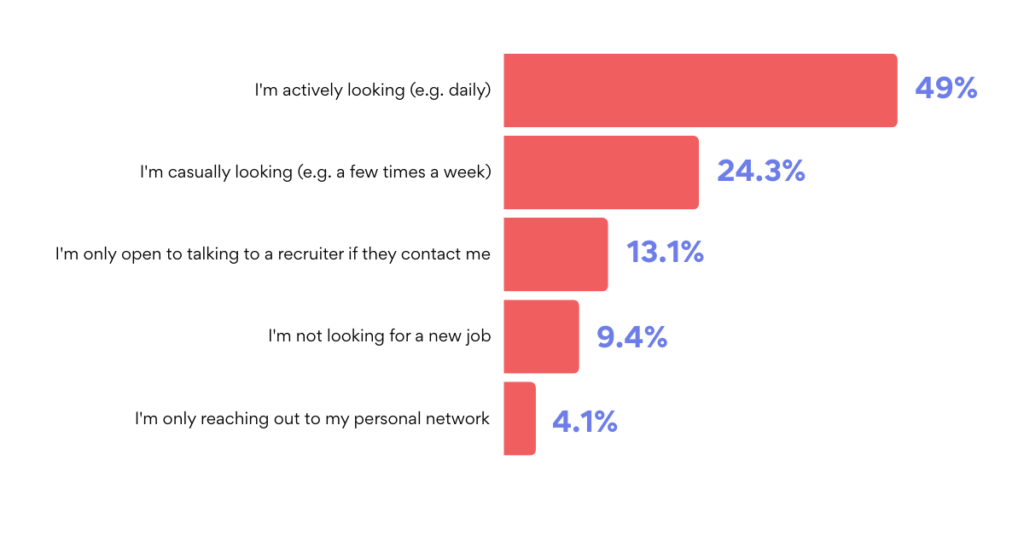
The results show that a significantly higher number of survey respondents are searching for jobs compared to the general market average.  

Around 75% of survey respondents base is engaged in job-seeking activities, whereas the typical percentage of individuals actively looking for jobs in the broader market is around 25%. 

Advice for Job Seekers: High Demand for Job Opportunities 

The higher engagement with job-seeking activities on GrabJobs shows there is a substantial demand for job opportunities among the population. This is due to various factors such as economic conditions, employment trends, or specific demographics using the platform. 

We can draw the conclusion that even though there’s high demand, job seekers shouldn’t be discouraged. We recommend that you focus on enhancing your resume, gaining relevant experience, and honing your interview skills. These steps can significantly improve your chances of landing your dream role despite the competition. 

Based on the survey results, we think that job seekers should be at the top of their game when looking for work. The good news? We have many tips for mastering your job search on our website. Whether it’s crafting the perfect resume or preparing for an interview, our resources are designed to help you succeed. 

How Many Job Sites Do Job Seekers Typically Use?

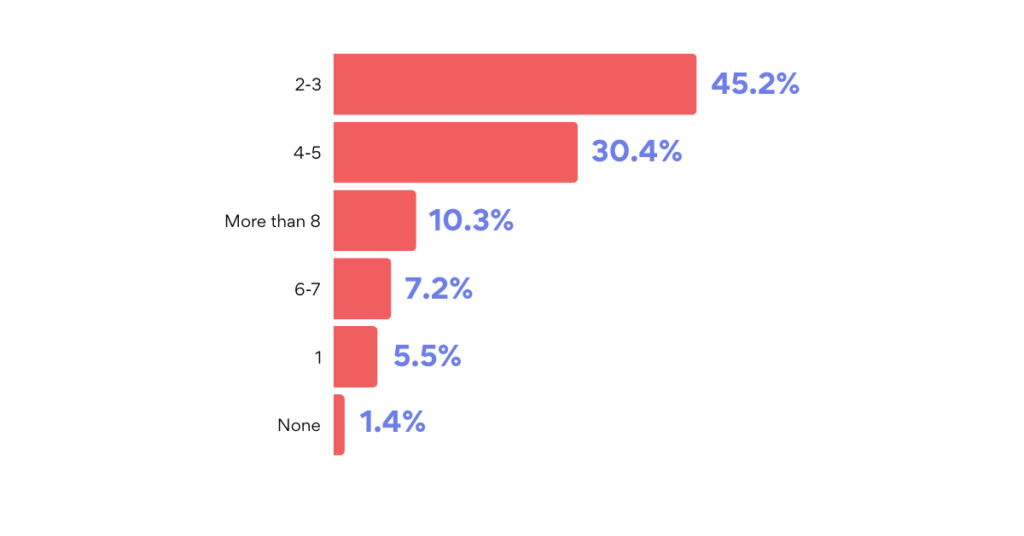
Our findings show that job seekers are using multiple job sites in their search for work. Approximately 75% of respondents use 2 to 5 job sites during their job search; this shows a preference for exploring diverse platforms.  

Moreover, we see that the average number of job sites used by job seekers is 4.5. Although many individuals are leveraging multiple platforms, there is still an opportunity for increased diversification.  

Advice for Job Seekers: Diversify Your Job Site Usage

We recommend that you diversify your job site usage to increase your exposure to a wider range of job opportunities. 

If you explore various platforms, you can access a more extensive pool of job listings—which will increase your chances of finding relevant positions that match your skills and preferences. 

Remember, this survey shows job seekers are only browsing through 4.5 job boards. If you look through 10 job boards, you’re already ahead of the game.  

How Many Jobs Do Job Seekers Apply to Per Week?

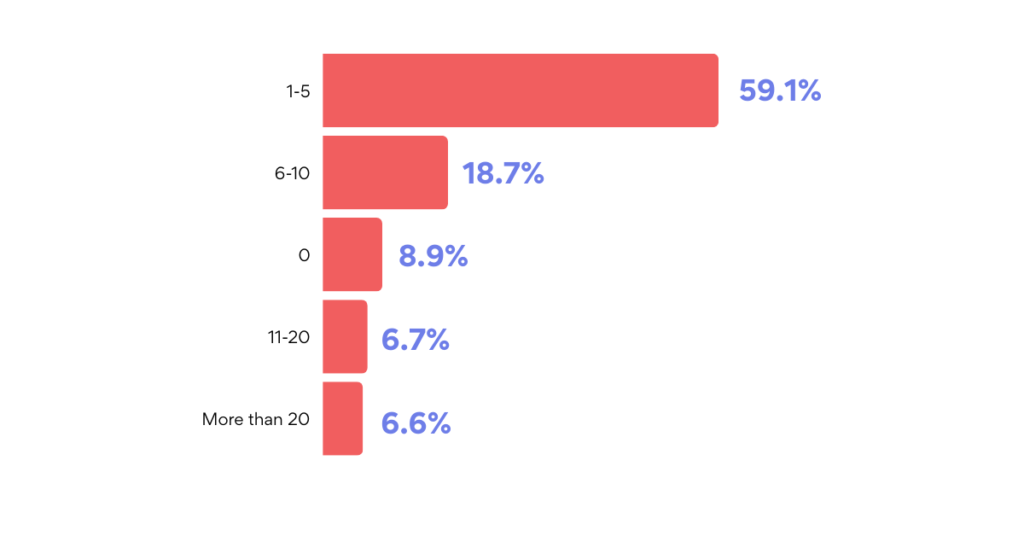
These findings show how active job seekers are, with a significant majority of respondents—approximately 80%—applying to up to 10 jobs per week.  

Additionally, the average number of job applications per week—around 8—translates to approximately 31 applications per month. 

Advice for Job Seekers: You Must Continuously Apply for Roles

According to our survey, job seekers are highly active in the job application process, with approximately 80% of individuals applying to up to 10 jobs per week. Based on these findings, we recommend that you continuously search for new employment opportunities to maximize your chances of securing a role. 

You should always remember the old saying: It’s a numbers game. Of course, there’s no point in sending thousands of applications without customization and a bad resume. But still, apply for as many jobs—with solid applications—as possible in your free time. It gives you a better chance of success! 

How Quickly Do Job Seekers Find Employment?

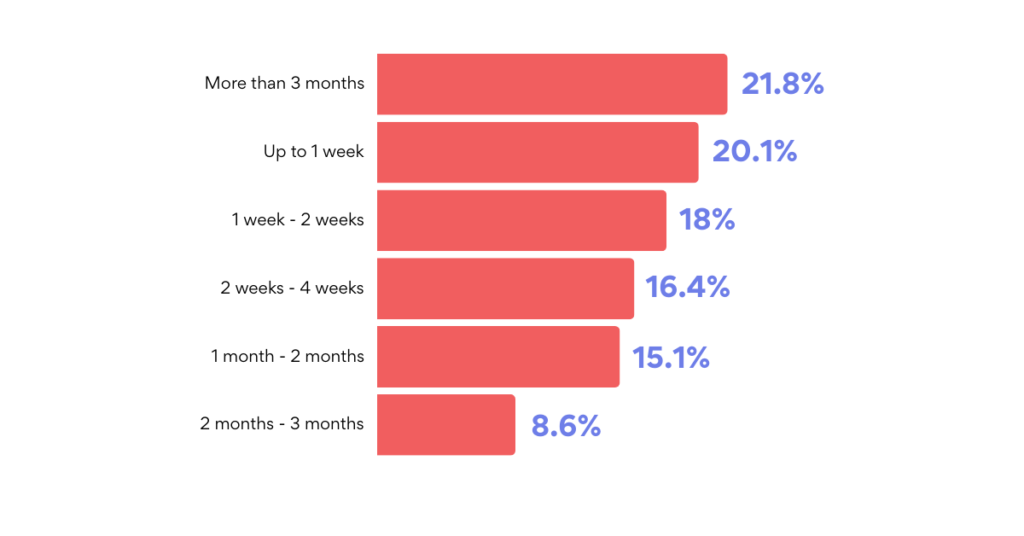
The data shows that job seekers are looking for jobs for different lengths of time. Approximately 38% of job seekers find employment within 2 weeks.  

Around 53% secure employment within 1 month—while approximately 68% find employment within 2 months. 

However, about 30% of job seekers take more than 2 months to secure employment. Despite these fluctuations, the average duration to find employment is around 1.5 months.

Advice for Job Seekers: Be Patient & Do Not Quit

Be Patient

According to our observations, the duration to secure employment can vary widely depending on factors such as industry, experience level, and job market conditions. While some job seekers find employment quickly, others may experience a more prolonged job search. 

 We recommend that you understand and adjust your expectations accordingly. The survey results suggest that it’s important not to become frustrated if you don’t find work within days; you’re not alone in this experience. 

By staying proactive, continuously networking, and refining your job search strategies—you increase your chances of finding suitable employment opportunities that align with your skills and career aspirations. But first, stay patient.  

Never Quit

Amidst the ebb and flow of the job search journey, one steadfast principle remains: perseverance is key. The data paints a nuanced picture of the job market landscape, revealing varying timelines for securing employment.  

However, regardless of the duration, one thing remains constant: the importance of never giving up. 

What Methods Do Job Seekers Use to Find Opportunities?

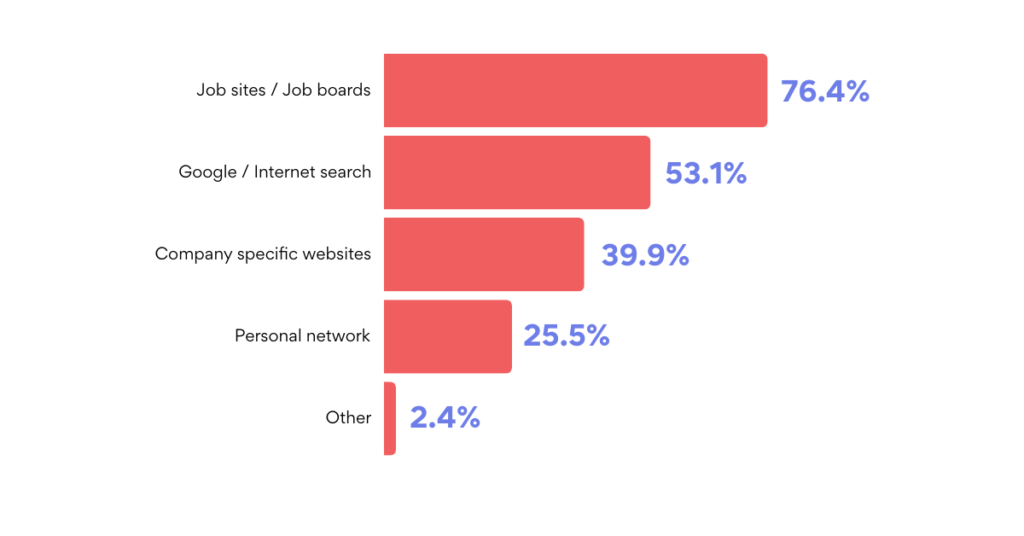
Our data reveals a major reliance on digital platforms. Approximately 3 out of 4 job seekers use aggregators to discover job openings.  

Furthermore, a striking 87% of job seekers primarily depend on online channels to conduct their job search—with only 13% opting for offline methods. 

Advice for Job Seekers

You Must Leverage Digital Platforms

With 87% of job seekers primarily depending on online channels to conduct their job search, it’s crucial to prioritize your online presence. Today, many companies post job openings exclusively on the internet, moving away from traditional methods like local newspaper advertisements. 

Therefore, ensure that your profiles on job sites and social media platforms are up-to-date and professional. This proactive approach enhances your visibility to potential employers and positions you competitively.  

Balance Online and Offline Strategies

While online methods dominate the job search landscape, you should not overlook the value of networking and offline strategies to supplement your efforts.  

Offline interactions and networking events can still play a significant role in uncovering hidden job opportunities and building meaningful connections within your industry. If you can attend local conferences and seminars and chat with the right people, your dream role may appear.  

Likewise, always look for referrals from friends, family, and your network.  

Many freelancers find good gigs through referrals; you can also find great full-time roles through referrals.  

2. Job Search Experience and Satisfaction

How Satisfied are Job Seekers with their Search Experience?

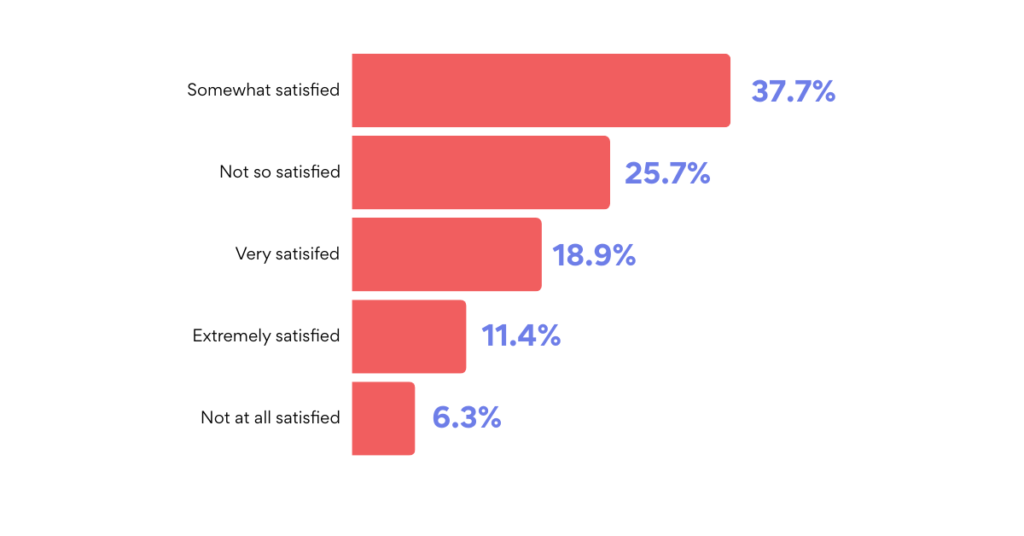
Our data reveals significant discontent among job seekers with their job search experience. Approximately 70% of job seekers express dissatisfaction, which aligns closely with market trends. This sentiment highlights the challenges and frustrations of finding jobs.  

Advice for Job Seekers:

Acknowledge Common Frustrations

Be mindful that you are not alone in experiencing frustrations during your job search journey. With approximately 70% of job seekers expressing dissatisfaction, recognize that many individuals encounter similar challenges and obstacles.  

As a result, this acknowledgement could provide you with comfort and reassurance. It can also motivate you to persevere and seek out solutions to improve your job search experience. 

Always Look to Improve Your Skills

You should take proactive steps to identify areas for self-improvement—whether it’s refining your resume, enhancing your networking efforts, or exploring new job search platforms.  

You can also enhance your job search and increase your chances of finding rewarding employment opportunities with this positive, proactive mindset.  

What are the Biggest Frustrations in the Job Search Process?

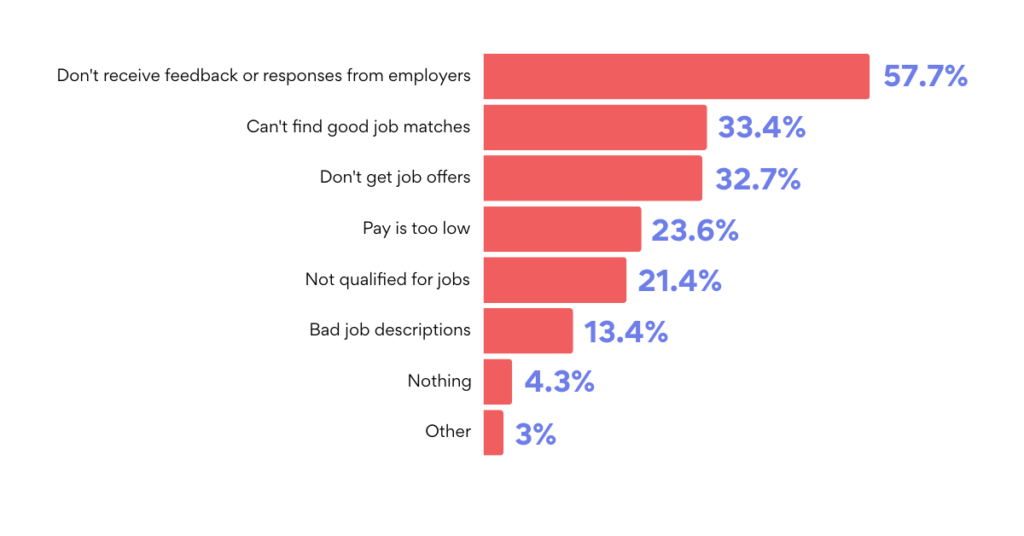
Our findings indicate a prevalent frustration among job seekers, with the most significant complaint being “ghosting” by employers. Ghosting is the lack of communication or feedback from employers after submitting applications or attending interviews.  

Advice for Job Seekers:

Manage Expectations

You should be prepared for the possibility of ghosting during your job search and not take it personally. We know that can be challenging! 

However, the most significant frustration reported by job seekers is a lack of communication with employers. So manage your expectations and recognize that ghosting is a common occurrence in the hiring process. You’re not alone.  

Moreover, if you reframe your mindset and know that ghosting is not a reflection of your worth as a candidate, you can maintain confidence and resilience through a longer-than-expected job hunt.  

Take Proactive Measures

Proactively following up with employers after applying or interviewing can help alleviate some frustration and provide clarity on the application status.  

Additionally, exploring job platforms or resources that prioritize transparency and effective communication can reduce ghosting and improve the job search experience.  

You should look for employers who value open communication and strive to maintain a positive candidate experience; this will ensure a smoother and more rewarding job search journey. 

3. Time Investments in Job Searching

How Much Time do Job Seekers Spend Searching for Jobs Each Week?

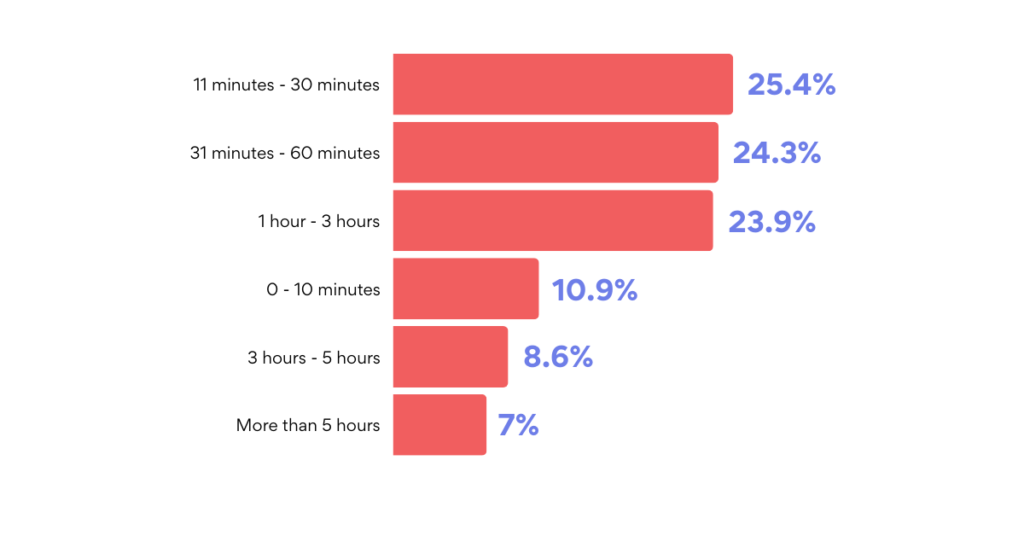
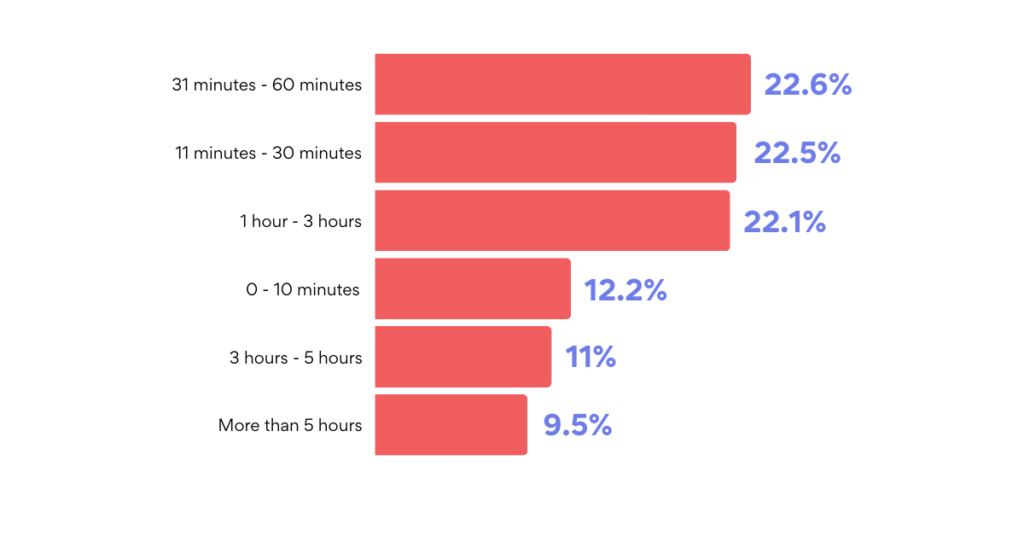
Our data reveals varying levels of time investment among job seekers in their job search efforts. From our survey, approximately 60% of job seekers spend 1 hour or less per week searching for jobs, indicating a relatively low level of engagement. 

However, the average time spent per week is approximately 2.2 hours, with some individuals dedicating over 3 hours to their job search.  

Advice for Job Seekers:

Increase Time Allocation

You should consider allocating more time to your job search efforts to increase your exposure to more opportunities.  

With the majority of job seekers spending 1 hour or less per week on their job search, committing additional time will significantly enhance your chances of finding suitable employment.  

In addition, by increasing your time investment to an average of 5 hours per week for job search and application activities—you adopt a more comprehensive approach that maximizes your visibility to potential employers.  

Improve Job Search Strategies

Dedicating more time to your job search allows you to implement and refine your strategies. You should actively research companies, customize your applications, and network with professionals in your field.  

Additionally, “passive” job seekers—who spend less time on their job search—should be aware that increasing their time investment can significantly enhance their chances of success.  

How Much Time is Spent on Applying to Jobs Weekly?

Our findings reveal varying levels of time investment among job seekers in the application process. From our data, approximately 60% of job seekers spend 1 hour or less per week applying for jobs, which is a surprisingly low level of engagement 

However, the average time spent per week on job applications is around 2.5 hours—with some individuals dedicating over 3 hours 

Advice for Job Seekers: Ensure Sufficient Application Time

With an average of around 8 jobs applied per week and the average time spent per application being about 19 minutes, you should allocate enough time to customize applications effectively.  

Rushing through applications can lead to generic and poorly tailored submissions, diminishing your chances of standing out to employers. This is a mistake many job seekers make.  

However, by dedicating sufficient time to each application—you can craft compelling resumes and cover letters that showcase your qualifications and fit for the role.  

This will increase your chances of securing interviews and job offers, resulting in less frustration and happier outcomes.  

4. Financial Investments in Job Searching

How Much Do Job Seekers Typically Spend on their Job Search?

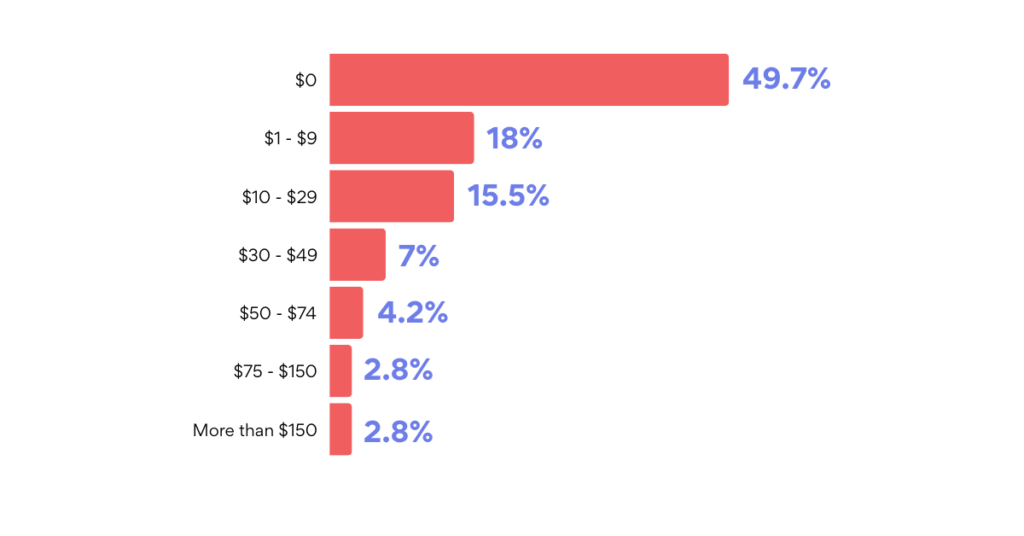
Our findings reveal that a significant majority of job seekers—approximately 85%—spend $29 or less on their job search.  

Interestingly, about 50% of job seekers report spending money on their job search, with 10% allocating more than $50. 

The average spend among job seekers is approximately $22, with those who do spend averaging around $44.  

Advice for Job Seekers:

Evaluate Your Spendings

Many job seekers can secure job opportunities without paying for costly services or resources, as evidenced by the high percentage of job seekers spending $29 or less.  

This suggests many job seekers may not perceive the value in paying for services or may prioritize free or low-cost alternatives in their job search.  

Current market conditions are generally of a high standard to secure employment. Understanding where you might have gaps, or where you can find an edge on the competition, can make a meaningful difference in success. Consider paying for offerings that increase your competitiveness. 

In some cases, a small investment can make all the difference in your job hunt. You can use sites to help craft a creative, eye-catching resume with all the right keywords. Or you can hire a ghostwriter to write a brilliant resume.

Use Free Resources

Given the bulk of job seekers spending zero on their job search, it shows there are free resources to support job search efforts.  

From online job boards and networking platforms to career counseling services and informational interviews, you can leverage no-cost resources to enhance your job search effectiveness.  

Exploring creative and cost-effective approaches to networking, skill development, and self-promotion can also minimize financial investments in your job search. While some job seekers are able to spend little to nothing, it generally isn’t as effective as spending, if spending increases competitiveness. 

While some job seekers are able to spend little to nothing, it generally isn’t as effective as spending, if spending increases competitiveness. 

5. Tools and Customization

How Common is Customization in Job Applications?

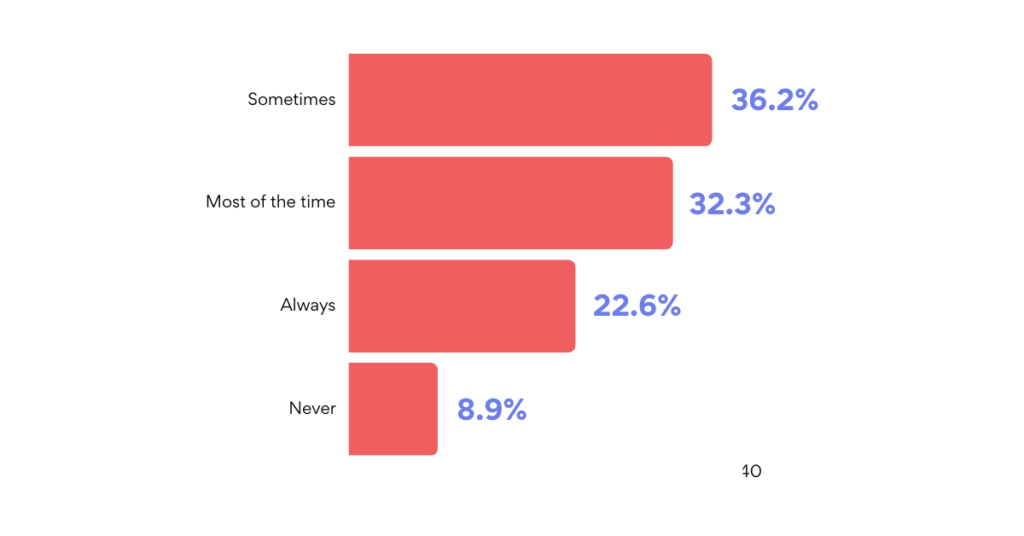
Our data highlights the importance of customization in job applications, as it’s a common practice among the majority of job seekers. Only 8.9% of respondents fail to customize their resume, and you don’t want to be in that minority.  

Advice for Job Seekers: Prioritize Effective Customization

Our data highlights that customization is a prevailing practice among job seekers, suggesting a widespread acknowledgement of its importance. 

With this insight, you should recognize that tailoring applications to match job requirements is not just a recommendation but a normative behavior. To land the best roles at the best companies—i.e. Fortune 500 firms—you likely won’t get anywhere without a customized resume.  

We recommend focusing on crafting personalized applications that directly address the needs and preferences of each employer. This approach demonstrates a candidate’s commitment and increases the likelihood of standing out.  

What Tools Are Job Seekers Using to Fill Out Applications?

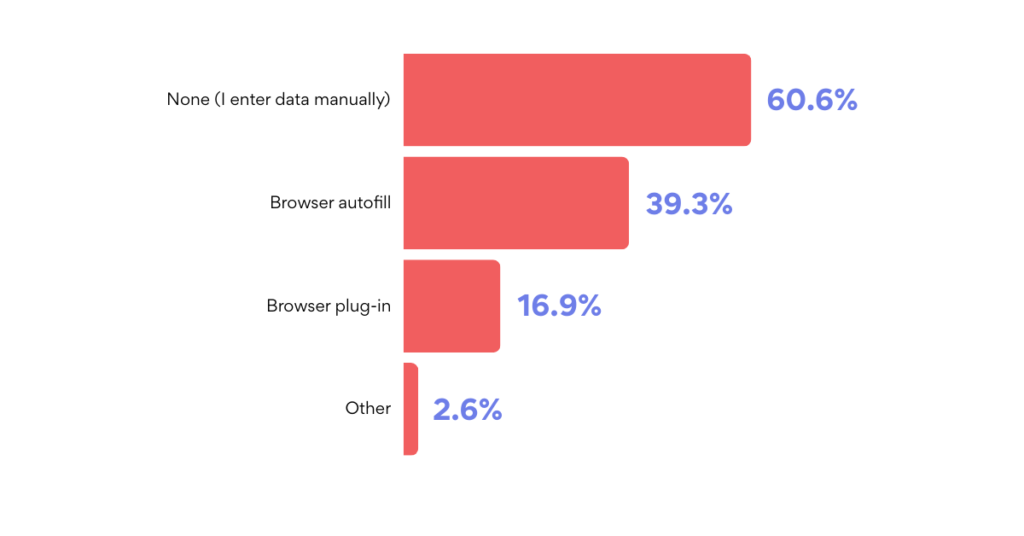
Our data highlights two significant trends in job seeker behavior: a majority of job seekers (approximately 2 out of 3) manually fill in applications, while around 1 in 5 are already utilizing browser plug-ins.  

From our observations, this indicates a growing, technologically savvy user base that is increasingly seeking automation in the application process. 

Advice for Job Seekers: Address the Need for Automation

Our data shows that a significant majority of job seekers still manually fill out applications, indicating a strong need for automation in the job application process. We recommend that you explore options to streamline your application workflows to save time and effort. 

Whether through browser plug-ins, job search platforms, or other automation solutions—embracing technology can make all the difference.  

How Do Job Seekers Keep Track of Their Applications?

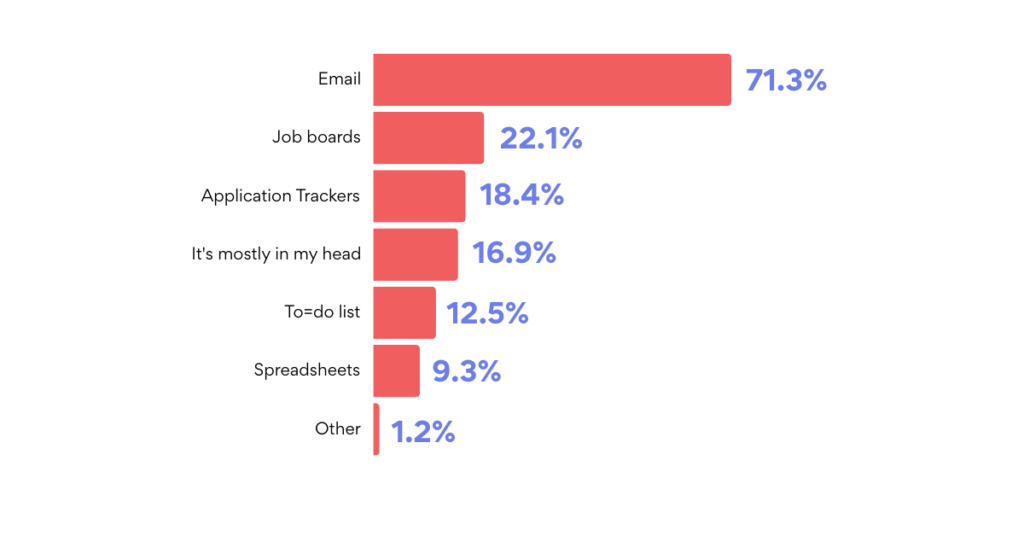
Our data shows that most job seekers are monitoring their job applications in some way. Approximately 3 out of 4 job seekers primarily use email to track their applications, while around 1 in 5 are already utilizing applicant tracking systems (ATS). As a result, this shows a more sophisticated user base seeking advanced application management tools.  

Additionally, another 1 in 5 job seekers uses offline capabilities—such as lists or spreadsheets, highlighting the demand for applicant tracking solutions. 

Advice for Job Seekers:

Optimize Application Management

Relying solely on email to manage applications may not be the most efficient or effective method for you. It can become overwhelming and disorganized.  

To streamline your application management process—consider exploring and utilizing application trackers that can significantly enhance your ability to manage and track applications in a centralized manner. 

Adopt Advanced Application Management Tools

You should also consider adopting tools or resources that provide advanced application management features—such as tracking, follow-ups, and reminders. These features can help you stay organized and increase your chances of success in the job market.  

For instance, GrabJobs Premium offers these features, enabling you to manage your applications effectively and optimize your job search strategy. You can enhance your application management process and improve your overall job search experience by leveraging these tools.  

6. Outcomes and Employer Feedback

How Do Job Seekers Keep Track of Their Applications?

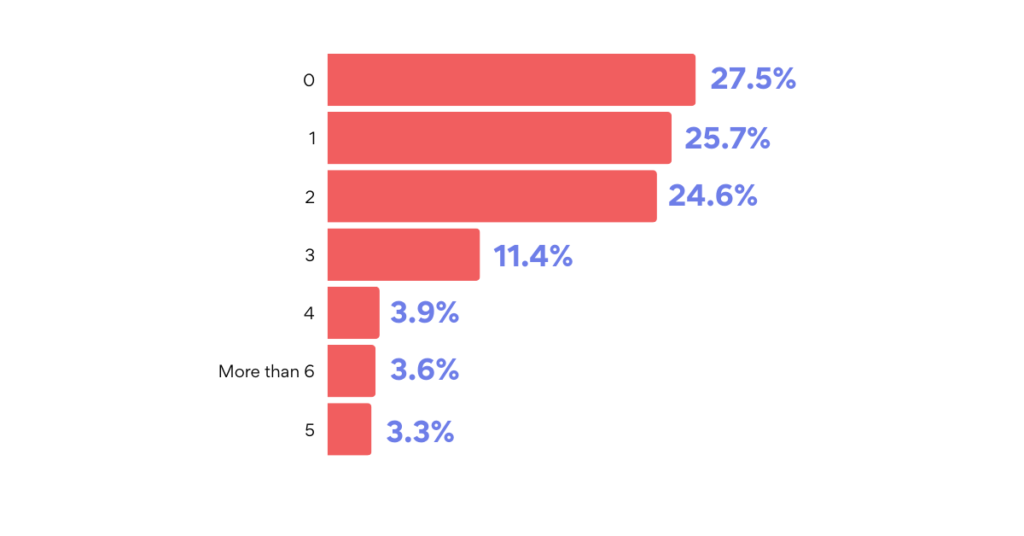
On average, for every 10 companies that job seekers apply to, how many usually get back to them with feedback?

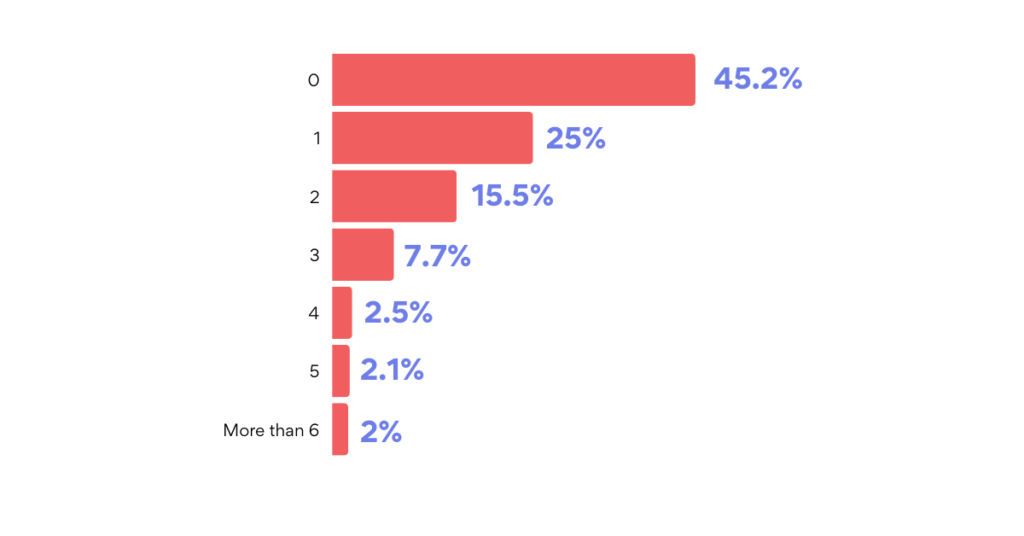
On average, for every 10 companies that job seekers apply to, how many usually get back to them with an offer? 

Our findings indicate promising success rates among survey respondents in securing interviews and job offers. Great news! Approximately 72% of individuals boast a 10% or higher interview success rate, suggesting a relatively high level of success in securing intervies. 

Moreover, we see that the average success rate for job offers is around 16%. 

Advice for Job Seekers: Be Confident

Geography, industry, role, seniority, supply/demand and income all influence success rates. Be mindful of the type of market(s) in which you are seeking employment to adjust your expectations and progress measurement.  

If you aren’t progressing as effectively as you think you should be, change your approach, and keep changing, until you observe those changes results in more positive outcomes.   

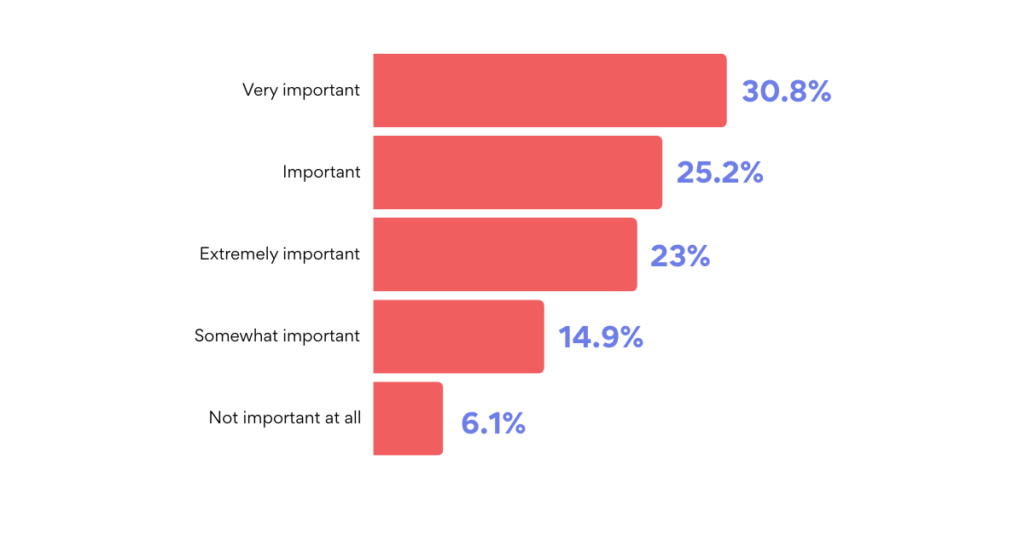
How important is employer feedback to unsuccessful job applicants?

Our findings highlight a strong consensus among job seekers regarding the value of employer feedback, with approximately 80% acknowledging its significance. 

This recognition shows the importance of feedback as a valuable resource for job seekers seeking to enhance their skills and competitiveness in the job market. 

Advice for Job Seekers:

Actively Seek Employer Feedback

You should actively seek and value employer feedback. It provides valuable insights that can contribute to your growth and improvement, helping you understand areas for development and refinement in your job search approach. 

Reflect on the Feedback

Use feedback as a tool for self-reflection and development. Likewise, take the insights gained from employer feedback and leverage them to enhance your job search strategies, interview skills, and overall competitiveness.  

Whether it’s refining your resume, practicing your interview responses, or honing your networking techniques, incorporating feedback into your personal and professional development journey can lead to greater success.  

Summary of our Advice

In the pursuit of a successful job search—knowledge is power. Our comprehensive survey, including insights from over 10,000 job seekers, sheds light on the modern job market’s intricacies, challenges, and opportunities.  

Through meticulous research and analysis, we’ve uncovered key trends and behaviors that illuminate the path to career success 

10 Highest-Paying Restaurant Jobs in Singapore

Retail Jobs in Singapore

Table of Contents

The food industry is a significant player in the global economy, providing millions of jobs worldwide.

The food industry is also booming in Singapore, offering various employment opportunities for individuals across skill levels in one of the world’s richest countries. Around 126 thousand people are employed in Singapore’s food sector.

Although many view food jobs as low-paying and menial, pay in this sector can vary significantly depending on various factors.

In this article, we will explore the factors influencing pay in the restaurant sector, jump into the top 10 highest-paying restaurant jobs in Singapore, and discuss the benefits that go beyond salary:

Factors Influencing Pay in the Food Sector

Many things influence the pay in the restaurant sector. Singapore is one of the world’s best cities for hospitality, so there are many things to consider, such as:

1. Job Role

Pay in the restaurant sector varies depending on the specific job role. Although entry-level positions like cashier or kitchen staff may offer lower wages, skilled roles—such as managerial positions or specialized chefs—can command higher salaries.

There are many high-paid roles for managers and chefs in Singapore.

2. Experience

Experience plays a significant role in determining pay. If you have years of experience in the industry, you can earn higher wages versus newcomers.

In addition, employers may offer higher salaries to employees with a proven track record of success and expertise in their roles.

3. Education and Certifications

Employees with relevant education or certifications may qualify for higher-paying positions within the food industry.

For example, if you have a degree in hospitality management or culinary arts, you may be eligible for managerial or supervisory roles with increased responsibilities and compensation.

4. Location

Location is a crucial factor influencing pay in the food sector. In urban areas with high living costs, wages may be higher to attract and retain talent due to the increased cost of living.

Conversely, in rural or less affluent areas—wages are lower due to lower living expenses and market demand. In Singapore, however, wages are high throughout the country.

5. Employer Policies

Employer policies—including wage scales, bonuses, and benefits packages—also impact pay in the hospitality sector.

Some employers may offer competitive wages and generous benefits to attract top talent and foster employee loyalty. Furthermore, performance-based bonuses or incentives may be provided to reward employees for their contributions to the company.

6. Market Demand

Pay rates in the food sector may also be influenced by market demand for certain skills or positions.

In highly competitive markets where skilled workers are in high demand, such as Singapore, employers offer higher wages to attract talent.

In contrast, in areas with lower demand or oversaturation of labor, wages may be lower due to less competition for available positions.

7. Industry Trends

Industry trends and economic conditions can impact pay in the food sector. For example, changes in consumer preferences, technological advancements, or regulatory requirements may influence labor costs and wage levels.

Also, employers may adjust pay rates in response to market dynamics to remain competitive and sustainable.

8. Unionization and Collective Bargaining

In some cases, pay rates in the food sector may be influenced by unionization and collective bargaining agreements between employers and labor unions.

Unionized workers may negotiate higher wages, better benefits, and improved working conditions through collective bargaining—which can impact pay levels across the industry.

Top 10 Highest-Paying Restaurant Jobs in Singapore

Restaurant managers oversee daily operations, manage staff, and ensure customer satisfaction. They typically have extensive experience in the industry and may hold a degree in hospitality management or a related field.

Restaurant managers in Singapore can earn a competitive salary, with bonuses and career advancement.

  • Expected Salary: SGD 3,000 – SGD 5,000 per month
  • Skills Needed: Leadership, customer service, and operations management
  • Scope of Work: Overseeing daily operations, managing staff, ensuring customer satisfaction, and driving profitability. Restaurant managers typically have extensive experience in the industry and may hold a degree in hospitality management or a related field.

Executive chefs are responsible for menu planning, food preparation, and kitchen management.

They have advanced culinary skills and may oversee multiple restaurant locations. Executive chefs in Singapore command high salaries, reflecting their expertise and leadership responsibilities. 

  • Expected Salary: SGD 4,000 – SGD 7,000 per month
  • Skills Needed: Culinary expertise, menu planning, and kitchen management
  • Scope of Work: Responsible for menu planning, food preparation, and kitchen management. Executive chefs have advanced culinary skills and may oversee multiple restaurant locations.

Sous chefs assist executive chefs in kitchen operations, managing kitchen staff, and ensuring food quality and consistency.

They play a crucial role in menu development and culinary innovation. Sous chefs in Singapore earn competitive wages, with opportunities for advancement to higher-level positions.

  • Expected Salary: SGD 3,000 – SGD 5,000 per month.
  • Skills Needed: Kitchen supervision, menu development, and culinary innovation.
  • Scope of Work: Assisting executive chefs in operations, supervising kitchen staff, and ensuring food quality and consistency. Sous chefs play a crucial role in menu development and culinary innovation, with opportunities for advancement to higher-level positions.

Head bartenders oversee bar operations, create cocktail menus, and train staff in mixology techniques.

They have extensive knowledge of spirits, wines, and cocktails and excel in customer service. Head bartenders in Singapore enjoy lucrative salaries, especially in upscale establishments, making it one of the highest-paying restaurant jobs.

  • Expected Salary: SGD 3,000 – SGD 5,000 per month.
  • Skills Needed: Mixology, customer service, and bar management
  • Scope of Work: Overseeing bar operations, creating cocktail menus, and training staff in mixology techniques. Head bartenders have extensive knowledge of spirits, wines, and cocktails.

Restaurant general managers manage all restaurant operations, including staffing, budgeting, and marketing.

They have strong leadership skills and business acumen, ensuring profitability and customer satisfaction. Restaurant general managers in Singapore receive competitive compensation packages, including bonuses and incentives.

  • Expected Salary: SGD 4,000 – SGD 6,000 per month.
  • Skills Needed: Leadership, business acumen, and marketing.
  • Scope of Work: Overseeing all aspects of restaurant operations, including staffing, budgeting, and marketing.

Pastry chefs specialize in creating desserts, pastries, and baked goods for restaurants and bakeries. They have advanced pastry skills and artistic flair, producing visually stunning and delicious creations.

Pastry chefs in Singapore command high salaries, reflecting the demand for their specialized expertise.

  • Expected Salary: SGD 3,000 – SGD 5,000 per month.
  • Skills Needed: Pastry skills, creativity, and attention to detail.
  • Scope of Work: Creating desserts, pastries, and baked goods for restaurants and bakeries. Pastry chefs command high salaries in Singapore, reflecting the demand for their specialized expertise and artistic flair.

Restaurant supervisors assist managers in overseeing daily operations, supervising staff, and ensuring smooth service. They have strong leadership skills and customer service experience, maintaining high standards of quality and efficiency.

Restaurant supervisors in Singapore receive competitive wages and may have opportunities for career advancement.

  • Expected Salary: SGD 2,500 – SGD 4,000 per month.
  • Skills Needed: Leadership, customer service, and operations management.
  • Scope of Work: Assisting managers in overseeing daily operations, supervising staff, and ensuring smooth service. Restaurant supervisors maintain high standards of quality and efficiency, receiving competitive wages and opportunities for career advancement.

Restaurant consultants provide expertise and guidance to restaurant owners and operators, helping them improve operations, increase profitability, and enhance customer experiences.

They have extensive industry knowledge and may specialize in areas—such as marketing, menu development, or operations management. Restaurant consultants in Singapore earn high fees for their specialized services.

  • Expected Salary: Variable (Consulting fees)
  • Skills Needed: Industry knowledge and expertise in specific areas.
  • Scope of Work: Providing expertise and guidance to restaurant owners and operators to improve operations, increase profitability, and enhance customer experiences. Restaurant consultants earn high fees for their specialized services in Singapore.

Head waiters/waitresses oversee dining room service, train staff, and ensure guest satisfaction.

They have excellent communication skills and attention to detail, orchestrating seamless dining experiences. Head waiters/waitresses in Singapore receive competitive wages, including tips and service charges.

  • Expected Salary: SGD 2,000 – SGD 3,500 per month (including tips)
  • Skills Needed: Communication, attention to detail, and customer service
  • Scope of Work: Overseeing dining room service, training staff, and ensuring guest satisfaction. Head waiters/waitresses produce seamless dining experiences, receiving competitive wages—including tips and service charges.

Food and beverage directors oversee all food and beverage operations within a hospitality establishment, including restaurants, bars, and catering services.

They develop menus, manage inventory, and optimize profitability while maintaining high standards of quality and service.

Food and beverage directors in Singapore earn substantial salaries, reflecting their senior leadership roles and strategic responsibilities.

  • Expected Salary: SGD 5,000 – SGD 8,000 per month
  • Skills Needed: Leadership, strategic planning, inventory management
  • Scope of Work: Overseeing all food and beverage operations within a hospitality establishment. Food and beverage directors develop menus, manage inventory, and optimize profitability while maintaining high standards of quality and service.

Benefits Beyond Salary in Restaurant Jobs

1. Flexible Work Schedules

Restaurant jobs often provide flexible work schedules, allowing employees to balance their work commitments with personal obligations—such as education, family responsibilities, or other part-time jobs.

This flexibility enables individuals to customize their work hours according to their needs, promoting a better work-life balance.

2. Opportunities for Career Advancement

Contrary to popular belief, food establishments offer ample opportunities for career advancement. Many employees start in entry-level positions but can progress to higher-ranking roles with increased responsibilities and higher pay.

With dedication, hard work, and continuous learning, individuals can climb the ranks within the company and even transition to managerial positions.

3. On-the-Job Training

Restaurant jobs often provide valuable on-the-job training, equipping employees with essential skills and knowledge necessary for success in the industry.

Through hands-on experience, workers learn about food preparation techniques, customer service strategies, sanitation protocols, and safety procedures.

This training enhances job performance and lays the foundation for career growth and development.

4. Employee Discounts

One of the perks of working in the food industry is access to employee discounts on meals and other menu items. Staff members typically receive discounted or complimentary meals during their shifts, helping them save money on food expenses.

This benefit adds value to the compensation package and builds appreciation and loyalty.

5. Professional Development Programs

Some food establishments offer professional development programs to support employees in their careers. For instance, these programs may include opportunities for further education, skills training workshops, leadership development courses, or mentorship initiatives.

By investing in their employees’ growth and development, companies demonstrate their commitment to nurturing talent and promoting long-term success.

6. Transferable Skills Development

Working in the food industry provides employees with valuable transferable skills applicable across various sectors. Skills like customer service, teamwork, communication, problem-solving, and time management are highly desired by employers in different industries.

For instance, these skills enhance job performance, increase employability, and open doors to future career opportunities.

7. Positive Work Environment

Despite its fast-paced nature, the food industry often promotes a positive and supportive work environment; team members collaborate closely, share responsibilities, and celebrate successes together.

The diverse and dynamic nature of the workplace also offers opportunities for interaction with people from different backgrounds, which promotes cultural awareness and inclusivity.

8. Job Stability

Food jobs typically offer stable employment opportunities, with many establishments operating year-round and experiencing consistent customer demand.

This stability provides employees with a reliable source of income and job security—especially during uncertain economic times or fluctuations in the job market.

Final Thoughts

Many things influence pay in Singapore restaurants, including job roles, experience, education, location, and employer policies. Although some positions may offer lower wages, others—such as managerial or specialized roles—can command competitive salaries

Furthermore, restaurant jobs offer benefits beyond salary, including flexible work schedules, opportunities for career advancement, on-the-job training, employee discounts, and valuable transferable skills.

It’s an excellent career if you’re passionate about food and hospitality, and some of the highest-paying restaurant jobs offer brilliant opportunities.

At GrabJobs, we have all the latest restaurant jobs in Singapore. Check out our job board today!

How to Get an S Pass Work Permit for Singapore

railway in Singapore Feature Image For: How to Get the Employment Pass Work Permit for Singapore

Singapore is a popular destination for professional expats of all kinds, especially those who work in the tech sector. Singapore has even been described as the Silicon Valley of Asia, with giants like Amazon, Google, and Facebook all setting up shop in this exciting country.

Whether you’re looking for a job in tech or another industry altogether, you’ll need to obtain a work permit before you can get hired. While there are various types of work visas in Singapore, one of the most popular is known as the S Pass. Read on to learn all about how to get the S Pass work permit and start your career in Singapore.

What Is an S Pass Work Permit in Singapore?

The S Pass is a work permit Singapore offers to foreign workers. It’s a short-term work permit that typically lasts between 1-3 years (although it can be renewed) and allows foreigners to be legally employed in Singapore.

The intent behind the S Pass (as well as other types of employment passes) is to make it possible for Singaporean businesses to hire talented individuals from all over the globe. However, with strict eligibility requirements, it’s also designed to encourage foreign companies to employ local Singaporean people and give them priority over foreign workers whenever possible.

The S Pass is specifically geared toward less skilled and non-technical workers who earn a minimum of $2,500 per month in a junior position. Examples of workers who might apply for an S Pass include technicians, accountants, and journalists.

Employers need to verify that their employees’ salaries match up with their experience, qualifications, and skills before they can apply for an S Pass.

How to Get an S Pass Work Permit: Requirements and Eligibility

As with other types of work passes and permits, the S Pass comes with a set of specific criteria that you must meet before you can qualify. To be eligible for this particular Singapore job visa, you must check the following boxes before applying:

Monthly Earnings

As mentioned above, you must earn at least $2,500 per month to be eligible for the S Pass. Remember that this limit is specifically set for younger workers in junior positions.

If you are an older worker looking to get hired for a more senior position, your monthly earning requirements will be higher because you also have more work experience and more skills.

Education

In addition to earning requirements, there are also education requirements to consider. Applicants for the S Pass must have a degree or diploma before they can qualify. More specifically, they must have earned it after at least 1 year of full-time study.

Work Experience

To qualify for an S Pass, you must have work experience relevant to the job for which you’re applying. 

One of the main purposes of the S Pass is to bring skilled workers to help build up Singaporean businesses. So. if you’ve never worked in the industry of the company looking to hire you, the Singaporean government will be less inclined to grant you a work pass. They’d prefer the job go to a local who has relevant experience or to a more skilled and experienced foreign worker. 

S Pass Self-Assessment Tool

Some people might read through the criteria listed above and know right away that they’re a good fit for the S Pass. Others might be on the fence about whether or not they should apply for this type of work permit.

If you fall into the latter group, consider using the S Pass Self-Assessment Tool available through the Ministry of Manpower. This tool is easy to use, available 24/7, and helps you to determine your eligibility before you (and your potential employer) go through the process of applying for an S Pass. 

The S Pass Self-Assessment Tool is a great option for those who are unsure of which pass is right for them. But it’s important to remember that this tool does not guarantee anything. You and your new employer will still need to complete a number of other checks and steps before you can be granted an S Pass (or any type of work visa).

This tool is simply meant to point you in the right direction, which can be a timesaver for you, your potential employer, and the Singaporean government. 

How to Get an S Pass in Singapore: The Application Process

Now, let’s get down to business and address what everyone wants to know when they’re learning about work visas Singapore has to offer: How do you apply for an S Pass?

If you’ve decided that the S Pass work permit is the right option for you, here are the steps you and your employer will need to go through to help you get approved:

Get a Job Offer

Before we dive into the specific steps of the application process, keep in mind that only an employer or an appointed employment agent can apply for an S Pass.

This means you need to receive a job offer from a potential employer before you can consider applying for this type of work permit. Then, you’ll work with that company to get your S Pass approved as soon as possible.

If you haven’t received a job offer from a company in Singapore yet, take a few steps back and start searching for businesses that are hiring workers like you. The GrabJobs Singapore Jobs page is a great place to kick off your search. It allows you to narrow down your options based on skills requirements, salary, location, and more.

When searching for Singapore jobs, make sure that every company you consider applying to also has their job listed on the MyCareersFuture website. The government requires this step because it ensures the position is open to both foreign workers and Singaporean workers.

For more help on finding a job in Singapore, check out some of our other resources. For starters, the GrabJobs Salary Guide Article, Salary Guide Tool for Singapore, and our list of the Most In-Demand Jobs in Singapore are all excellent resources.

Use these tools to find the right job for you, submit an impressive application, and nail the interview process. Once you’ve received a job offer, your potential employer will go through the following steps (updating you and asking for information along the way) to help you get the proper permit so you can start working.

Submit an Application

To submit an application for an S Pass, your potential employer will need to get written consent from you giving them permission to apply on your behalf. They may also ask for information related to your education or work history to help them fill out the application correctly.

After they’ve filled out the online form, the business will need to pay a $105 application fee. If the application is approved, they will receive a printable document known as an in-principle approval (or IPA) letter. They’ll send a copy to you, which includes a pre-approved single-entry visa for you to travel to Singapore.

Prepare & Travel to Singapore

Within 60 days of the application being approved, you must travel to Singapore and undergo a medical exam. To help you prepare, your employer will need to submit an entry application and purchase medical insurance and work injury compensation insurance.

Get Your S Pass Issued

Once you’ve arrived in Singapore, your employer must log into the Ministry of Manpower portal and pay a $100 fee for your S Pass. Once it’s issued, you and your employer will receive a notification letter via email.

This letter allows you to begin working and traveling in and out of Singapore while you wait for your official S Pass card to arrive. It will also indicate whether or not you need to have your fingerprints and photo taken for your pass.

To get the pass issued, your employer will need to provide the following:

  • Your passport details
  • Your Singapore contact details
  • Your medical insurance details
  • Your work injury compensation insurance details
  • Your Short-Term Visit Pass (STVP) or immigration pass details
  • Your Singapore residential address and office address

Your employer may also need to upload PDF copies of the following documents:

  • Your passport page to show your arrival date in Singapore 
  • Your completed medical examination form 
  • Your completed declaration form, which should be attached to your IPA letter

Register Fingerprints and Photo

If fingerprints and a photo are required for your S Pass, you need to get them registered within a week of receiving your pass.

Your notification letter will let you know whether or not these requirements apply to you. If they do, you’ll need to make an appointment to visit the Ministry of Manpower Services Centre (Hall C, specifically). Bring the following documents to your appointment:

  • Your original passport
  • Your appointment letter
  • Your notification letter

Receive the S Pass Work Permit

Within 4 working days of registering or verifying your document, your S Pass will be delivered to the address listed on the forms. You will receive an email or SMS message with specific delivery details at least 1 working day before the delivery is scheduled. 

If the delivery is unsuccessful after two attempts, you’ll need to go to Hall C at the Ministry of Manpower Services Centre to pick it up in person.

You can do this 3 days after the second delivery attempt, and you do not need an appointment. You will, however, need to bring the following documents:

  • Your original passport
  • Your notification letter

Someone else can also be sent to pick up your S Pass, but they must have an authorization letter from your employer.

About the S Pass Work Permit: Frequently Asked Questions

Are you still feeling a little confused about how to get the S Pass and what to expect from the process? If so, the answers to these frequently asked questions may shed more light on this particular work pass and help you feel more confident:

How Long Does It Take to Get an S Pass Work Permit Approved?

On average, it takes 3 weeks for the S Pass application to be either approved or denied. Some cases do take longer than this, but most people hear back within a 3-week period.

After you’ve received your approval letter, you also have 60 days to travel to Singapore and continue the steps required to finalize the process. From here, things move fairly quickly, and you’ll likely be able to start work within a few weeks. 

Can My Dependents Join Me in Singapore if I Have an S Pass?

If you are approved for an S Pass, your dependents can qualify for a Dependent Pass in Singapore to travel here with you. The Dependent Pass Singapore is available to spouses and children of those who meet the following criteria:

  • Hold a valid S Pass or Employment Pass
  • Earn a monthly salary of at least $6,000 (individually, not combined household income)
  • Are sponsored by an established and Singapore-registered company

What's the Difference Between an S Pass and an Employment Pass in Singapore?

Along with the S Pass, a Singapore Employment Pass is another common work permit.

The Singapore Employment Pass is similar to the S Pass, but it’s geared toward foreign professionals in specialized, managerial, and executive roles. Candidates must earn at least $4,500 per month in junior positions ($5,000 for applicants in the financial sector), and they must have received qualifications from accredited institutions.

Can I Get Health Insurance with an S Pass?

By law, employers are required to buy and maintain health insurance for you for as long as you work for them. This coverage must total at least $15,000 per year and must cover day surgery and inpatient care.

When Do I Need to Renew My S Pass Work Permit?

After you’ve received the S Pass, you can keep it for up to 2 years before you need to renew.

How Often Can I Renew My S Pass?

Your S Pass work permit can be renewed indefinitely—as long as you continue to work for a company based and registered in Singapore.

It’s worth noting, however, that S Pass renewal is not guaranteed. The Singaporean government reserves the right to deny a renewal request for any reason (and reasons are typically not provided). 

This information isn’t meant to scare you away from seeking employment in Singapore, but rather to make you aware of the realities of working here. If you plan to work in Singapore long-term, you may eventually want to look into other, more permanent work permit options.

Final Thoughts on the S Pass Work Permit

Are you feeling more prepared to apply for an S Pass work permit in Singapore? If this is the right work pass for you, follow the steps outlined above and you’ll be well on your way to getting hired and starting your new career here.

If you’re looking for open roles in Singapore, check out the listings on GrabJobs. Our career resources page is full of helpful information, from job-seeking tips to guides for nailing job interviews. Check it out today to learn more!

Best Bank Jobs in Singapore

best bank jobs in Singapore

Singapore is one of the world’s largest banking sectors. Ranked number three in the Global Financial Centres Index, this thriving banking center serves the domestic market as well as the entire Asia Pacific region. 

Careers in banking are highly coveted and very competitive due to the large salaries offered at certain levels. There is a vast array of different banking roles, from customer-centric positions like bank tellers, loan officers, customer service reps, and administrative jobs, all the way up to securities, commodities, or financial services positions.

The best-paying bank jobs in Singapore are in the high-flying worlds of global market trading, debt and equity capital management, and mergers and acquisitions. These jobs are demanding, competitive, and challenging—but these challenges are reflected in the high salaries offered.

The Pros and Cons of Banking Jobs in Singapore

Still deciding whether banking is the right industry for you? Before we dig into the best bank jobs in Singapore, let’s take a look at the pros and cons of working in the banking industry. 

The Pros of Singapore Bank Jobs

  • Great pay: The best banks want the best staff, so they are prepared to pay for them. Many banks offer starting and performance bonuses and pay around S$10k a month after three to four years. As you move up levels, the money becomes eye-watering, with foreign exchange brokers and portfolio managers taking home salaries over S$285,000 per year.
  • The people: Since deregulation in the late 90s, Singapore has employed some of the best and brightest graduates available. The massive compensations involved in the industry mean that you will work with—and serve—some of the people at the forefront of technology and business. The industry is so fast-moving that training and learning never stops; and with a diverse and varied staff, you’ll be rubbing shoulders with a wide variety of different people.
  • Generous perks: A company can’t employ the brightest and the best without attracting them with generous bonuses. Banks compete over the most skilled staff, like investment bankers, and to keep them in the job, they need to offer a few extras. Traveling business class, eating at the best restaurants, and staying at the best hotels are just some of the pluses involved. Some companies also offer generous pensions and paternity or maternity leave.
  • Networking opportunities: There are very few jobs that will give you quite as much access to wealthy and successful people as high-level banking. Accumulating contacts like these can be a great move for anyone who plans to branch out independently after a while. Additionally, when the job strains become too much, many people decide to move into management or consulting roles, using their experience at the forefront of these desirable industries to help a variety of companies.
  • Experience and Training: Specialized industries such as banking require a lot of learning on the job. To get to the top you need to work long hours to beat out your competition and the skills and training you accrue in such a compressed amount of time constitute a lifetime of training in other industries.

The Cons of Working at a Bank in Singapore

  • Long Hours: While the compensation is excellent, the hours are long. They say money never sleeps and because of this, you might not get too much time for rest. It’s not uncommon for financial analysts to work 16-hour days—and occasional weekends. This lifestyle will not be for everyone. As you progress, the hours you work may become a little better, but even associates regularly pull 60-80-hour weeks. Burnout is common.
  • It’s Not a 9-5 Job: Careers like investment banking and trading can be all-consuming. There is an expectation that you are available 24/7, with weekends and evenings frequently disrupted. This is fine for the workaholic, but striking the right balance—and finding time for friends and family—is essential.
  • Competition: The high level of competition in the Singapore banking industry is both a blessing and a curse. Competition from other workmates for bonuses, promotions, and opportunities can be intense.

Which Singapore Bank Jobs Pay the Best?

If you’re looking for a lucrative banking career, consider the following high-paying positions. These jobs have a high earning potential and are often in demand.

Global Markets - Trading: S$191k

Global market traders usually work on behalf of investment banks, financial houses, or exchanges. Traders generally fall into one of three camps:

  • Flow traders who trade on behalf of the bank’s clients
  • Proprietary traders who trade on behalf of the bank
  • Sales traders who buy and sell securities on behalf of either the bank or the client

This job requires an analytical mind and an ability to read the financial markets and make good predictions and decisions. It’s high-stress and involves being a good communicator, a strong proficiency with numbers, and good teamwork skills.

ECM & DCM: S$190k

Equity capital market (ECM) and debt capital market (DCM) traders do similar jobs, but one trades equity and the other trades debt.

  • Equity capital market: ECM works to help companies raise equity capital. ECM has a primary and secondary market. Primary markets are where securities like private placements, derivatives, and IPOs are issued. The secondary market is where stocks and shares are traded. ECM jobs include a fair amount of marketing and sales of securities, so prospective employees benefit from a knowledge of financial markets on top of an ability to present and package deals for clients.
 
  • Debt capital market: While ECM works with more long-term securities, DCM is a more fast-paced environment, working with debt in the short term. DMC analysts work with debt issuances like bonds or debentures. DCM works with companies looking to issue debt to drive their expansion. Again, this is a high-stakes job that requires an analytical mind and a great level of knowledge about finance, fixed-income markets, treasuries, money market instruments, and more.

M&A: S$190k

Mergers and acquisitions (M&A) is a classic investment banking job. These roles can be either buy-side or sell-side. The sell-side works with clients (i.e. a company) who are looking to either merge with another company as equals or be purchased (or acquired) by a larger company. The buy-side works with clients who want to buy a specific company or, more generally, find companies to acquire.

Again, strong analytical skills are a must, with an ability to use data to create financial and valuation models.

Structured & Project Finance: S$190k

Project finance deals with the financing of infrastructure projects across a range of industries. Large projects require significant investment and funding, and bank workers in this sector work to coordinate financial arrangements in these projects or provide capital. Again, this is split into a sell-side and a buy-side.

Analytic skills, an ability to innovate, excellent communication skills, and an understanding of risk management are required.

Anti-Money Laundering: S$146k

With stricter global governance and financial markets regulations in recent years, anti-money laundering (AML) and regulatory compliance are some of the most significant growth industries in banking. Driven by government crackdowns on terrorism, crime, fraud, and organized crime, banks have been forced to become more responsible and more aware of who invests or banks with them.

An AML analyst or investigator uses digital tools to investigate suspicious activity on behalf of the bank. They investigate cases or monitor activity and must liaise with examiners and auditors to pass compliance. An excellent eye for detail, an understanding of the sector, and excellent communication skills are some of the traits required for this position.

How Much Do Bankers Earn in Singapore?

Here is a list of the high range of salaries earned by bankers in Singapore. Note that this list does not include bonuses.

Global markets - trading
S$191k
ECM and DCM
S$190k
M&A
S$190k
Structured and project finance
S$190k
Anti-money laundering
S$146k
Research analyst (FICC and equity)
S$143k
Private banking RM
S$140k
Internal audit
S$132k
Market risk
S$132k
Product control
S$132k
Corporate banking RM
S$130k
Management accounting
S$127k

What Are the Top Banks to Work for in Singapore?

Wondering about the best banks to work for in Singapore? To give you an idea of where to start your job search, let’s take a look at the top banks in Singapore

DBS Bank

DBS Bank is the largest bank in Southeast Asia and serves the entire Asian market. They have a progressive workplace culture centered around equality and employ candidates locally and abroad. DBS offers a wide range of career options for graduates, with capital markets, compliance, audit, risk, and more.

👉   Browse DBS Bank Jobs

OCBC Bank

OCBC Bank is Singapore’s oldest bank, specializing in financial and wealth management and commercial banking. A recently overhauled benefits program has made OCBC Bank an attractive proposition for graduates, with perks centered around employee health and wellness.

👉   Browse OCBC Bank Jobs

UOB Bank

South-East Asia’s third largest bank, UOB Bank, offers commercial and private banking services, insurance, asset management, and more. An employee-focused approach, with benefits and a flexible leave program, makes UOB a popular choice for many graduates.

👉   Browse UOB Bank Jobs

Standard Chartered (Singapore)

Standard Chartered is a large multinational and financial services firm with offices in over 70 countries. It offers consumer, corporate, and institutional banking, along with treasury services. Great employee benefits and development programs make this a fine choice for graduates, with shareholder options particularly of interest. Standard Chartered salaries are considered very competitive.

👉   Browse Standard Chartered Jobs

Maybank (Singapore)

Maybank is a Malaysian-owned bank with a presence in over 20 countries. Along with corporate and consumer banking, they offer investment, asset management, and stockbroker services. Maybank has good career advancement programs and excellent medical and dental options for employees.

👉   Browse Maybank Jobs

What Are the Most In-demand Banking Jobs in Singapore?

These roles are the most in-demand bank jobs you can land in Singapore.

Many companies are turning to consolidation in a bid to increase market share or dominance, meaning that M&A is thriving. With demands in Associate to AVP level, candidates would benefit from a good knowledge of regional markets, financial modeling, and CFA certification.

With regulation and compliance at the forefront of the industry in recent years, firms are increasingly investing in administration and auditing staff. Some specialist areas in high demand are customer due diligence, transaction monitoring, anti-money laundering, and sanctions. Candidates with appropriate experience in these roles can command salaries of as much as S$300k.

Compliance, risk management, and financial audit positions have become more in demand as firms try to minimize operational and business risk while keeping abreast of regulatory changes. Strong internal or external audit experience, plus over five years of experience in financial services audits, are areas that firms are competing to fill.

Again, increased regulatory compliance and the introduction of the Foreign Account Tax Compliance Act (FACTA), have directed banks to focus on compliance across their entire range of services, from private to corporate. Know your customer (KYC) teams have expanded to meet demands, with a range of new hires required. Strong analytic skills and experience in APAC are desired.

While corporate banking sectors have shown slower recruitment levels of late, trade and support settlement roles have seen sharply increased demand. Asset classes like equities, fixed income, FX, and derivatives are growing in popularity across the financial sector and hedge funds—especially among analyst to senior analyst levels.

Which Cities are the Best for Banking Jobs?

According to the Global Finance Centres Index 35 released in 2024, the top banking capitals of the world are as follows:

#1 City for the Banking Industry: New York

Wall Street is the center of the U.S. financial industry. It is New York’s most important sector, generating about one-fifth of the total wages in the city. Financial markets on Wall Street include stocks, commodities, bonds, futures, and foreign exchanges. Morgan Stanley, Deloitte, Goldman Sachs, and Blackrock are just some of the bigger banks, exchanges, brokerages, and underwriting firms that have a presence in New York. This is a mature financial market, but the high cost of living is offset by the bustling New York culture and amenities on offer.

#2 City for a Banking Career: London

London is the world’s most connected financial center and boasts trade links and financial services across every market. London specializes in any banking service you can think of and has more banking head offices than anywhere in the world—with a total of over 480 overseas banks. The financial center generates about ¼ of the UK’s GDP. The cost of living can be high, but London is one of the entertainment capitals of the world, with great bars and restaurants.

#3 Best City for Banking Jobs: Singapore

Singapore has a vibrant and evolving banking industry that is an attractive option for many graduates and overseas workers. Many leading companies have a culture of equality and workplace happiness, with employee wellness becoming a part of their larger focus over recent years. The financial service is innovative and competitive, with many giant firms and great opportunities awaiting successful applicants.

#4 City for Banking Jobs: Hong Kong

Economic freedom, low corruption, and financial competitiveness make Hong Kong an attractive international financial sector. Low tax and free trade mean that many international banks maintain a presence in this bustling, economic powerhouse. With the Hong Kong dollar essentially pegged to the US dollar, and the Hong Kong Stock Exchange one of the largest exchanges in the world, Hong Kong is an ever-evolving banking sector.

Which Degree is Best for Banking?

As the bank sector becomes more innovative and more digital, many degrees like physics, math, engineering, and IT are in demand. However, MBA and finance degrees are still the most common holdings for recent graduates.

Below is a list of the top 5 degrees that will help power you to your dream job in banking.

MBA

A master of business administration (MBA) degree is a big help for a banking career. Possession of this degree can help graduates start at higher levels—even associate levels—because of its focus on strategizing, marketing, and project management.

Finance

A finance degree is essential for many banking sectors. While an MBA is great for many administrative and management roles, graduates who wish to work in the more analytic banking areas stand to benefit from this qualification. Investment, budgeting, problem-solving, and an understanding of the financial market are all key transferable skills.

Business

For entry-level roles, a business degree is a good option. The broader scope of a business degree—taking in diverse disciplines like corporate finance, law, strategy, and project management—means graduates have more potential flexibility across the financial sector than some of the more specialist degrees.

Economics

An economics degree is suitable for banking as the two disciplines are tightly entwined. An understanding of economic principles is essential to many aspects of finance dealt with by banks. Regulations, interest, monetary policy, and more are some of the transferable skills. Graduates with economics degrees may be interested in analyst roles due to their appreciation of the broader market.

Accounting

Accounting graduates have many opportunities within banking; however, many of these opportunities are more administrative in scope. Sectors like tax, financial reporting, and auditing all benefit from employees with a solid understanding of accounting principles. Additionally, many accounting graduates transition into treasury management and risk.

Find Bank Jobs in Singapore Today with GrabJobs!

If you’re in the market for a new job in banking, there are plenty of banks hiring employees online. Check out GrabJobs today to see the variety of banking jobs available in Singapore and begin applying.

The Best Weekend Part-Time Jobs in Singapore

part time weekend jobs

Singapore consistently ranks as one of the most expensive cities globally. No one can blame you for looking into weekend part-time jobs in Singapore.

For some, a second job may be the best way to recover from a temporary financial hardship or weather a career transition. Finding a weekend part-time job in Singapore is a great way to earn some side income without all the strings attached to full-time positions.

Weekend jobs are also great for university students looking to cover expenses, boost their income, or save for the future. While some part-time positions require specific skills, most part-time weekend jobs in Singapore simply require that you show up on Saturday or Sunday, perform your stated tasks, and go home. Of course, working part-time means you won’t reap the benefits of a salaried job, but you won’t be expected to take your work home or become emotionally invested in it, either.

Part-time weekend jobs in Singapore are ideal for anyone who wants to earn extra money from a side hustle without the time and effort that goes into building their own business. Consider some of the best ways to earn a few extra dollars every month with these weekend-only jobs in Singapore.

What Are the Best Weekend Part-Time Jobs in Singapore?

Ultimately, the best weekend jobs in Singapore are those that match your skill set, preferences, and availability. Even if you’re only looking for temporary weekend jobs in Singapore, finding a safe, productive working environment is the key.

While roles like retail associates are always in demand, it helps to seek part-time employment that aligns with your interests. If you like animals, for example, consider looking for weekend jobs at a local pet shop. Or if you find that you love to shop at a particular store and enjoy the atmosphere, consider applying there first. Not only will you give yourself the best chance to enjoy your job, but you may even score an employee discount. Similarly, working at a food and beverage outlet that you enjoy usually comes with perks like free food, so choose wisely.

Generally, part-time jobs in the service industry will be your best bet for weekend jobs in Singapore since they offer the most flexibility. For instance, there is a consistently higher demand on weekends for the food and beverage industry.

Here are some of the best ideas for part-time weekend jobs in Singapore:

Job Title

Hourly Pay

Food & Bev Service Staff

$7 - $9 /hour

Sales Assistant

$6.50 - $8 /hour

Ad-hoc Promoter

$7 - $10 /hour + commission if applicable

Receptionist

$7 - $10 /hour

Telemarketer

$10 /hour + commission

Data Entry

$7 - $10/hour

Food Delivery Driver

$7.50 - $10 /hour

There are several ways to look for part-time work in Singapore that suits your needs. You’ll find that many of these positions are within the service industry since they don’t require excessive skills that you can’t quickly learn and replicate. Other options are temporary or freelance positions that you may take on based on the task or a pre-determined short-term duration.

One quick way to find a part-time position is to sift through popular weekend part-time Telegram groups that announce temporary or permanent part-time positions. You should also ask family and friends to inform you of any open positions. Feel free to apply for work at nearby businesses or even online to secure a weekend job.

5 Popular Types of Weekend Jobs in Singapore

Here are some typical weekend part-time and second job options that you might consider in Singapore right now:

1. Food & Beverage Jobs

Though the restaurant industry has seen some fundamental shifts, the businesses that have managed to stay afloat are the ones that have adapted their business model to changing market demands. People still need to eat, so there are plenty of opportunities to work as food and beverage staff. Students tend to gravitate towards these positions due to the lure of free food and employee discounts, and since they pay $7-$9 per hour, you’ll bring home a modest side income.

Other Telegram groups, like the Singapore Job Listings SG Work Career group, have over 10k members. They boast that all jobs pay at least $10 per hour and allow you to make $2,000 per month if you were to work full-time. The key to making an extra $1,000 per month is finding a mix of sustainable, enjoyable part-time weekend jobs in Singapore that will not cause your primary job or course load to suffer.

👉   Browse Food & Beverage Jobs on GrabJobs

2. Food Delivery Jobs

Technology has given rise to a gig economy through enterprises like Grab, Deliveroo, or Foodpanda that allow you to work on your own schedule as a freelancer. Some figures show that almost half of restaurant sales will be for takeout orders, which is why the spike in the number of rider sign-ups at the start of the circuit breaker protocols earlier this year makes perfect sense.

Now that people have seen the safety and efficiency of ordering food or groceries, many believe that those conveniences are here to stay. Though those desirable positions are competitive, and it can be taxing long-term, drivers make about $7.50 for each delivery. Food delivery can be a great part-time job for Saturday and Sunday only in Singapore since that’s when people are most likely to order meal delivery.

👉   Browse Food Delivery Jobs on GrabJobs

3. Event Jobs

It’s also possible to host events as fun weekend jobs in Singapore as things get back to normal. The Event Part-Timers of Singapore Telegram group serves as a place to “satisfy all your minimal time commitment cash needs,” in case you’re looking for something to do on occasion.

Ad-hoc promoters, for example, will be needed once roadshows and events are routinely back on the schedule. Though the time commitments vary widely for these temporary weekend jobs in Singapore, you can expect to earn $7-$10 per hour for a weekend or two. These events might even pay a commission for any sales that you make, too.

👉   Browse Event Jobs on GrabJobs

4. Retail Sales Jobs

There are plenty of other more traditional weekend part-time jobs in Singapore, though. Retail sales assistants are in high demand. When you make $7-$8 per hour, putting in a few days of work on the weekend will help you reach that $1,000 mark every month.

👉   Browse Retail Sales Jobs on GrabJobs

5. Freelance Jobs

If you want to work from home, there are several options that you can consider. Data entry or telemarketing, for example, just require that you find the time, concentration, and a quiet space with a computer and an internet connection to do your work. It helps to have some people skills for telemarketing, but data entry requires the ability to type fast and pay attention to detail. Though they aren’t the most exciting things to do on the weekend, you can do both from the safety and comfort of your home, pretty much on your own schedule.

👉   Browse Work From Home Jobs on GrabJobs

Common FAQs About Weekend Part-Time Jobs in Singapore

If you’re looking at part-time weekend jobs in Singapore, you might have some questions about the legal and tax implications. Below are answers to some of the most common questions related to how having a second job or weekend job might impact your taxable income. 

Is It Illegal to Work Two Jobs in Singapore?

No, it isn’t illegal to work a second job in Singapore unless you are a foreigner holding a Work Permit or an S Pass. According to their contracts, government employees aren’t allowed to take on a second job either.

Most Singaporeans won’t fall into either of those categories. Most likely, you should be eligible to take on weekend part-time jobs in Singapore. The Ministry of Manpower (MOM) states that two primary situations might prevent ordinary Singaporean citizens who don’t work for the government from taking on a second job:

  1. If you have a current employment contract that prohibits you from taking on additional work
  2. If the second job causes a conflict of interest with your first job (like scheduling, etc.)

Should You Tell Your Employer Before Accepting a Second Job?

To ensure that there is no issue, the MOM recommends that people interested in a second job clear it with their primary employer before seeking or accepting another job. The Ministry is encouraging employers to do what they can to help workers accommodate scheduling a second job if they can. 

Taking on a second job may complicate arrangements where sick leave and medical benefits are concerned because each employer is only responsible for those when you are scheduled to work for them. It might be a little confusing to navigate, but it should be easy enough to sort through.

Do You Get Taxed More for Having Two Jobs?

This answer really does depend on your individual circumstances. When you file income taxes, you must declare all of your income, including money earned from freelance work, side gigs, or weekend jobs in Singapore. If this raises your level of income, you’ll be required to pay more in taxes.

According to the Inland Revenue Authority of Singapore (IRAS), weekend part-time jobs in Singapore may also force you to file taxes as a “self-employed person” if you operate as an independent contractor or freelancer. Some examples of work that may change how you file include private hire car driving for Grab or tutoring. If, for example, you drive a car for hire, you’d be forced to indicate that the “nature of business” is “private care hire/taxi driver” on your tax forms. If you do that, know that 60% of your driving income is automatically deducted as expenses, so it’s not all bad news. As long as the cost of your expenses, like the vehicle, maintenance, petrol, etc., don’t exceed 60% of what you earn, then you’ll come out ahead in this situation.

If your second job doesn’t bump up your income or require you to file as self-employed, then it may not have much of an impact on your taxes. This might happen if you’ve taken a pay cut from your primary employer, perhaps by working fewer hours. Feel free to consult the IRAS for more details, and research your particular situation. Pay attention to how it will impact your taxes each year and make sure that it will improve your situation.

Deciding to Take a Second Job: Is Working Two Jobs At Once Worth It?

That answer depends entirely on what you hope to gain from getting weekend jobs in Singapore. The extra money earned can help you make ends meet and cover necessary living expenses, especially in the face of these difficult times. But each of these positions will take a physical toll. Especially if you take on part-time jobs Saturday and Sunday only in Singapore, they will be in addition to your work or schoolwork during the week.

If you’re debating whether working two jobs at once is worth it, here are the most important factors to consider:

Do You Excel at Time Management?

Taking on a second job forces you to make sound decisions about the way that you manage your time. If you spend your weekends watching hours of TV, for example, you might benefit from finding more work. On the other hand, if you’re already crunched for time, then any additional work you consider should be part-time weekend opportunities that offer you more flexibility. If you’re able to find time for a weekend job in Singapore in addition to full-time work, you’ll be prepared to take on anything.

Do You Want to Learn New Skills or Explore Different Industries?

Choosing your second job carefully is incredibly important. If you wind up working in a place that you don’t like working at, time will drag on during each shift, and you’ll gear up for each weekend with regret.

Spend some time focusing your initial search for employment on places that you might enjoy working at. Finding a good fit in your second job can do wonders for your attitude and mental outlook. If this work aligns with your future goals, it can be an excellent addition for students to put on their resumes.

If you find that your second job allows you to try out a new role or industry that you’ve been eyeing for a career change, it might be a great idea to take the plunge and find out whether you enjoy this new role. A part-time position can be a low-stakes way to gauge future careers or help you transition to another industry. A weekend job in Singapore can also be a great way to develop new skills or gain valuable contacts. If your second job can get you ahead at any point in your future, definitely consider taking on weekend part-time jobs in Singapore.

How Will a Part-Time Job Impact Your True Earning Potential?

Unfortunately, there’s a lot that goes into determining whether a second job will be worth it. If you’re already stretched thin with schoolwork or your primary job, a second job might be too taxing. If your second job requires you to file your additional income as self-employed, it may complicate your tax situation. After taxing that other income, you might not wind up bringing home enough extra money to justify long weekend shifts.

You should also account for other expenses that might subtract from the value that you bring in. With any restaurant delivery or private vehicle hire jobs, you’ll need to bring your own bicycle, motorcycle, or vehicle and maintain it. Though some of those expenses are automatically calculated by the IRAS, you’ll need to make sure that you can afford those expenses and still come out ahead.

If the pay is enough to merit working on the weekends, and you find a way to make a decent living doing something you enjoy, take on a second job. Some people do this as a way to pass the time, build up rainy day savings, or even fund their true passions or hobbies. If you find a second job that allows you to do those things, then go for it!

Apply for Part-Time Weekend Jobs in Singapore Today

Finding a weekend part-time job in Singapore can be a rewarding way to earn extra cash in your spare time. Just make sure it doesn’t require too much physical or mental effort that it drains you for your studies or other employment because that can quickly lead to burnout. If you strategically apply for positions that give you the opportunity to hone new skills or explore new industries, a second job can be beneficial and enjoyable for students or those looking to transition their careers.

Depending on the nature of your work, there can be some costs associated with second jobs, like added taxes or additional expenses. Consider these carefully to ensure you make the most of this opportunity. As long as you make smart choices, finding an enjoyable weekend job in Singapore can be a great way to prepare for your future.

Whether you’re looking for a part-time role to supplement your income, want to gain work experience while you finish school, or are planning to make a career change, check out GrabJobs to find jobs in Singapore today.

Top 10 Best Paying Retail Jobs in Singapore

Retail Jobs in Singapore

Top 10 Retail Jobs in Singapore

So, you’re interested in finding the best paying retail jobs in Singapore? Who can blame you, right? There are plenty of retail jobs available, you can earn a comfortable income, and you can have a long and lucrative career. More importantly, the retail industry is always growing.  

But, there are several factors you’ll need to consider. For example, what type of retail job is the best fit for you? Where should you start looking for retail jobs? And probably the most important question: How much can you make in a retail job?

In this post, we’ll address all of these questions in more detail.

How Much do Retail Workers Make in Singapore?

Let’s start by looking at how much retail workers make on average in Singapore. But before we discuss the best paying retail jobs in Singapore, we need to distinguish between a few different concepts:

  • Average retail salary: The average salary for those working in retail in Singapore is about 5,030 SGD per month. This average is calculated by adding all the retail salaries across the board and dividing it between the number of salaries entered. Average salary can be an effective way to determine how much people are earning across an industry or profession.
  • Median retail salary: Another effective indicator to gauge salaries across a particular industry or position is median salary. Unlike the average retail salary, which represents the average across all the values used in a calculation, the median retail salary represents the middle value. In other words, when looking at the median, 50% of the values will be above the median value and 50% of the values will be below the median. In Singapore, the median salary for retail workers is about 5,330 SGD per month.
  • Retail salary range: The range indicates both the lowest and the highest values of salaries across an industry or specific position. In Singapore, the salaries for retail workers range between 2,360 SGD per month to 7,950 SGD per month.

What are the Best Paying Retail Jobs in Singapore?

Now that we’ve seen what you can expect to be paid in a job in retail sales, let’s look at some of the highest-paying retail jobs in Singapore.

A retail manager selects and hires store staff. They’re also responsible for staff training and assigning shifts to staff members. They ensure that shopping areas are clean and orderly, displays are in good shape, and customers get the help they need. So, apart from managing a store, they usually answer customer questions, help customers solve issues, deal with customer feedback and complaints, and point shoppers in the right direction.

  • Average salary: The average salary for retail managers is about 40,900 SGD per year. 
  • Salary range: Salaries for retail managers range between 21,000 SGD per year and 72,000 SGD per year. 
  • Companies hiring: Minene, Chris Hunter Pte. Ltd., Recruit Express Pte. Ltd. 

A retail account manager works for a manufacturer or supplier to sell merchandise to retail companies. They also focus on building lasting relationships with these retail companies. Their primary responsibility is to meet retail client needs by scheduling regular meetings, introducing and demonstrating new products, and helping clients place orders.

  • Average salary: The average salary for retail account managers in Singapore is about 55,000 SGD per year. 
  • Salary range: Salaries for retail account managers range between 29,000 SGD and 97,000 SGD. 
  • Companies hiring: Apple, Papa Palheta Pte. Ltd.

A customer service supervisor is responsible for managing a team of customer service staff to ensure they’re meeting customer expectations and delivering stellar customer service. As such, a customer service supervisor is generally in charge of hiring and training new customer service staff. They also often assist with general customer service tasks like greeting customers, answering questions, dealing with complaints, sorting out issues, and managing returns.

  • Average salary: The average salary for customer service supervisors is about 39,800 SGD per year. 
  • Salary range: Salaries for customer service supervisors range between 23,000 SGD and 69,000 SGD per year. 
  • Companies hiring: Wave Entertainment Pte. Ltd., Jibiru Yakitori & Craft Beer.  

As the name implies, store managers are responsible for managing retail stores. They’re in charge of hiring, training, and supervising retail staff, managing store activities, managing budgets and expenses, and maintaining proper financial records. Common tasks and daily activities for this role include team scheduling, dealing with customer complaints, and ensuring that the store meets its sales quotas.

  • Average salary: The average salary for store managers is about 38,100 SGD per year.
  • Salary range: Salaries for store managers range between 32,400 SGD and 63,000 SGD per year. 
  • Companies hiring: BLEU, Gelatissimo, Refreshing Moment.

Like store managers, general managers are responsible for managing the overall operation of their stores. However, they’re responsible for doing so across multiple store locations or regions. Often, their activities include managing warehouse and storage facilities. Store managers are also typically involved in hiring and training new employees and providing guidance and mentorship to current staff members. Finally, they’re responsible for overseeing and managing administrative tasks.

  • Average salary: The average salary for general managers is about 178,000 SGD per year.
  • Salary range: Salaries for general managers range between 6,000 SGD and 250,000 SGD per year.
  • Companies hiring: Timeo-Performance, JLL, Morgan McKinley.

Sales associates are responsible for helping customers find products that meet their needs and can help customers make buying decisions. Sales associations greet customers when they enter the store, answer their questions about products or brands, provide information about products, and help them find certain products in-store. From time to time, they may also operate cash registers and deal with purchases. 

  • Average salary: The average salary for sales associates is about 30,500 SGD per year.
  • Salary range: Salaries for sales associates range between 24,000 SGD and 54,000 SGD per year. 
  • Companies hiring: J & L Team, By Invite Only Jewellery, ME Global Pte. Ltd.

Like sales associates, retail advisers help customers find products that meet their needs and solve their problems. They also answer any questions customers might have, outline the benefits of products to customers, and provide information where needed. Their ultimate objective is to provide a stellar customer experience. 

Buyers are responsible for purchasing stock for retail stores. In other words, they buy the products, clothing, goods, and materials that the store sells to customers. The role involves building relationships with vendors, ensuring the right items are ordered and delivered on time, and making sure that the store always has sufficient stock on hand to serve customers properly. 

  • Average salary: The average salary for buyers is about 39,600 SGD per year.
  • Salary range: Salaries for buyers range between 34,800 SGD and 60,000 SGD per year. 
  • Companies hiring: WH Smith Singapore Pte. Ltd., Japan Home (Retail) Pte. Ltd.

Unlike many of the other jobs on this list, merchandisers are not responsible for selling products to customers. Instead, they’re responsible for how products are presented in-store to simplify the job of sales personnel and other staff. So, merchandisers are tasked with the visual setup and staging of a store. From time to time, they might also be responsible for promotional displays both inside and outside the store. They also work closely with buyers to ensure that the store’s inventory aligns with its merchandising and that sufficient stock is available at all times.  

  • Average salary: The average salary for merchandisers is about 27,000 SGD per year.
  • Salary range: Salaries for merchandisers range between 20,000 SGD and 66,000 SGD per year. 
  • Companies hiring: T-Gaia Asia Pacific, LIDL Singapore Pte. Limited, Elitez Pte. Ltd. 

Regional managers are responsible for overseeing the operations of all stores within a specific area. To do this, they’ll go to stores to make sure that the staff is following all of the company’s rules, policies, and procedures. They’ll also ensure that the store complies with all safety and customer service standards. Finally, they might also manage and plan budgets and store performance.

  • Average salary: The average salary for regional managers is about 84,000 SGD per year. 
  • Salary range: Salaries for regional managers range between 69,000 SGD and 103,000 SGD per year.
  • Companies hiring: Timeo-Performance, A WilsonHCG Company, JAC Singapore 

How Can You Find a Retail Job in Singapore?

We’ve now seen a broad overview of some of the highest-paying retail jobs in Singapore. Now, the question is: Where do you find these well-paid retail jobs? Fortunately, there are several options available to you for finding these jobs. Let’s take a look.

Job Sites

One of the first places you should look for a retail job is popular job sites. There are tons of online job sites and there are many benefits to using them. For instance, many of the job sites listed below give you access to thousands of jobs along with access to career guidance and resources. 

When you’d like to use a job site to find a retail job in Singapore, here are some of the sites you might consider:

GrabJobs

GrabJobsurrently used by over 10 million job seekers from all over the world, including those searching for employment in Singapore. More than 20,000 different companies post job ads on GrabJobs, too, so there are tons of options for people looking for work in Singapore to choose from.

GrabJobs is a unique job site because it automatically generates profiles for job seekers. In other words, you don’t have to worry about typing in all your personal and professional details across multiple job sites. GrabJobs does the heavy lifting for you and even offers an automated chatbot too. Not to mention, GrabJobs offers plenty of educational resources to help you advance your career, including interview best practices and free online retail courses.

Glassdoor

Glassdoor is, without question, one of the most well-known job sites in the world. It offers thousands of job opportunities to job seekers and also offers a wealth of resources that provide valuable information to candidates. These resources include career guidance, salary information, company reviews, and more. These features make Glassdoor a popular source of candidates for companies.

Indeed

Indeed is one of the largest job sites, offering thousands of job opportunities to candidates around the world. This makes it the perfect place for you to find sought-after, high-paid retail jobs in Singapore. And, apart from job listings, it also offers career guidance and advice, tips, and more.

Monster

Monster is also a well-known job website. It offers tons of job opportunities and a variety of well-paying retail jobs in Singapore. In addition to these job listings, Monster also provides career resources and information.

Social Media Platforms

Another option to consider when trying to find high-paying retail jobs in Singapore is social media. LinkedIn is the most popular social media network for finding jobs and showcasing your professional experience. Designed as a professional networking site, LinkedIn has many tools and features that make it easy to search for and apply for jobs.

Recruitment Agencies

Finally, you can also find retail jobs in Singapore by submitting your resume to recruitment agencies. The benefit of this is that they find jobs for you, so you’re spared the time and effort.  

Find the Best Paying Retail Jobs in Singapore Now

Apart from the sources mentioned above, you can also try out GrabJobs when you’re looking for retail jobs in Singapore. We believe it’s the best job site on the market to find a job across industries. It has the widest range of job listings and gives you all the tools you need to search for and find jobs. 

GrabJobs offers more benefits than just a wide selection of jobs. The platform is also simple to use, it’s easy to register, and you can apply for jobs with your resume, and you can even engage with employers and interview for jobs online. Ultimately, it’s one of the most reliable and easiest ways to find work opportunities, including retail jobs in Singapore.

To learn more about GrabJobs and how it can help you land your dream job, register your profile today. 

How to Get a Job at DBS Bank

How to Get a Job at DBS Bank

Explore the Best Jobs Near You

DBS Bank, formerly known as The Development Bank of Singapore, has a rich history that dates back to its founding in 1968 by the Singaporean government. It now stands as a pillar of the country’s financial employment sector and was recently ranked the World’s Best Bank.

If you live in Singapore and are interested in a fast-paced career with one of the top financial institutions in the country, then a job at DBS Bank might be for you. This guide will tell you everything you need to know about the organization, including everything you need (skills, personality traits, education, and background experience) to land a coveted role––plus, everything you can expect throughout your job interview journey. 

Table of Contents

An Overview of DBS

Initially established to provide financial services to support the country’s economic development, DBS Bank has since evolved into a leading financial institution in Asia––with a strong presence in Singapore and other key markets such as Hong Kong, China, India, Indonesia, and Taiwan. Through strategic acquisitions and mergers over the years, DBS Bank has expanded its presence across the region, positioning itself as a key player in the global banking industry.

With a commitment to innovation and digital transformation, DBS Bank has stayed ahead of the curve by using cutting-edge technology to enhance customer experience and streamline operations. Today, DBS Bank is recognized for its strong financial performance, sustainable business practices, and dedication to serving the needs of its customer base.

As an employer, DBS Bank offers employees the opportunity to be part of a dynamic and innovative workplace culture that values integrity, teamwork, and excellence. With a commitment to nurturing talent and promoting diversity, DBS Bank provides comprehensive training programs and career development opportunities for its employees to grow professionally within the organization. Additionally, DBS Bank prioritizes corporate social responsibility initiatives by actively engaging in sustainability efforts that benefit communities across the region.

Overall, working at DBS Bank provides individuals with the chance to be part of a forward-thinking institution that is dedicated to delivering exceptional financial services while making a positive impact on society.

Career Opportunities at DBS

DBS Bank maintains a highly reputable standing within the Asian financial sector––and much of that reputation can be attributed to the caliber of hired talent. Some of the most popular job titles at DBS include:

1. Customer Service Officer

Customer Service Officers at DBS Bank are responsible for handling customer inquiries, providing information about banking products and services, resolving customer complaints or issues efficiently and effectively, and maintaining a positive relationship with clients. They should possess strong communication skills to interact with customers in person, over the phone, or through email correspondence, and have a thorough knowledge of the bank’s policies to accurately address customer concerns.

2. Secured Credit Operations Specialist

As a Secured Credit Operations Specialist, you can expect to handle all aspects of secured credit operations, with a focus on the management and administration of secured lending portfolios. In this role, you will be tasked with processing and documenting loans in compliance with bank policies and regulatory requirements. This job requires a thorough understanding of credit processes, collateral evaluation, risk assessment, and reviewing legal documentation.

3. Product Manager

Driving the development and management of innovative financial products and services that meet the needs of customers is the main focus of the bank’s Product Manager. You will be required to conduct market research, analyze customer feedback, and work closely with cross-functional teams to develop product strategies that enhance customer experience and improve competitiveness in the industry.

4. Wealth Planning Manager

Wealth Planning Managers at DBS provide comprehensive financial advisory services to high-net-worth clients. This includes conducting financial needs analysis, creating personalized wealth management strategies, and recommending suitable investment products to help clients achieve their financial goals. You will be expected to maintain an in-depth understanding of financial markets and products while also developing strong relationships with clients by delivering exceptional customer service.

5. Treasures Relationship Manager

This unique role also involves building and maintaining strong relationships with high-net-worth clients, specifically by providing personalized financial advice and solutions tailored to the client’s individual needs and goals. Responsibilities include managing a portfolio of clients, identifying opportunities for cross-selling banking products and services, and proactively addressing any client concerns or issues. The role requires excellent communication and interpersonal skills, as well as a deep understanding of financial markets, investment products, and wealth management strategies.

Where Can I Find DBS Job Opportunities?

Quite simply, DBS Bank will often post job openings on their official website under the comprehensive Careers section. This portal is the most convenient way to access up-to-date positions available within the company. And best of all, the application process on their website is seamless and direct.

Networking with current employees or attending career fairs and industry events related to banking and finance can also provide valuable insights into potential job openings at DBS Bank. Wherever you’re looking, be sure to carefully review the requirements and responsibilities of each job posting before applying to ensure a good fit with one’s skills and qualifications.

Online career boards like GrabJobs are also a great place to source job openings within DBS Bank.

DBS Job Application & Interview Process

Getting a job at DBS Bank––including the application and interview process––does not have to be intimidating. Know what to expect ahead of time via the “How We Hire” page on the company’s website. Check out the basic stages below:

Step 1. Learn company culture and values––before you start your job search, make sure that the values that DBS Bank practices are aligned with yours. 

Step 2. Search jobs. Using the seamless job search function on the company career webpage, you can filter positions based on keywords and location.  

Step 3. Application and assessments. Find something you like? Apply! DBS Bank’s reimagined HR process means that someone will reach out to begin psychometric assessments, like games that measure your problem-solving skills (these will vary depending on the role you’re applying for).

Step 4. Interviews. Once the assessment portion of the application process has been evaluated, if you are a good fit, another member of the hiring team will reach out to conduct the first of likely many interview rounds in which conversations about work history, performance, and scenario-based questions will be asked (again, the number of interviews will vary depending on the role you’re applying for).

Step 5. Pre-employment screening. Interview rounds will typically come with additional pre-employment screening questions and testing that evaluate your culture fit. During this final stage of interviewing, you will also likely have an all-important compensation discussion.

Step 6. Offer and onboarding. If everything comes together following your interviews, DBS will reach out with a solid job offer and, if acceptable, onboarding can begin.

Common DBS Bank Interview Questions:

> What skills do you have that would be valuable to DBS Bank?

> How do you prioritize your tasks when dealing with multiple deadlines in a fast-paced environment?

> How would you handle a customer who is unhappy with a service or product they received from the bank?

> Can you explain the difference between a credit and a debit card?

> Can you describe your experience with financial analysis and modeling?

How Hard Is It to Land a Job at DBS?

Landing a job at DBS Bank is known to be a highly competitive process due to the bank’s reputation as one of the leading financial institutions in Asia. Potential job candidates are typically required to undergo a rigorous selection process that involves multiple rounds of interviews, assessments, and simulations designed to evaluate their technical skills, industry knowledge, problem-solving abilities, and cultural fit with the organization. 

DBS Bank also places a strong emphasis on hiring individuals who possess a diverse range of backgrounds and experiences to contribute to its culture of innovation and continuous improvement. As such, applicants need to show not only their expertise in banking and finance but also their ability to adapt to change, as well as collaborate effectively with others, and drive positive business results.

Resume and Cover Letter Tips for a Job at DBS

As you’ve discovered, DBS Bank is a major financial institution in Asia so landing a job––even on the ground floor––means standing out from the crowd. When applying for a job at DBS, it is important for all applicants to have a polished resume and cover letter that highlight their qualifications and experience in the banking industry.

Begin by tailoring your resume to showcase relevant skills such as financial analysis, risk management, customer service, and compliance. Use concise language and bullet points to clearly outline your accomplishments and responsibilities in previous roles. 

If you choose to submit a cover letter, be sure to use it to demonstrate your knowledge of DBS Bank’s values and mission statement, while also expressing your enthusiasm for the opportunity to contribute to their team. Be sure to address the hiring manager by name if possible and customize each cover letter for the specific role you are applying for within the organization. By presenting yourself as a well-qualified candidate who is both knowledgeable about DBS Bank and committed to its success, you will greatly increase your chances of landing a job at this prestigious financial institution.

What are the Employee Benefits and Perks at DBS?

For a global banking company, DBS, as expected, offers considerable perks and benefits to all members of its staff. Here are some of the standard options available to new hires:

> Health and wellness––DBS offers comprehensive medical insurance for employees and their families, including leave benefits for major life events, flexible business stipends, and complimentary health screenings. 

> Compensation––competitive salaries, plus owning a stake in DBS Bank’s success via an employee share purchase plan. 

> Learning and career development––including opportunities for internal and cross-department team building, plus scholarship programs for educational and professional growth.

> Family––generous maternity, paternity, and family leave plans.

> Recognition––quarterly performance awards as well as peer recognition platforms.

How to Get a Job at DBS: Frequently Asked Questions

Still have questions about the job application process at DBS Bank that weren’t covered above? Here are a few additional FAQs.

What kind of work culture can I expect at DBS Bank?

Potential DBS Bank employees can expect a company culture that is focused on innovation, collaboration, and continuous improvement. As one of the continent’s leading financial institutions, DBS values diversity and inclusion, giving every employee a voice and the opportunity to contribute to the success of the organization. The bank also encourages a culture of learning and development, providing ample opportunities for professional growth through training programs, mentorship, and career progression. DBS is also known for promoting work-life balance by offering flexible working arrangements and wellness initiatives to support employee well-being. 

What should I do if DBS Bank does not hire me?

If DBS Bank does not hire you, it is important to remember that rejection is a common part of the job search process and should not deter you from pursuing your long-term career aspirations. Applicants should take the time to reflect on the interview process and seek feedback from the hiring manager, if possible while remaining professional and maintaining a positive attitude. Obtaining feedback can provide valuable insights into areas where improvements can be made for future opportunities. You should continue to network within the banking industry and actively pursue other job openings that align with your career goals.

Which personality traits does DBS look for in an employee?

DBS tends to look for employees who possess a combination of technical expertise, strong communication skills, and a commitment to upholding the highest standards of ethical conduct. Candidates should have a solid educational background in fields such as finance, accounting, or business administration, as well as relevant work experience in the banking industry. DBS also hires individuals who demonstrate adaptability and resilience in the face of challenges, as well as a willingness to continuously learn and grow professionally. The ideal employee is someone who can work effectively both independently and collaboratively within a team environment, while also displaying a high level of integrity and professionalism in all aspects of their work.

Top 20 Weekend Jobs in Singapore

Weekend Jobs in Singapore

One of the most culturally rich and diverse cities in the world, Singapore has developed quite a reputation over the years for not only its exceptional education system and strong workforce (being on the cutting edge of various technologies and high-power industries) but also for having a––well, very wealthy population. And while those super-elite Singaporeans surely have it made, they also have, in turn, made Singapore a very expensive place to live. As such, it’s pretty important to have a lot of money.

If you live in Singapore and wish to pick up a weekend job––that is, not a full-time job, and maybe something a little less flexible than a part-time opportunity––there are plenty of financial reasons to do so. But also, other benefits align with a greater work-life balance and increased workweek flexibility. For whatever your reasons, this article includes the best types of weekend jobs, from all types of industries and skillsets, that you can find in Singapore right now. 

The Top 20 Weekend Jobs Available Right Now in Singapore

1. Content Writer

Salary range: SGD $15 – $35 per hour

Scope of work: One of the many benefits that freelance content writers in Singapore can claim is that they can mostly do their jobs anytime and anywhere they please. Writing content for websites, social media pages, white papers, long-form or short-form can typically be done on a part-time basis––ideal for lazy weekends. And for those writers who are good enough and have developed a solid database of clients, the workload can often be executed during downtime. It’s a very lucrative supplementary job that can become a full-time career with the right talent. The more you put into it, the greater your abilities. And the more money you can charge. 

Skills required: Communication, time management, observation, languages

2. Delivery Driver

Salary range: SGD $10 – $25 per hour

Scope of work: With many people still preferring to shop from the comfort of their homes, Singapore is full of opportunities for job seekers looking to earn some cash on the weekends by delivering parcels to private residences or businesses. Global companies like Amazon and Alibaba offer plenty of delivery driver jobs to those who can keep up with the fast-paced industry. 

Skills required: Communication, time management, negotiation, observation, driving

3. Bookkeeper

Salary range: SGD $12 – $18 per hour

Scope of work: There are plenty of small businesses in Singapore that need the expertise of a knowledgeable bookkeeper with excellent financial skills to keep track of their spending, income, and outputs. If you want to keep things on a part-time level, advertise your services locally and get a few small company clients you can work for on the weekends. If you are good enough, you can likely go bigger and charge more. 

Skills required: Communication, time management, negotiation, observation, finance/mathematics

4. Restaurant Server

Salary range: SGD $10 – $20 per hour

Scope of work: A quick and easy weekend job for any Singaporean to find, hospitality work comes with paid training, flexible hours, and the opportunity to develop interpersonal skills––all while earning a decent wage + tips for bringing food to the tables of the country’s thousands of restaurants.  

Skills required: Communication, time management, teamwork, negotiation, observation

5. Transcriptionist

Salary range: SGD $10 – $40 per hour

Scope of work: If you happen to excel at typing, and have a flexible weekend schedule, you can certainly find transcription work online and throughout Singapore. Truthfully, transcribing does not require a ton of engagement or creativity; transcriptionists typically listen to audio or watch video recordings and type out the content into concise, well-written documents. It’s a seamless job that usually pays very well. 

Skills required: Communication, time management, observation

6. Food Delivery Driver

Salary range: SGD $12 – $25 per hour

Singapore, like many countries, is an area on the go. People are always moving around and sometimes they forget to stop in at the grocery store to pick up food for the week. That’s why delivery drivers are in such high demand throughout Asia––companies like FoodPanda and Deliveroo have tapped into the demands of hungry Singaporeans, and they need qualified drivers to transport orders to and from restaurants to customers. These are very easy weekend jobs to find. 

Skills required: Communication, time management, driving

7. Administrative Assistant

Salary range: SGD $15 – $25 per hour

Scope of work: Administrative assistants are a popular commodity in Singapore’s workforce, with countless roles becoming available every week. Many businesses are looking for weekend talent in order to give a break to the Monday to Friday assistants––this is where you can step in and claim a well-paying position with plenty of growth opportunities. 

Skills required: Communication, time management, teamwork, negotiation, observation

8. Warehouse Assistant

Salary range: SGD $8 – $11 per hour

Scope of work: We’ve already talked about how popular Amazon is for delivery drivers––but the warehouse fulfillment centers in Singapore are always hiring skilled weekenders with time on their hands to meet the demand. Warehouse assistants typically work in a factory-like setting where things are mostly self-explanatory: fill boxes, seal boxes, move boxes, and so on. Not the most engaging work, but certainly better than spending a Saturday on the sofa. 

Skills required: Communication, teamwork, observation

9. Freelance Graphic Designer

Salary range: SGD $30 – $53 per hour

Scope of work: If you’ve got a weekend to spare, fill that downtime with some graphic design work that can not only pay you some serious cash but can also help pad your portfolio and experience levels in order to grow. Graphic designers design everything––from menus to billboards to book covers, to buildings. How hard you want to work is entirely up to you as a freelancer. 

Skills required: Communication, time management, negotiation, observation

10. Retail Sales Assistant

Salary range: SGD $7 – $10 per hour

Scope of work: There are so many retail stores in Singapore looking for helpful assistants to guide customers and help with fittings, product knowledge, and exceptional customer service. While many senior-level retail staff work throughout the workweek, there are still ample availabilities on the busy weekends.

Skills required: Communication, time management, teamwork, negotiation, observation

11. Telemarketer

Salary range: SGD $9 – $21 per hour 

Scope of work: An emerging industry with plenty of perks, weekend telemarketers can assuredly work from just about anywhere with a telephone nearby. If you choose to work on just the weekends, companies can likely set you up with your own device, a sales script, and a tele-sales handbook, and, provided you meet your quotas, you can expect an engaging and well-paid part-time job wherever you are in Singapore.

Skills required: Communication, time management, teamwork, negotiation, observation

12. Tutor

Salary range: SGD $25 – $60 per hour 

Scope of work: A great opportunity to help develop young minds on the weekends (while being generously compensated), tutors in Singapore can make a great living owing to the country’s exceptional approach to education. With such stringent emphasis placed on learning, there are plenty of tutoring jobs available throughout.  

Skills required: Communication, time management, negotiation, observation

13. Bartender

Salary range: SGD $18 – $25 per hour

Scope of work: Hospitality work is essential to Singapore. More than that, it is essential to Singaporeans––especially those who enjoy going out on the weekend to have dinner, get some drinks, and go dancing. It’s a need that is becoming even more in demand. Therefore, bartenders will always be required throughout the country’s major urban areas. 

Skills required: Communication, time management, teamwork, observation

14. Receptionist

Salary range: SGD $16 – $24 per hour

Scope of work: These roles are important to many businesses that deal with the public––from healthcare to automotive to finance to creative marketing and commerce––you name it, chances are a company is looking for a qualified receptionist to work the demanding weekend shift answering phones, booking appointments and receiving guests.  

Skills required: Communication, time management, teamwork, negotiation, observation

15. Event Crew Member

Salary range: SGD $10 – $12 per hour

Scope of work: Being a crew member for events is a relatively easy job to source––a lot of them come from word of mouth, or people knowing people. And best of all, so many events in Singapore take place on the weekends, making them the perfect gig for part-timers with flexible schedules. Events can vary, but it’s mostly hand-eye coordination, heavy lifting, and a positive attitude that get you hired. 

Skills required: Communication, time management, teamwork, negotiation, observation

16. Brand Ambassador

Salary range: SGD $15 – $24 per hour

Scope of work: Working as a brand ambassador on the weekend has become a very popular option for people in Singapore with great sales, communication, and interpersonal skills. Promoting a brand is relatively easy if you have the natural flair companies are looking for. Best of all, you don’t typically need much experience or training to use in-person or online selling abilities to share your client’s goods. 

Skills required: Communication, time management, teamwork, negotiation

17. Cashier

Salary range: SGD $10 – $15 per hour

Scope of work: A fundamental role in just about any customer-facing sales business, cashiers are the lifeblood of the company. They serve as a true beacon of dedication and numbers skills, and there are so many businesses in Singapore looking to bring them on––even if they only have weekend availability. 

Skills required: Communication, time management, teamwork, negotiation, observation

18. Proofreader

Salary range: SGD $10 – $23 per hour

Scope of work: Proofreading is another great freelance option for creative types looking to spend their weekends earning some quick and easy cash. If you are a solid wordsmith and can accurately transform pre-edited copy into fluid, well-written communications for businesses and brands, then you can expect to make a great supplementary income throughout Singapore. 

Skills required: Communication, time management, negotiation, observation, language

19. Content Creator

Salary range: SGD $20 – $40 per hour

Scope of work: An up-and-coming industry that is quickly gaining serious traction in Singapore and around the world, content creators can earn a ton of cash on the weekends simply by creating content (video is usually the most popular) that connects with followers. YouTubers who post video blogs about their favorite local restaurants or shopping neighborhoods, or live streamers who play video games to an audience, even mukbang and ASMR creators can expect to earn big bucks for the output of their creativity. 

Skills required: Communication, time management, teamwork

20. Manicurist

Salary range: SGD $10 – $23 per hour

Scope of work: A great service for people who value cleanliness and presentation, manicurist jobs are readily available throughout Singapore––and many salons look for skilled technicians who can work the busy Saturday and Sunday shifts. If you have an aesthetician’s license (and if you don’t, they are relatively easy to get) and some creative flair, you can be a weekend manicurist and earn some great money while meeting interesting people. 

Skills required: Communication, teamwork, negotiation

There you have it! The top 20 weekend jobs available in Singapore right now. Whatever industry you choose to lead, there are options available for every Singaporean to pick up a new line of work in order to supplement an existing income––a valuable factor in one of Asia’s richest regions. Now that you have a solid understanding of the types of weekend jobs available throughout the country, including salary range and the skills required, you should be able to source your own outlet and start earning.